Bihar Prohibition Exposed: Bail Rush At Patna High Court Highlights Failure Of Liquor Ban
A mass disposal of liquor ban cases at the Patna High Court has laid bare the failure of Bihar’s prohibition policy. Introduced by Nitish Kumar in 2016, the law has fuelled bootlegging, hooch deaths and massive revenue losses while clogging prisons and courts with minor offenders.

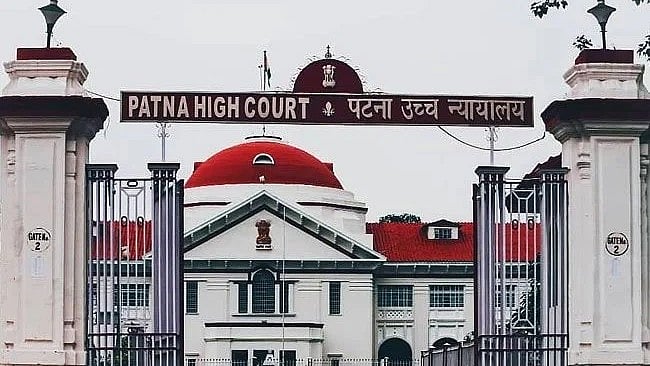
High Court of Patna, Bihar | Image credit: LiveLaw
The Patna High Court recently set a new record by disposing of 476 cases in a single day, with Justice Rudra Prakash Mishra granting bail to all but 13 accused in matters related to violations of Bihar’s Prohibition Law. Most of these cases involved consumption or possession of small quantities of alcohol. Many of the accused, who had no prior criminal background, had been languishing in jails for extended periods. Justice Mishra’s initiative was primarily aimed at decongesting overcrowded prisons and clearing the massive backlog of bail applications that had been choking the judiciary for years.
Hollowness of the prohibition law exposed
While Justice Mishra achieved his ambitious and commendable goal, and district as well as lower courts are expected to follow suit in a similar fashion, his decision to grant bail in the overwhelming majority of cases has starkly exposed the hollowness of the Bihar Prohibition and Excise Act, 2016. Enacted in April 2016 as a key poll promise by Bihar’s longest-serving Chief Minister, Nitish Kumar, the law was projected to curb domestic violence, reduce crime rates, and improve public health significantly. The government continues to claim success on these fronts with selective statistics. However, in reality, the prohibition has primarily served to prolong Nitish Kumar’s political dominance in Bihar while spawning a new class of corrupt officials, middlemen, and criminals who thrive on the underground trade.
Massive revenue losses
Estimates suggest that Bihar has lost direct revenue of around Rs 20,000 crore annually due to the ban, amounting to a staggering Rs 2 lakh crore over the past decade. This could have funded free education for children across Bihar for five years or significantly upgraded infrastructure in rural and urban areas alike. Beyond the direct revenue shortfall, indirect losses are more difficult to quantify but are substantial nonetheless. Since 2016, numerous potential investors from various countries have been arrested for consuming liquor, effectively deterring them and the job opportunities their investments would have created. The tourism sector has also suffered badly, as tourism and liquor have traditionally gone hand in hand, discouraging visitors and hurting local economies.
Bootlegging thrives, enforcement fails
It is no secret that Bihar’s prohibition law has been a resounding failure. Alcohol remains freely available through unofficial channels, with unemployed youth increasingly drawn into bootlegging and offering home delivery of preferred brands at inflated prices. Excise revenues in neighbouring states such as Uttar Pradesh, Jharkhand, and West Bengal have surged noticeably, as have those in farther states like Haryana. Even the neighbouring country, Nepal, has benefited, with smugglers sourcing liquor from elsewhere and storing it in warehouses, often with the tacit knowledge of the police and excise officials, who take a cut for turning a blind eye. Occasional raids keep the courts and prisons clogged but do little to stem the flow effectively.
Health and social costs
Those who can afford it consume liquor discreetly behind closed doors, while the less fortunate turn to illegally brewed country liquor, or desi daru, of dubious quality. Hooch-related deaths continue to be reported regularly from the state. Household incomes have not risen. On the contrary, they have declined for the working class, particularly manual labourers, who end up spending more to quench their thirst or risk their lives with toxic brews that often prove fatal.
Lessons from Gujarat and elsewhere
Compare this with Gujarat’s long-standing prohibition, which has endured on paper since the state’s birth as it is Mahatma Gandhi’s birthplace. In practice, liquor is sold legally to foreigners, to locals on medical prescriptions, and to visitors from other states who obtain temporary permits. For others, a thriving bootlegging network ensures supply without much hassle. The state government has even legalised consumption in the GIFT City for outsiders, recognising that business and investment opportunities cannot be sacrificed on the altar of rigid ideology.
Prohibition has never succeeded anywhere in the long run. In the United States, it was repealed in less than 14 years. Similar experiments in the USSR, Iceland, Norway, Finland, and Canada a century ago met the same fate, as governments lost revenue and smuggling proliferated unchecked. Closer home, Haryana’s Bansi Lal government imposed prohibition but withdrew it within 21 months after it failed and created a massive hole in state revenues. Andhra Pradesh, Kerala, Tamil Nadu, Mizoram, and Manipur have all enforced and then abandoned prohibition for identical reasons.
Politics over policy
Whether to drink or not is an individual choice that cannot be dictated by politicians like Nitish Kumar, especially when the motive appears to be appeasing a section of voters for electoral gains. First-time offenders, unfortunately caught in the net, often spend years in prison because their bail applications languish due to judicial backlog. Many emerge from jail as hardened criminals after prolonged exposure to serious offenders behind bars, turning minor lapses into lifelong criminal records.
Leaders like Tejashwi Yadav and Prashant Kishor promised to scrap the law during campaigns, yet their parties failed to secure a mandate to force change. The judiciary may grumble, but will not strike it down, and Nitish Kumar shows no inclination to do so. The onus now lies on the BJP to persuade him, but it is unlikely to press the issue, given its own lack of majority and the risk of alienating an old, stubborn ally. Arrests will continue, deaths will occur, but vote-bank politics must not suffer. That is the tragic reality unfolding in Bihar today.
Ajay Jha is a senior journalist, author and political commentator.
RECENT STORIES
-
-
-
-
-