Bengaluru’s Hall Of Shame: Children In The Washing Machine
The alleged abuse of toddlers at a Bengaluru workplace daycare has exposed gaps in oversight, accountability and safety standards at corporate childcare facilities. The piece calls for stricter regulation, independent audits and stronger governance while underscoring the importance of reliable childcare in supporting women's participation in the workforce.

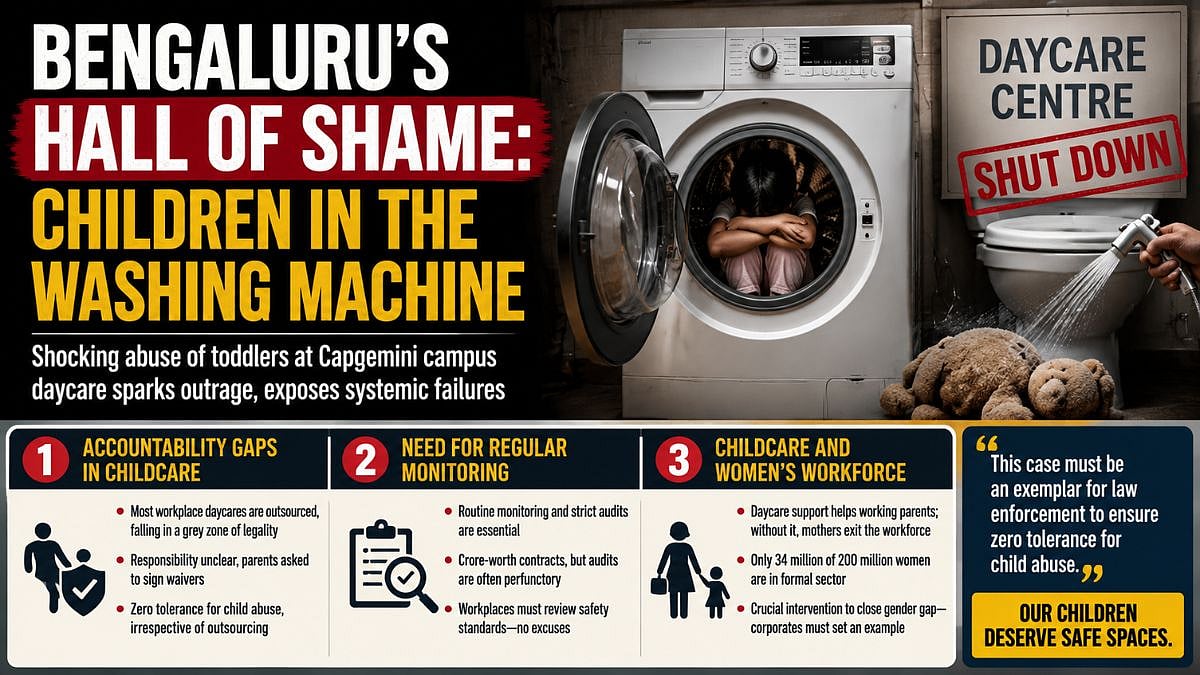
The Bengaluru daycare controversy has renewed calls for stricter safety standards and accountability in workplace childcare facilities | AI Generated Representational Image
The shocking revelations of mistreatment and abuse of toddlers, including stuffing children into a washing machine and spraying them with the toilet bidet, at the daycare centre on global IT services giant Capgemini's Bengaluru campus have moved the needle back to three fundamental issues plaguing urban working mothers in the formal sector.
After the anonymous call to the city's child protection unit and the surfacing of videos online, the Bengaluru police booked five women workers and arrested one of them; the probe is ongoing.
Inexplicably, the woman whistleblower, who surreptitiously recorded the abuse on her mobile phone, was also arrested. The company closed the daycare centre, which, reports say, provided care to 20-30 children of employees on most days.
Need For Accountability
In its wake, the police launched review checks on company-provided daycare facilities across the city to ensure their compliance with the regulations. This is the first of the fundamental issues. Such facilities in formal workplaces, provided as benefits, are usually outsourced to third parties and fall in the grey zone of legality.
While regulations exist, the trail of responsibility is unclear, and internal rules often require parents to sign waivers while registering their young children in such facilities.
It must be noted that the affected children's parents have not spoken up—the toddlers will require mental and emotional therapy to heal—but working mothers and corporate employees flooded social media with angry posts. This case must be made an example for law enforcement to ensure zero tolerance for child abuse, irrespective of the outsourcing of care.
Strengthen Oversight Mechanisms
Secondly, there is no substitute for routine and strict monitoring of daycare—or cafeteria and other facilities—provided by companies, backed by regular audits by independent agencies. Usually, annual or long-term contracts worth crores for such facilities are handed out to third-party providers, and audits are hardly carried out; if they are, they remain perfunctory.
The Capgemini case serves as a wake-up call to other workplaces to review safety standards and carry out regular and meaningful audits. There can be no excuse for the lack of safety standards and robust governance.
Childcare Is Essential
Thirdly, daycare facilities, whether on work campuses or independent of them, offer much-needed support for working parents; in their absence, one parent, usually the mother, drops out of the workforce. Of the 200 million women in India's workforce, only around 34 million are in the formal sector.
Moreover, the recent decline has worried policymakers and women's groups. Domestic responsibilities, including childcare, are a factor holding qualified women back.
Childcare facilities, then, are no longer an employee benefit but a crucial and essential intervention to close the gender gap in the workforce. Arguably, they are urgently needed for women in the informal sector, but where they exist in global corporates, they must set an example.
Published on: Tuesday, July 07, 2026, 09:39 PM ISTRECENT STORIES
-
-
-
-
-