Ayyappa Worship: A Pilgrimage Beyond Rituals, Rooted In Discipline And Quest For Moksha
Very often, in South Indian temples nowadays, you see men wearing black clothes, unshaven, doing their worship. In some temples, you also see coconuts and palm seeds kept in urns, the old ‘para’, which was a measuring instrument for rice in olden days. Lamps are lit, and certain rituals are done.

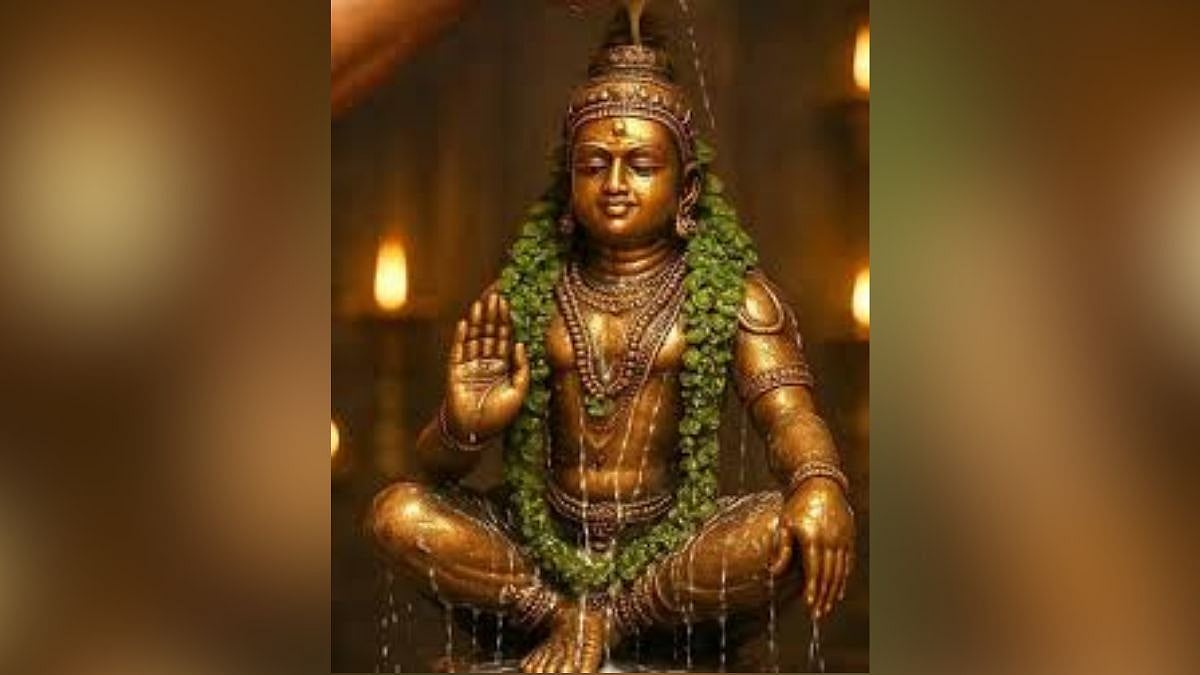
Ayyappa Worship: A Pilgrimage Beyond Rituals, Rooted In Discipline And Quest For Moksha | File Photo
Very often, in South Indian temples nowadays, you see men wearing black clothes, unshaven, doing their worship. In some temples, you also see coconuts and palm seeds kept in urns, the old ‘para’, which was a measuring instrument for rice in olden days. Lamps are lit, and certain rituals are done.
To the people not familiar with this, it looks strange. This marks the intense season of Ayyappa worship in Kerala, drawing devotees from across India—even Punjabis make the pilgrimage to Sabarimala. It has been in the news for corruption right now, with some of the politicians being indicted for it.
The temple remains dedicated to Lord Ayyappa, understood to be a manifestation of both Lord Vishnu and Lord Shiva, hence called Harihara Sutta. It is very interesting that if you go to any temple in India, you can ask the Lord for anything and everything that you want. And when those wishes are fulfilled, you go and offer your prayers of gratitude. This is common.
So, some people do the same in Ayyappa temples also. But really speaking, the worship of Lord Ayyappa is for Moksha, enlightenment, and self-knowledge. This is why Lord Ayyappa is honoured as the teacher of Vedanta, the teacher of the Mahavakya.
During the intense worship period of one mandala (41 days), devotees adopt monk-like discipline. Unlike traditional monks who wear saffron, Ayyappa devotees wear black or dark blue clothes, honouring Ayyappa as Neelavastradhari. They sleep on simple mats without beds, consume only sattvic vegetarian food, abstain from smoking and alcohol, and live a life of tapas (austerity).
Carrying offerings on their heads, devotees walk the pilgrimage route to Lord Ayyappa, praying exclusively for Moksha. This distinguishes Sabarimala as one of India's rarest temples dedicated solely to enlightenment rather than material fulfilment.
This singular focus on spiritual liberation makes the Ayyappa tradition profoundly significant.
The writer is the founder of Aarsha Vidya Foundation. You can write to him at aarshavidyaf@gmail.com
RECENT STORIES
-
-
-
-
-