A Moment Of Reckoning: US Court Orders Meta, Google To Pay $6 Million Over Addictive Apps, Flags Social Media Harm To Users
A US court has ordered Meta and Google to pay $6 million in damages for designing addictive social media platforms that harm mental health. The ruling highlights algorithm-driven user manipulation and may trigger global regulatory action, especially to protect young users from excessive screen time and harmful content exposure.

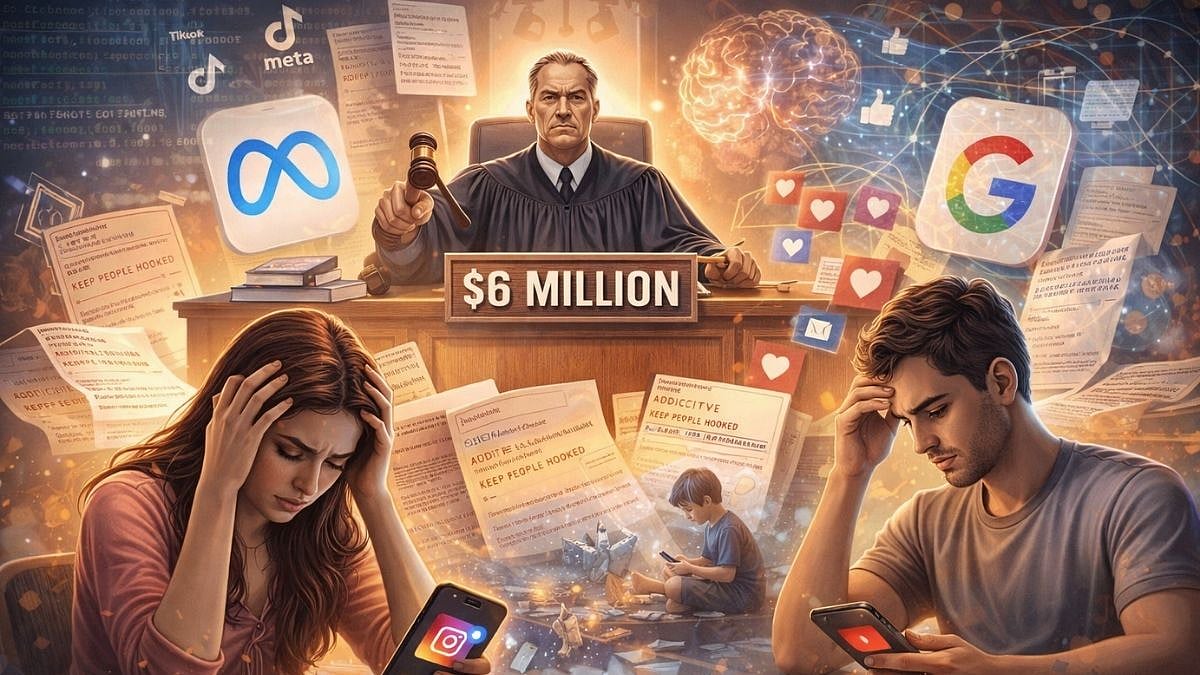
Landmark US court ruling raises questions over addictive social media algorithms and their impact on mental health | AI Generated Representational Image
A California court’s ruling ordering social media companies Meta and Google to pay personal and punitive damages of $6 million to a woman for harming her mental health by making apps like Instagram and YouTube deliberately addictive is a landmark. Both the companies may appeal the order, while TikTok and Snapchat’s Snap Inc. came to a settlement earlier. But the case, along with one in New Mexico pertaining to social media’s failure to protect young users from predators, should act as a check on unbridled profit-seeking.
Scale and influence of major platforms
Meta, which counts some 3 billion users each on Facebook, Instagram and WhatsApp, carries an astronomical valuation of $1.5 trillion and earns billions in revenues, while YouTube is estimated to be worth $500 billion, earning $60 billion in 2025. What makes the California order significant is that it takes cognisance of the technological tools used by the companies, demonstrated in court using internal documents, to tailor algorithms that hook users in an endless loop of content that is addictive and virtually impossible to stop.
Addictive design and its consequences
When these programmes prioritise bizarre and manipulative content, the outcome is often violence and self-harm. One of the victims has now created a Goliath moment, with support from the Social Media Victims Law Center. The penalty and compensation may be small, but the verdict from the jury in Los Angeles should be read as a much-needed call for restraint on powerful media that thrive on glamourising extreme behaviour and materialistic consumption, with disastrous effects on impressionable teenagers.
Global policy response gaining momentum
Governments around the world have started taking note of the impact of social media on younger users, with pioneers like Australia banning their use by children under 16. Similar measures are being considered by others: French lawmakers passed a resolution for a ban, and calls for legislation are growing louder elsewhere.
Big Tech faces growing accountability pressure
There is little doubt that social media apps have been algorithmically twisted to keep users “always on” through provocative, sensational and often shocking user-generated videos and content that churn out profits. Thus far, legal challenges on content invariably failed, as the companies were protected from liability for third-party material. But the latest successful petition showed that the system was designed to produce addiction, and the prosperous platforms knew about the harms.
Parallels with tobacco industry and future course
This situation has drawn comparisons with the tobacco industry, which promoted its products, ignoring well-known hazards, until it lost a major case in 1998 leading to a $206 billion settlement with prosecutors. Big Tech must now detoxify its online playgrounds, closing them to children and giving control to age-verified humans over algorithms. Social media should foster genuine conversations, in the manner everyone expects, and not remain a murky swamp.
Many Gen Z citizens now regret that their early years on these apps represent time lost. Their resistance could snowball.
Published on: Saturday, March 28, 2026, 08:19 PM ISTRECENT STORIES
-
-
-
-
-