Scientists Find Rare Amino Acids In Meteorite That Crashed Into New Jersey Home
Scientists have found rare extraterrestrial amino acids and evidence of ancient salty water in a meteorite that crashed into a New Jersey home in 2024. The pristine space rock is helping researchers study the early solar system and how organic molecules essential for life may have reached Earth billions of years ago.

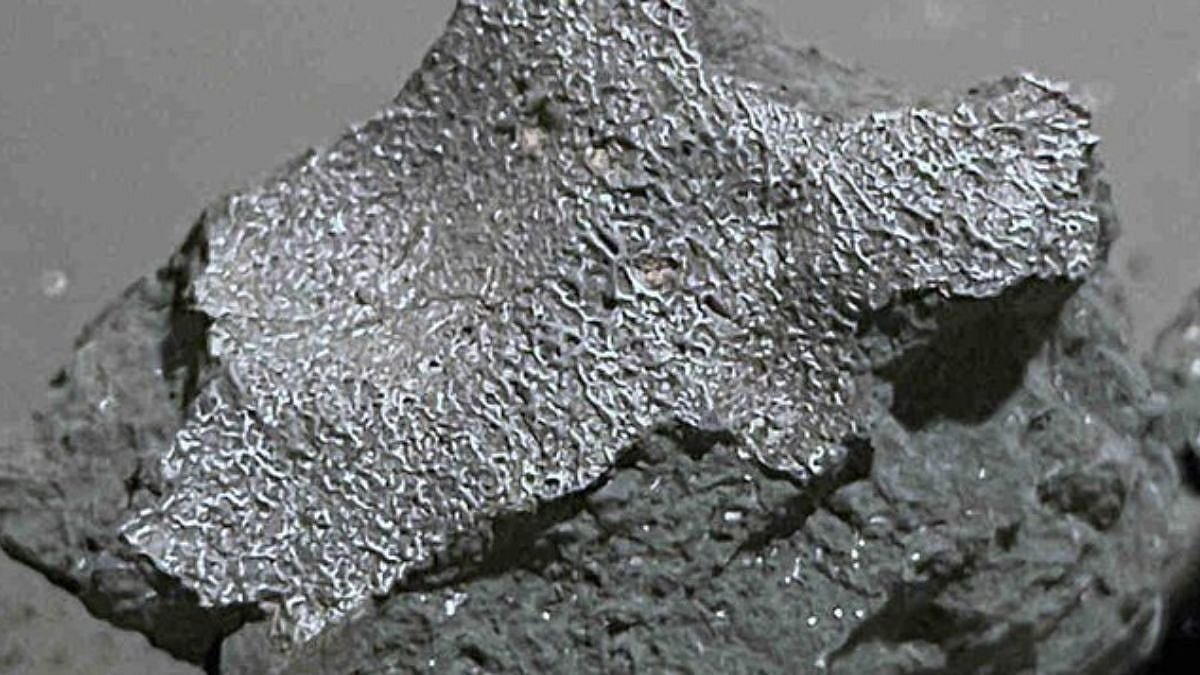
Scientists analysed a rare meteorite recovered from a New Jersey home and found extraterrestrial amino acids and evidence of ancient salty water | Representational Image
New York, July 16: A meteorite that crashed through the roof of a home in Hillsborough, New Jersey, has provided scientists with a rare glimpse into the early solar system. The fragile space rock, weighing more than one kilogram, contains complex amino acids and evidence of ancient salty water, offering fresh clues about the origins of organic molecules essential for life.
The findings come from a study published on Wednesday in the journal Science Advances.
Rare Space Rock Recovered
On July 16, 2024, residents across New York, New Jersey, Connecticut, Rhode Island and Pennsylvania witnessed a bright fireball streak across the daytime sky. As it passed south of the Statue of Liberty, it generated a sonic boom that was felt in parts of New York City and New Jersey.
The object, estimated to be about the size of a large airline bag, entered Earth's atmosphere at about 32,000 miles per hour (14.4 kilometres per second). It broke apart roughly 35.4 kilometres above the ground because of its unusually fragile nature. Fragments were detected by Newark Liberty International Airport's Doppler weather radar as they fell from Staten Island into New Jersey.
Only one fragment was recovered after it crashed through the ceiling of a master bedroom in a Hillsborough home.
The homeowners immediately collected the black fragments and dust using disposable gloves, aluminium foil and glass jars. According to Peter Jenniskens, senior research scientist at the SETI Institute and NASA's Ames Research Center, they also repaired the damaged roof before rain could fall.
"The fragile meteor is porous and sucks in water from the air," Jenniskens said, adding that the homeowners' quick response helped prevent contamination and preserved the sample for scientific analysis.
Window Into Early Solar System
Scientists identified the Hillsborough meteorite as a rare CM½ carbonaceous chondrite, an intermediate form between the primitive CM1 and CM2 meteorite types. It is only the second witnessed fall of its kind, and the first recovered in such a pristine condition, allowing researchers to study it without significant contamination.
"It is the first CM-type meteorite that contained bits of rock that preserved the subsurface of the original asteroid," Jenniskens said via email. "We really have a unique window here on the physical properties of the parent asteroid."
Researchers believe the meteorite originated from an asteroid in the inner asteroid belt between Mars and Jupiter. Jenniskens explained that a large collision created an asteroid family, followed by another collision about six million years ago that produced the fragment eventually sent into near-Earth orbit.
"Some time ago, a significant asteroid family was formed in a large collision and some 6 Myr ago a smaller collision destroyed one of these asteroids, from which a piece ended up in near-Earth orbit," Jenniskens wrote. "That piece experienced heat/cold cycles from spinning in the sunlight and fragmented about 200,000 years ago. Then it still took that long to hit the small target of Earth."
Ancient Brines And Amino Acids
The meteorite contains high levels of sodium, indicating the presence of ancient icy brines within its parent asteroid. As the water evaporated, concentrated salt minerals were left behind, creating conditions that may have supported the formation of molecules essential for life.
Scientists also detected organic carbon and a diverse collection of amino acids.
"We detected a complex suite of amino acids, the fundamental building blocks of proteins, in water extracts of the Hillsborough meteorite," said study co-author Dr Danny Glavin, senior scientist for the Sample Return in the Solar System Exploration Division at NASA's Goddard Space Flight Center.
"Most of the amino acids detected in Hillsborough are rare or nonexistent in life on Earth, so they are truly extraterrestrial in origin."
Glavin added: "There are hundreds of amino acids in this meteorite and the majority of them do not occur naturally on Earth. The suite of amino acids in Hillsborough was even more diverse than those found in pristine samples returned from the carbon-rich asteroids Bennu and Ryugu."
Researchers are now comparing the Hillsborough sample with material collected from the asteroids Bennu and Ryugu by NASA's OSIRIS-REx mission and Japan's Hayabusa2 mission.
Fragments of the meteorite are being preserved at the American Museum of Natural History in New York City.
Clues To Origin Of Life
Primitive carbonaceous chondrites are believed to have delivered organic material to the early Earth, making them important to understanding the origin of life.
The Hillsborough meteorite "provides more evidence that meteorite delivery of organic matter to the early Earth could have been an important source of organic molecules necessary for the origin of life," Glavin said.
Peter Brown, professor in the Department of Physics and Astronomy at Western University in London, Ontario, who was not involved in the study, said the discovery of ancient brine is particularly significant.
The brine "is a really strong sort of indicator of how water has moved, evolved and in particular how it's reacted with organics," Brown told CNN.
"Everything we can learn about how water changes this kind of primitive meteorite is super important to sort of astrobiology and early biology on Earth."
Brown also noted that the meteorite had undergone little heating, helping preserve evidence of how water interacted with minerals and organic compounds billions of years ago. He credited the homeowners' swift actions with ensuring the fragile sample remained suitable for scientific study.
The homeowners, who chose to remain anonymous, said, "We knew almost immediately that what happened to us was incredibly rare, and we felt a responsibility to preserve the meteorite for the scientific community."
Also Watch:
ALSO READ
"It's still surreal to think that this meteorite traveled through space for millions of years before ending its journey in our home. The entire experience has been incredible, and we're honored to have played a small part in advancing scientific understanding through its study."
Scientists say reports from doorbell cameras and dashcams capturing fireballs can help locate future meteorites and improve understanding of the solar system's evolution.
To get details on exclusive and budget-friendly property deals in Mumbai & surrounding regions, do visit: https://budgetproperties.in/
RECENT STORIES
-
-
-
-
-