Qom To Karbala To Mashhad: Khamenei Funeral Procession To Span Iran, Iraq Cities In Symbolic State Ritual
Marking the end of an era after his assassination, the late Supreme Leader’s planned highly choreographed, multi-city funeral procession will serve as a powerful geopolitical statement, projecting regional influence, religious legitimacy and unbroken regime stability during a critical transition of power

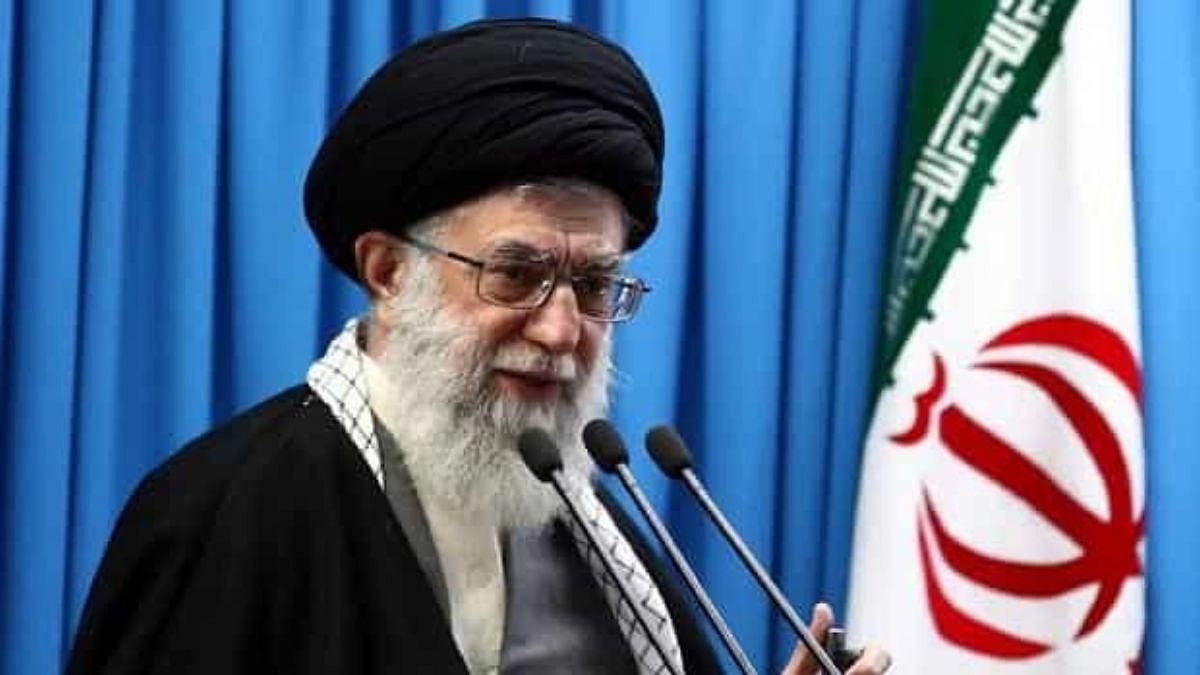
Iran's Late Supreme Leader Ayatollah Ali Khamenei | Agency
When the Israeli-launched, Rafael-made Blue Sparrow missile hit its intended target in Iran on February 28, 2026, it did more than just claim lives—it marked the end of an era. The assassination of Iran's Supreme Leader, Ayatollah Ali Khamenei, in his well-fortified Tehran compound initially left the nation reeling, before it regrouped to mount a fierce resistance against the US and Israel.
Preoccupied by the conflict and bound by strict security concerns, Iran is finally holding Khamenei's funeral ceremonies after a four-month delay. The late Ayatollah represented the very institution of Islamic governance in the country, serving as an institution in his own right rather than just an individual. Though his death was violent, his funeral will see the whole of Iran give him a major state send-off.
According to an AFP report, the funeral processions will pass through a series of locations that reflect the religious, political and ideological pillars of the Islamic Republic. From the seat of power in Tehran to the holy cities of Qom, Karbala, Najaf and finally Mashhad, each stop holds deep symbolic importance.
Where will Iranians bid their final goodbye?
The Iranian public will have a final opportunity to view Ayatollah Khamenei’s body at Tehran’s Grand Mosalla (Imam Khomeini Prayer Hall) this coming Saturday. The significance of this massive complex is both political and religious.
The symbolism of the public viewing is profound, reflecting the late Ayatollah's dual role as both the supreme religious authority and the apex of a country built on clerical rule.
Tehran: The institutional and military nerve centre
The funeral procession of Ayatollah Ali Khamenei through Tehran will hold deep significance because the capital represents the institutional, political and military nerve centre of the Islamic Republic.
The image of streets filled with mourners offering their final homage will also carry an underlying message to domestic and international audiences that the core governing apparatus remains stable, unbroken, and unified despite the loss of its long-serving leader.
Why the body goes to Qom
Bringing his body to Qom, the theological heartbeat of Iran and the world's premier centre of Shia Islamic learning, serves as a vital bridge between the political state and the traditional clerical establishment. By parading the late leader through the city where his revolutionary identity was originally forged under Ayatollah Khomeini, the regime explicitly reinforces the religious and historical legitimacy of the Velayat-e Faqih (Guardianship of the Islamic Jurist) system at a time of immense vulnerability.
Beyond honouring the past, this specific stop carries profound implications for the political transition, particularly in consolidating support for his son and successor, Mojtaba Khamenei. Mojtaba maintains deep personal roots in the Qom Seminary, where he studied and later taught theology to build his own network among the powerful grand ayatollahs.
Choice of Karbala: Ethos of martyrdom
The inclusion of Karbala in the multi-city funeral procession for Ayatollah Khamenei is a profoundly symbolic move that blends raw geopolitical theatre with deep-seated religious narrative.
It taps directly into the central spiritual pillar of Shia Islam, which is, the narrative of martyrdom. Karbala is the burial site of Imam Hussein, the grandson of Prophet Muhammad, whose death at the Battle of Karbala forms the foundational ethos of sacrifice and resistance against tyranny for Shia Muslims.
Ayatollah Khamenei's remains will also be taken to Najaf
Taking Ayatollah Khamenei’s remains to Najaf serves an even deeper, more complex theological purpose than the stop in Karbala. While Karbala represents the emotional ethos of martyrdom, Najaf is the supreme seat of traditional Shia spiritual authority, housing the tomb of Imam Ali (the first Shia Imam) and the historical epicentre of Shia jurisprudence (the Hawza of Najaf).
With Mojtaba Khamenei taking the reins as the third Supreme Leader, establishing his legitimacy across the entire Shia world is paramount. Parading the late Ayatollah through Najaf acts as a heavy-handed, symbolic demand for endorsement from the Iraqi clerical establishment, signalling that the leadership transition in Tehran expects deference from the entire transnational Shia network.
Message behind the Iraqi itinerary
The cross-border itinerary is a powerful projection of Iran's enduring regional influence and its Axis of Resistance. Conducting a highly coordinated state funeral across both Iran and Iraq requires the full mobilisation of Iraqi state machinery. By parading the coffin through Najaf and Karbala, Tehran is sending an unmistakable message to international adversaries and domestic audiences alike: Iran’s geopolitical grip on Iraq remains entirely intact.
In Mashhad, Ayatollah Khamenei passes into history
The final stop of the multi-city funeral procession brings Ayatollah Khamenei to Mashhad, his birthplace and the physical conclusion of his 87-year journey. He will be laid to rest at the sprawling Imam Reza Shrine—the burial site of the eighth Shia Imam and the ultimate spiritual heart of Iran.
By placing his tomb within this sacred complex, the regime permanently weaves his legacy into the fabric of Shia history transforming a political ruler into a permanent object of religious reverence. This homecoming neatly closes the circle of his life, tracing a direct line from his early days as a local anti-Shah dissident in Mashhad’s mosques to the long-serving leader who reshaped the modern Middle East.
RECENT STORIES
-
-
-
-
-