Iran Claims 7 Oil Tankers Struck In Strait Of Hormuz As Fears Of Full-Scale War Escalate
Iran claimed seven oil tankers were damaged or caught fire overnight in the Strait of Hormuz, raising concerns about renewed regional conflict. The Revolutionary Guards warned against US military involvement, while diplomatic efforts continued. The reported incidents remain independently unverified, with potential implications for global energy supplies and shipping.

Iran Claims 7 Oil Tankers Struck In Strait Of Hormuz As Fears Of Full-Scale War Escalate | X
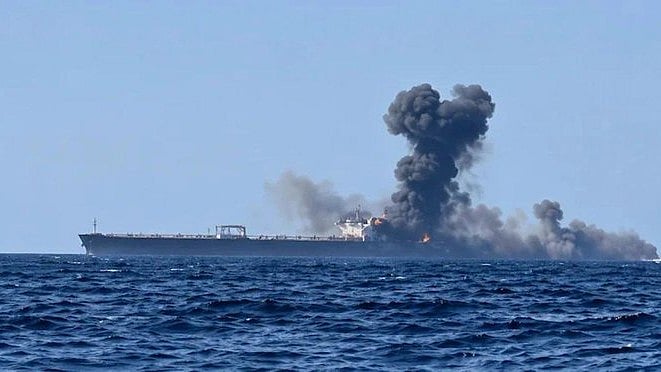
Iran claimed on Thursday that seven oil tankers caught fire or sustained damage overnight in the Strait of Hormuz after being targeted by Iranian forces or striking naval mines. The reported incidents have heightened fears of renewed full-scale war in the region.
The developments come just days before closely contested elections in Israel, where Prime Minister Benjamin Netanyahu faces the possibility of losing power. Concerns have also intensified ahead of next month’s US midterm elections, with voters expressing anger over rising prices linked to the war. Against this backdrop, fears are growing that the US and Israel could resume military strikes against Iran.
Iran’s Revolutionary Guards Threaten US Military Bases
Iranian state television, citing the navy of the Islamic Revolutionary Guard Corps (IRGC), reported the incidents involving the seven tankers. The force also renewed its warning that it could target US military bases across the region if Washington continues helping commercial vessels navigate the Strait of Hormuz.
The Iranian report provided no information about casualties. The United Kingdom Maritime Trade Operations (UKMTO), a British maritime security monitor, had not reported the alleged attacks. However, maritime monitors have recently observed that some shipping companies are reluctant to disclose such incidents.
Iran continues to assert control over the strategic waterway, which remains a crucial bargaining point in any negotiations with Washington over the conflict.
Tehran Signals Readiness For Diplomacy And Military Action
Iran’s top diplomat, Abbas Araghchi, said on Wednesday that Tehran remains willing to pursue diplomatic negotiations despite its reservations, while maintaining its readiness to defend itself.
Iranian authorities have repeatedly warned that the country has drawn significant military lessons from the conflict, which began with US and Israeli strikes on February 28.
In recent days, Tehran has also suggested that it could broaden its list of potential targets to include critical infrastructure, particularly undersea cables and data centres.
Meanwhile, the US is strengthening its military presence in the Middle East by deploying additional forces, including a third aircraft carrier and thousands of troops. These reinforcements will join what is already the largest concentration of American warships and aircraft in the region in decades.
ALSO READ
US Rejects Iran’s Seven-Day Peace Proposal
Diplomatic intermediaries are continuing efforts to bring Washington and Tehran back to formal negotiations.
Iran has been promoting a proposal under which the war would end and the Strait of Hormuz would fully reopen within a week, provided the US accepts several conditions.
Among Tehran’s demands is an end to the American blockade of Iranian ports. The conditions closely resemble those contained in an earlier agreement signed by Washington and Tehran in June, which collapsed within days.
US President Donald Trump rejected Iran’s latest seven-day proposal. Nevertheless, both countries have acknowledged that indirect diplomatic discussions remain underway.
Since Washington rejected the proposal, reported attacks on vessels travelling through the Strait of Hormuz have increased.
Also Watch:
Renewed War Could Disrupt Global Energy Supplies
The possibility of a return to full-scale hostilities has raised concerns about civilian safety across the Middle East and the wider economic consequences of another major conflict.
Renewed fighting could severely disrupt shipments of oil, natural gas and related products, including fertiliser, from the region.
Such disruptions could trigger another surge in global prices, adding to the economic pressures already associated with the conflict.
RECENT STORIES
-
-
-
-
-