What Comes After The Smartphone? Microsoft Reveals AI Badge At Build 2026 That Is Way Smarter Than Your Phone
Microsoft showcased a wearable AI badge at Build 2026 that could signal a future beyond smartphones and laptops. The badge-sized device features a touchscreen, camera, and fingerprint unlock, allowing users to interact with AI agents, capture images and perform tasks, as part of its vision for next-generation workplace computing.

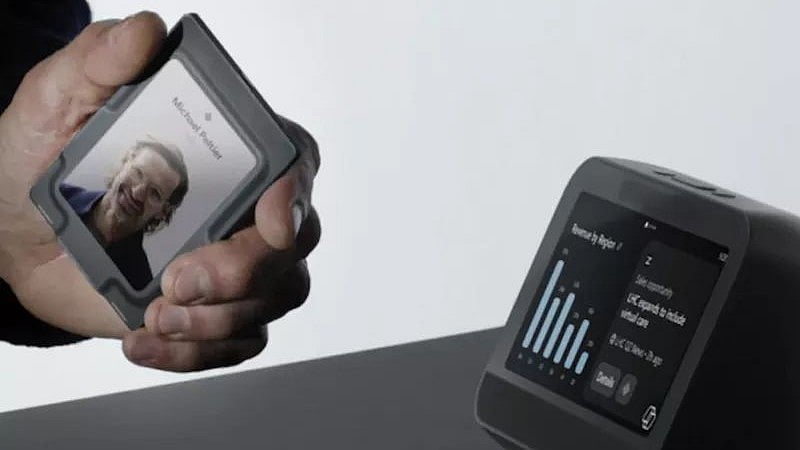
Is the smartphone going to be redundant soon? Maybe not in the near future, but we have started taking the initial steps. Microsoft has a bold new vision for the workplace - a tiny, badge-sized device clipped to your shirt that lets you talk to an AI agent, snap photos of your surroundings, and unlock it all with your fingerprint - no phone, no laptop required.
The company unveiled two concept devices under the name Project Solara at Microsoft Build 2026 this week, and while neither is headed to store shelves anytime soon, they offer the clearest signal yet of where Microsoft thinks workplace computing is going.
Microsoft has unveiled an AI badge
The more striking of the two devices is a wearable AI badge, roughly the size of a standard office access card. It can be clipped to clothing or worn on a lanyard, and packs a touch screen, a camera, and a fingerprint scanner into its compact frame.
At Build 2026, Microsoft executive Steven Bathiche demonstrated the device by unlocking it with a fingerprint and asking it to photograph the audience and route those images for review. Bathiche described the camera as giving agents the ability to "better understand and help take action on the environment around them." Microsoft CEO Satya Nadella called the devices a 'new form factor' for computing.
The second device is a small desk display aimed at cutting through the clutter of a traditional PC setup. It can surface information from Microsoft 365 services including Outlook and Excel, respond to voice commands, and connect workers directly to AI agents, all without touching a keyboard.
A platform, not a product
Microsoft was careful to position Project Solara as a reference design rather than a finished product it plans to manufacture and sell. The intent is to hand off the blueprint to hardware makers and let them build enterprise AI gadgets on top of it. Qualcomm and MediaTek have already partnered with Microsoft on the reference designs, suggesting the ecosystem is being set up deliberately.
Under the hood, Project Solara runs Microsoft Device Ecosystem Platform, an enterprise-grade operating system built on AOSP. It integrates with Microsoft's existing enterprise toolchain, including Intune for device management, Entra ID for identity, and Windows Hello for Business for authentication.
Companies including AccuWeather, Best Buy, CVS Health, and Target are expected to pilot Solara devices, suggesting Microsoft has already been quietly building a real-world testing network for the concept.
The privacy question nobody is ignoring
A badge with a camera and always-on AI capabilities in the middle of an office is not without complications. AI wearables have faced growing scrutiny around cameras, microphones, data retention, and the thorny question of consent, particularly in workplace settings where recording a conversation or capturing an image may cross compliance lines or make colleagues uncomfortable.
Microsoft has been down the enterprise hardware road before. HoloLens, its mixed reality headset, was discontinued in 2024 after years of development and limited adoption outside niche military and industrial use cases. Project Solara faces a similar challenge: convincing businesses that the utility is worth the complexity.
RECENT STORIES
-
-
-
-
-