ISRO Aims For Zero Space Debris By 2030, Performs Evasive Manoeuvres To Prevent Satellite Collisions
The Centre told Rajya Sabha that ISRO avoids congested low-earth orbits and conducts collision avoidance manoeuvres to minimise satellite risks. Under the NETRA project and Debris Free Space Mission 2030, India is strengthening space situational awareness. Expenditure on Gaganyaan has reached ₹6,018 crore till January 2026.

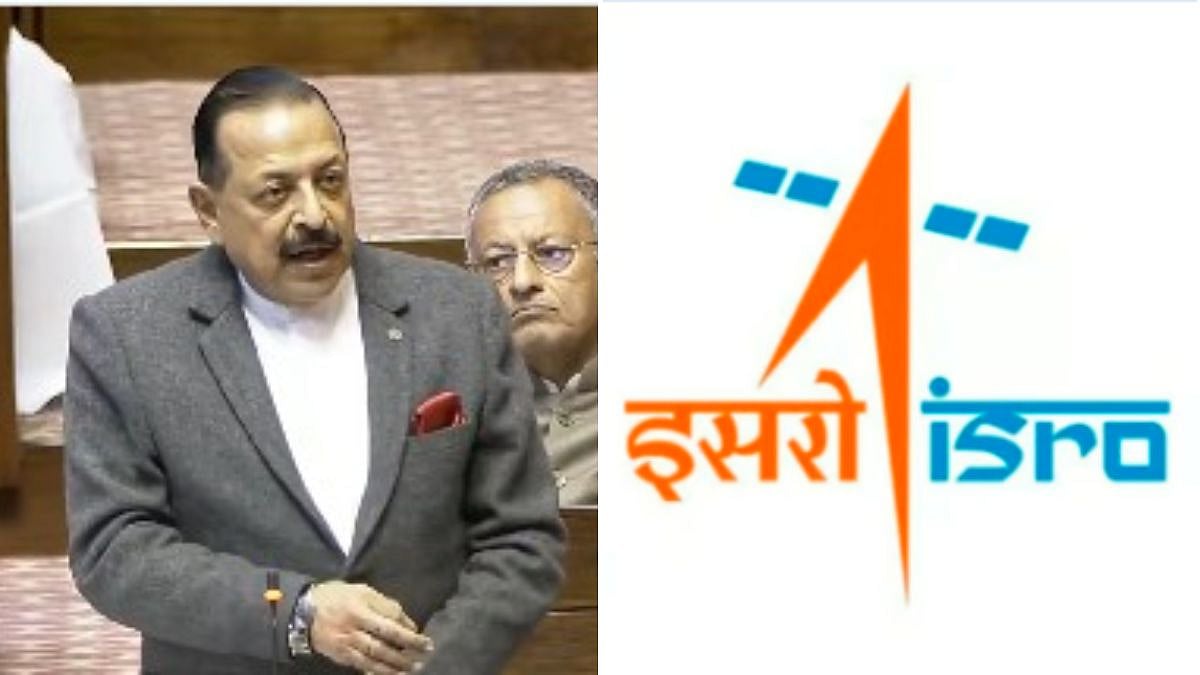
Minister of State (MoS) for Science and Technology, Jitendra Singh, in a written reply, said that other measures taken by the space agency towards strengthening Space Situational Awareness (SSA) for Indian satellites include continual assessment of collision risks and performing Collision Avoidance Manoeuvres (CAMs) as and when required. | IANS & File Pic
New Delhi: With the aim of minimising the risk of satellites' collision in low-earth orbit due to congestion, the Department of Space/Indian Space Research Organisation (ISRO) opt for operational orbits away from the already known crowded zones and perform need-based evasive manoeuvres, the Centre told the Rajya Sabha on Thursday.
Minister of State (MoS) for Science and Technology, Jitendra Singh, in a written reply, said that other measures taken by the space agency towards strengthening Space Situational Awareness (SSA) for Indian satellites include continual assessment of collision risks and performing Collision Avoidance Manoeuvres (CAMs) as and when required.
In reply to another query, the MoS said the cumulative expenditure on the Gaganyaan programme as on January 2026 stands at nearly Rs 6,018 crore.
On the satellite collision issue, MoS Singh referred to the setting up of indigenous facilities to monitor the space objects under the Network for Space Object Tracking and Analysis (NETRA) project, among others.
Sharing details of the Union government's comprehensive plan to achieve zero debris in space, the Debris Free Space Mission (DFSM) declared by ISRO in 2024 aims to achieve zero debris by all Indian actors, government as well as private, by 2030.
ALSO READ
The MoS said that the ISRO has institutionalised the process to ensure extra fuel margins for both spacecraft and launch vehicles for their post-mission disposal.
Studies are being undertaken with rendezvous and proximity operations and robotic arms as precursors to active debris removal, he added.
The MoS said that India is an active participant in international cooperation frameworks such as the Inter-Agency Debris Coordination Committee (IADC), United Nations Working Group on Long Term Sustainability (UN-LTS), and contributes technically in these forums.
"Progress has been made in implementing these measures such as the end-of-life deorbiting and passivation of SCATSAT to reduce its orbital life and disposal of IRNSS-1D to a super-synchronous graveyard orbit and passivation to avoid interference with operational satellites, among others," MoS Singh added.
(Except for the headline, this article has not been edited by FPJ's editorial team and auto-generated from an agency feed.)
RECENT STORIES
-
-
-
-
-