Jalgaon: Cotton Production Likely To Fall 50-60% Amid Prolonged Dry Spell
Farmers had initially expected a good harvest after receiving favourable rainfall during the early stages of cultivation. However, the prolonged dry spell that followed affected the crop and reduced yield prospects. The Agriculture Department has consequently estimated a 50% to 60% decline in production

Jalgaon: Cotton Production Likely To Fall 50-60% Amid Prolonged Dry Spell |
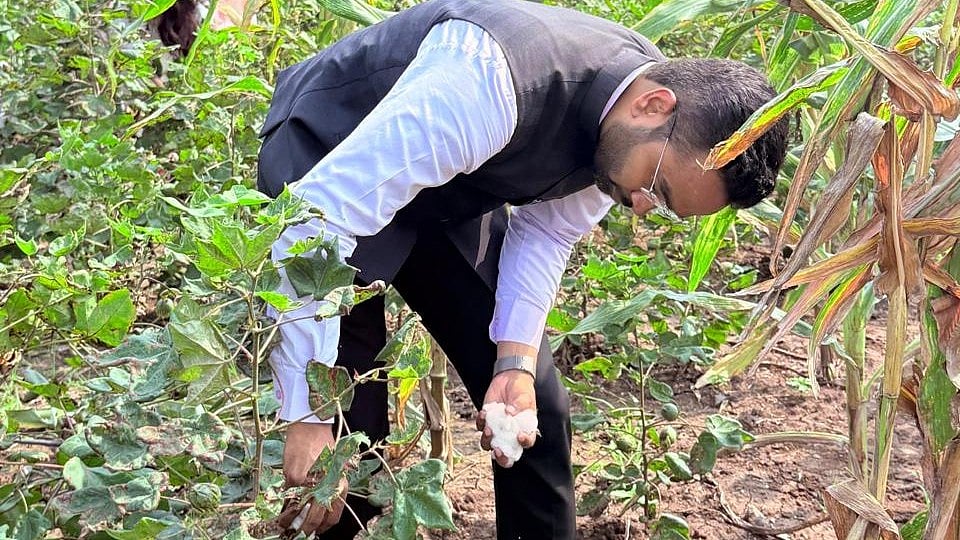
Jalgaon: A prolonged dry spell has severely affected cotton cultivation in Jalgaon district, with the Agriculture Department estimating a 50% to 60% decline in rain-fed cotton production this year.
Jalgaon is known for its extensive cotton cultivation and records the highest cotton sowing area in the state. Cotton, often referred to as ‘White Gold’, is an important crop for the district’s economy. While the crop is usually cultivated across at least 5.5 lakh hectares annually, the area under cotton cultivation fell to 4.35 lakh hectares this year as farmers reduced sowing amid poor market prices.
Farmers had initially expected a good harvest after receiving favourable rainfall during the early stages of cultivation. However, the prolonged dry spell that followed affected the crop and reduced yield prospects. The Agriculture Department has consequently estimated a 50% to 60% decline in production.
The impact is also expected to be felt by the region’s ginning and pressing industry. Khandesh has more than 150 ginning and pressing factories, which process cotton produced in the region and provide employment to thousands of workers. The industry also contributes to government revenue through taxes.
Annual cotton production in the region generally averages around 15 lakh bales. However, production fell to around 11 lakh bales last year after rainfall during Diwali affected the crop.
According to Avinash Kabra, Secretary of the Khandesh Ginning and Pressing Factory Owners’ Association, this year’s drought-related decline could bring production down to around 8 to 9 lakh bales, representing a drop of nearly 50% from the usual level.
Kabra said ginning factories generally operate in three shifts when cotton production reaches around 15 lakh bales. With this year’s projected output of only 8 to 9 lakh bales, factories are likely to operate in a single shift.
The reduced availability of cotton is also expected to affect oil extraction units, which could face a shortage of raw material from cotton seeds. Pradeep Jain, Founding President of the association, expressed concern that the decline in cotton availability could ultimately affect employment in the sector.
The association also raised concerns over cotton being transported to ginning factories in Gujarat without being intercepted. It said such movement adversely affects local ginning factories despite Jalgaon being one of the state’s major cotton-producing districts.
With production expected to remain significantly below normal levels, farmers are now closely watching the market to see what prices their reduced harvest will fetch this season.
RECENT STORIES
-
-
-
-
-