'Utility Bills Cannot Prove Structure's Legality': Bombay HC Refuses Relief To Borivali Resident
The Bombay High Court dismissed a Borivali resident's plea against the demolition of his structure, ruling that utility bills and municipal assessment records do not prove a building is legally authorised. The court upheld the BMC's action, rejected the compensation claim and allowed the petitioner to pursue civil remedies.

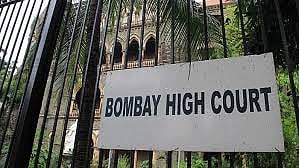
The Bombay High Court upheld the BMC's demolition action, ruling that utility bills do not establish a structure's legal status | File Photo
Mumbai, July 8, 2026: Observing that municipal assessment records, electricity bills and water bills cannot be treated as proof that a structure is authorised under municipal laws, the Bombay High Court has dismissed a petition filed by a 72-year-old Borivali resident challenging the demolition of his structure by the Brihanmumbai Municipal Corporation (BMC).
Court Upholds BMC Action
A Bench of Justices Ajey Gadkari and Kamal Khata upheld the BMC's stop-work notice and demolition order issued in January and February 2024. The court also rejected the petitioner's demand for restoration of the demolished room and Rs 80 lakh compensation.
The petitioner, Ashok Ramugade, claimed ownership of a 120 sq ft room in Borivali West and argued that it was an old authorised structure. He relied on sale deeds, municipal assessment records, utility bills and a business licence to contend that the premises existed before 1961.
He also argued that he had carried out only permissible repairs after receiving a municipal communication stating that no permission was required for tenantable repairs.
Documents Not Proof Of Legality
The court, however, found that the petitioner failed to produce any sanctioned building plan or other reliable document establishing that the structure was legally authorised.
“Such documents may indicate the existence or occupation of a structure, or the provision of municipal and utility services to it. They do not, by themselves, establish title to the land or demonstrate that the construction was sanctioned or authorised under the applicable planning laws,” the Bench said.
The judges also noted that while the sale deed referred to a room measuring about 120 sq ft, the petitioner's own documents showed the structure measured about 246.92 sq ft after the work carried out by him.
“Permission to carry out tenantable repairs does not authorise an occupant to enlarge the area, alter the dimensions or reconstruct the premises contrary to a sanctioned plan,” the court observed.
The Bench cautioned against using old municipal assessment records to legitimise unauthorised construction. “Such assessment records cannot be used to legitimize subsequent additions or enlargements for which no municipal sanction is produced,” it said.
Petition Dismissed
The court further held that granting relief in such cases would encourage illegal construction and undermine planned development. It also observed that the petitioner had attempted to rely on documents that did not establish legal entitlement to the structure.
Also Watch:
While dismissing the petition, the court said the petitioner was free to pursue appropriate civil remedies regarding his ownership or possessory rights. Though it was inclined to impose exemplary costs, the Bench refrained from doing so considering the petitioner's age.
To get details on exclusive and budget-friendly property deals in Mumbai & surrounding regions, do visit: https://budgetproperties.in/
RECENT STORIES
-
-
-
-
-