Maharashtra Declares 2026 'Save Two-Wheeler Riders & Pedestrians Year' Amid 15,549 Road Deaths In 2025
Maharashtra has declared 2026 as the “Save Two-Wheeler Riders and Pedestrians Year,” launching a statewide road safety campaign. Measures include strict helmet enforcement, pedestrian infrastructure upgrades, accident data analysis, and deployment of radar-equipped interceptor vehicles.

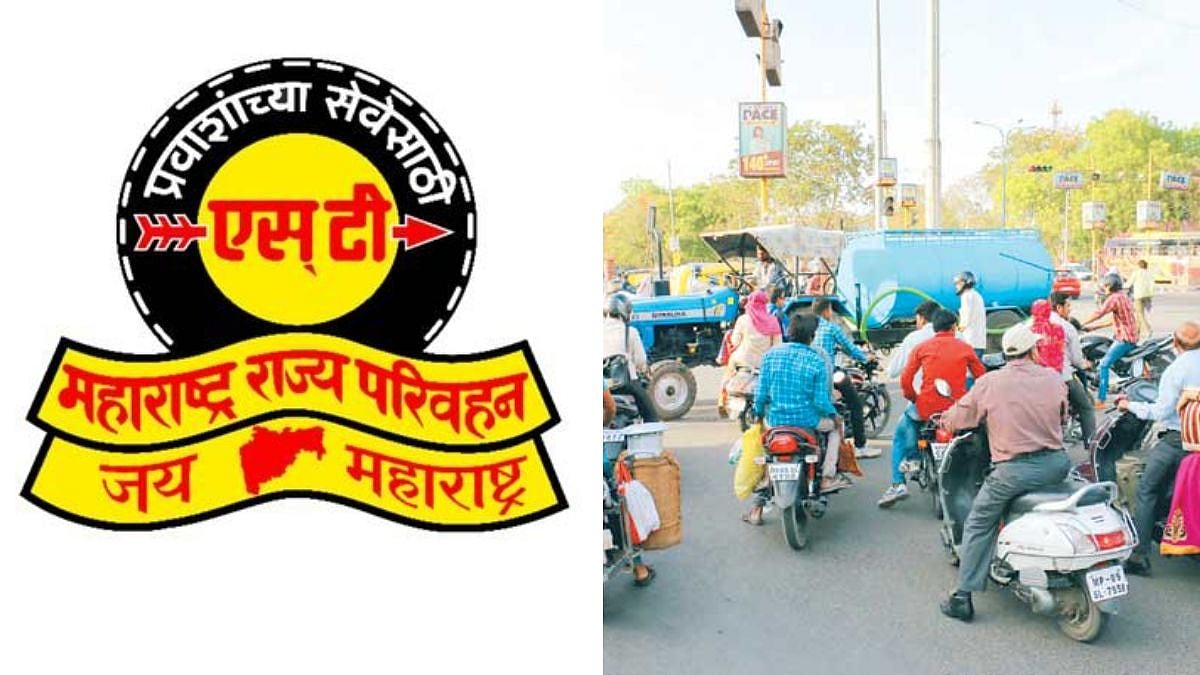
In a major road safety initiative, the Maharashtra state transport department has declared 2026 as the “Save Two-Wheeler Riders and Pedestrians Year,” launching a statewide campaign to curb rising road fatalities. | X & File Pic
In a major road safety initiative, the Maharashtra state transport department has declared 2026 as the “Save Two-Wheeler Riders and Pedestrians Year,” launching a statewide campaign to curb rising road fatalities.
36,450 accidents, 15,549 deaths
The decision was announced through an official circular issued by the Maharashtra Transport Commissioner on February 11, 2026, directing all Regional and Deputy Regional Transport Offices to implement urgent and coordinated safety measures.
The move comes in the wake of alarming accident figures recorded in 2025. According to official data, Maharashtra witnessed more than 36,450 road accidents last year, resulting in approximately 15,549 deaths and over 32,147 injuries. Two-wheeler riders accounted for 57 percent of the fatalities, while pedestrians made up 21 percent—underscoring the vulnerability of these groups on state roads.
Transport authorities said the campaign is aligned with the World Health Organization’s global goal of reducing road accident deaths by 50 percent by 2030. To achieve this, Maharashtra will adopt the internationally accepted “Safe System Approach,” which emphasizes improved road engineering, strict enforcement of traffic laws, and extensive public awareness programs.
Action plan finalized in January meet
The action plan was finalized during a state-level road safety review meeting held on January 28–29, 2026. Officials resolved to implement coordinated measures involving transport departments, municipal corporations, public works agencies, and the National Highways Authority of India (NHAI) to address accident-prone stretches and improve overall road safety infrastructure.
According yo the circular, strict enforcement of helmet rules will be a central component of the campaign. Authorities have been instructed to conduct rigorous helmet checks on the three most accident-prone highways in every district, with plans to gradually expand enforcement to other high-risk routes. These drives will be supported by awareness programs aimed at encouraging voluntary compliance among riders.
Pedestrian safety has also been identified as a top priority. Transport officials will conduct detailed surveys to identify infrastructure gaps such as damaged dividers, missing footpaths, unsafe junctions, and poorly designed crossings. Immediate corrective measures—including installation of zebra crossings, barricades, foot overbridges, underpasses, and upgraded traffic signals—will be undertaken in crowded urban areas.
Scientific analysis of FIRs from Jan 2025
Another key directive mandates a scientific analysis of road accidents. From January 1, 2025 onward, accident-related FIRs will be collected from police stations and examined by designated Motor Vehicle Inspectors to determine root causes and recommend preventive measures.
District authorities have been asked to map accident-prone locations using Google Maps and categorize them through a color-coded system—green for 2023, orange for 2024, and red for 2025. The data-driven strategy is expected to help officials identify high-risk zones and prioritize remedial action
To strengthen enforcement on highways, radar-equipped interceptor vehicles will be deployed to monitor speeding and other traffic violations. The Transport Commissioner has issued strict handling protocols to protect the sensitive radar equipment. In addition, enforcement vehicles will have their maximum speed limited to 60 km per hour through ECU calibration, and officers have been instructed not to exceed operational speeds of 50 km per hour.
Wheel jammers via DPDC funds
The circular also introduces administrative reforms to enhance traffic regulation. Wheel jammers will be procured using District Planning and Development Committee (DPDC) funds, while toll plazas across the state will be required to display prominent “No Helmet, No Entry” boards. Interceptor vehicles will be stationed at toll points to ensure compliance.
ALSO READ
Driving license testing procedures will also come under closer scrutiny. With current failure rates hovering around 30 percent at automated test centers, Transport Commissioner Vivek Bhimanwar has directed senior officials to review video recordings of driving tests to ensure transparency and adherence to prescribed standards.
“All concerned departments must implement these measures without delay and submit monthly progress reports to headquarters,” Bhimanwar stated in the circular.
Through this comprehensive, multi-agency approach, the Maharashtra government aims to significantly reduce road accident deaths and injuries, making the state’s roads safer for two-wheeler riders and pedestrians in the years ahead.
To get details on exclusive and budget-friendly property deals in Mumbai & surrounding regions, do visit: https://budgetproperties.in/
RECENT STORIES
-
-
-
-
-