Maharashtra Bets On AI To Tackle Rising Human-Wildlife Conflict; ₹260-Crore Plan Approved
The Maharashtra government has approved a Rs 260-crore action plan to tackle human-wildlife conflict through AI-based alert systems in nearly 1,000 villages near forests. The initiative includes control rooms, rescue centres, rapid response teams and community-led support groups aimed at reducing animal attacks, crop damage and improving wildlife management.

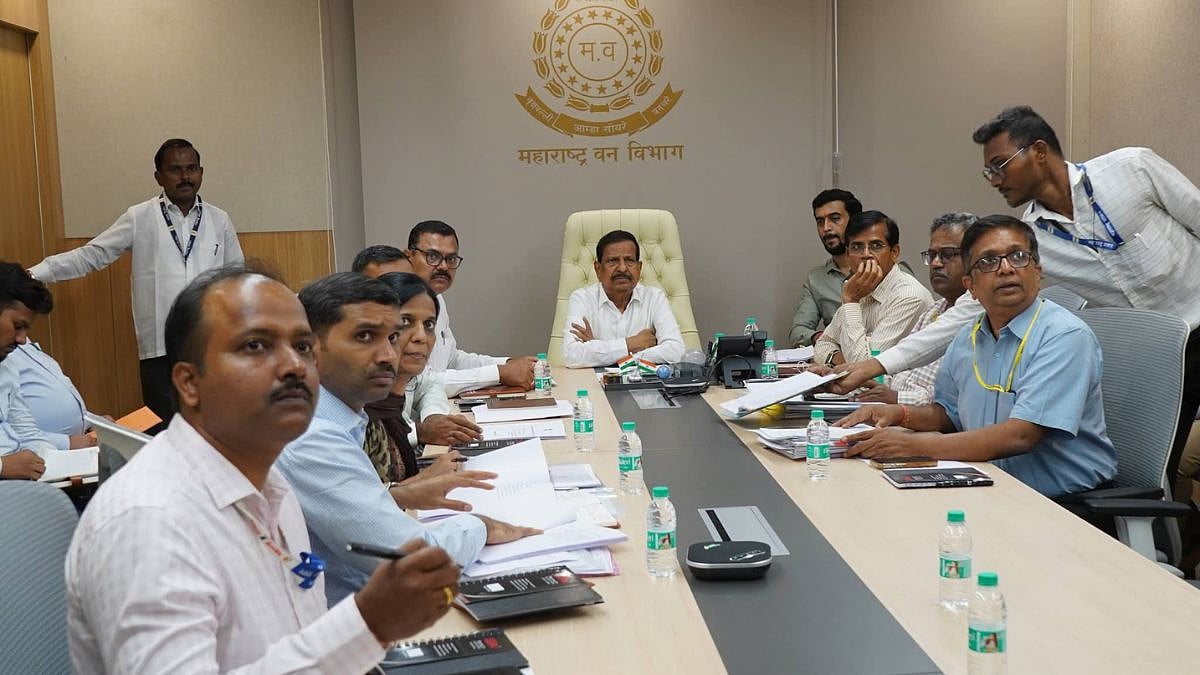
Forest Minister Ganesh Naik chairs a State Wildlife Board meeting that approved a ₹260-crore action plan to deploy AI-based systems for reducing human-wildlife conflict across Maharashtra | X - @NaikSpeaks
Mumbai, May 26: In a major push to reduce rising incidents of human-wildlife conflict, the Maharashtra government has approved an ambitious Rs 260-crore action plan that will deploy artificial intelligence-based alert systems in nearly 1,000 villages located near forest areas.
The decision was cleared at a meeting of the State Wildlife Board’s Standing Committee chaired by Forest Minister Ganesh Naik, who directed officials to immediately implement measures aimed at preventing attacks by wild animals and protecting human lives.
AI-based alerts and control rooms planned
Under the first phase of the project, 10 state-of-the-art control rooms modelled on police command centres will be established across Maharashtra.
Equipped with advanced digital systems, these centres will monitor Forest Department resources, patrol teams and vehicle movement, while enabling rapid coordination during wildlife emergencies.
The government will also expand its AI-based wildlife alert mechanism, currently being tested in select villages, to around 1,000 villages adjoining forest zones. The system will provide real-time alerts to residents about the movement of wild animals, helping villagers take precautionary measures in advance.
Rescue infrastructure and community participation
As part of the wider strategy, the Forest Department will set up two rescue centres and 10 transit treatment centres for injured or captured wild animals. Twenty Rapid Rescue Teams will also be formed for emergency wildlife operations.
In a community-driven approach, nearly 2,000 Primary Response Teams comprising local villagers will be created to assist the Forest Department during wildlife incidents in rural and forest-border areas.
The government is also planning special mobile squads to capture animals such as monkeys, deer and wild boars that damage crops. These animals will later be relocated back to forest areas. In addition, sterilisation centres for monkeys and wild boars have been proposed to control their population.
Also Watch:
ALSO READ
Reducing conflict between humans and wildlife
Officials said the measures are expected to significantly reduce attacks on humans, minimise crop damage and improve coexistence between people and wildlife in vulnerable regions of the state.
To get details on exclusive and budget-friendly property deals in Mumbai & surrounding regions, do visit: https://budgetproperties.in/
RECENT STORIES
-
-
-
-
-