When Was Bhaskara- 1 Launched? Everything To Know About India's First Low-Orbit Earth Observation Satellite
Bhaskara I was a 7th-century Indian mathematician and astronomer who was a leading scholar of Aryabhata's school, expanding upon his work. The satellite was launched by the Soviet Union's Intercosmos programme from the Kapustin Yar launch site in present-day Russia.

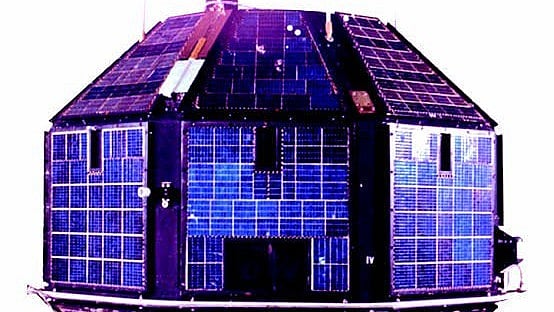
Bhaskara- 1 |
Bhaskara-I, India's first low-orbit Earth observation satellite, was launched on June 7, 1979, marking a major milestone in the country's space programme. Named after the renowned Indian mathematician and astronomer Bhaskara I, the satellite was developed by the Indian Space Research Organisation (ISRO) to gather valuable data about Earth's surface and atmosphere.
About Bhaskara-I
Bhaskara I was a 7th-century Indian mathematician and astronomer who was a leading scholar of Aryabhata's school, expanding upon his work. The satellite was launched by the Soviet Union's Intercosmos programme from the Kapustin Yar launch site in present-day Russia. Weighing around 444 kilograms, Bhaskara-I was designed primarily for remote sensing and scientific research. It orbited the Earth at a low altitude, enabling it to capture detailed information about land, water, and weather conditions.
Soviet Union's Intercosmos programme
The satellite was launched by the Soviet Union's Intercosmos programme from the Kapustin Yar launch site in present-day Russia. Weighing around 444 kilograms, Bhaskara-I was designed primarily for remote sensing and scientific research. It orbited the Earth at a low altitude, enabling it to capture detailed information about land, water, and weather conditions.
Bhaskara-I carried two television cameras operating in the visible and near -infrared spectrum.
These instruments helped monitor natural resources, agricultural land, forests, water bodies, and environmental changes. The satellite also featured a Satellite Microwave Radiometer (SAMIR), which collected data related to oceanic and atmospheric conditions, including water vapour and cloud cover.
ALSO READ
Interesting facts about Bhaskara-I
It was India's first satellite specifically designed for Earth observation and remote sensing applications.
Its Satellite Microwave Radiometer (SAMIR) helped study atmospheric and oceanic conditions.
Bhaskara-I helped establish the technological foundation for India's advanced Earth observation satellites.
Bhaskara I was best known for his commentaries on the work of Aryabhata. He was among the first to write numbers in the Hindu-Arabic decimal system using a circle for zero.
RECENT STORIES
-
-
-
-
-