What Is Haka? New Zealand Protesters Disrupt Sikh Community Procession With This War Cry
A Sikh community parade in South Auckland was briefly disrupted after protesters linked to Destiny Church performed haka along the route, prompting police to intervene to maintain order. The incident renewed attention on haka, a traditional Maori ceremonial expression involving chanting and movement, used to convey identity, unity, and purpose in cultural, sporting, and ceremonial settings

A Sikh community parade in South Auckland, New Zealand, was briefly disrupted on Saturday after a small group of protesters performed a haka along the procession route. The incident occurred on Great South Road, where police intervened to keep the two groups apart and prevent the situation from escalating.
According to local reports, the protesters were associated with the group “True Patriots of NZ,” which has links to Destiny Church, led by political and religious figure Brian Tamaki. Videos shared on social media showed members of the group standing in the path of the parade while chanting and performing haka as the Sikh procession passed by. Authorities confirmed that no injuries were reported, and the parade continued under police supervision.
The protest group describes itself as opposing globalism, mass immigration, and what it calls “woke ideology.” While the haka performance drew public attention, officials focused on maintaining public safety and ensuring the Sikh community event could proceed peacefully.
What is Haka?
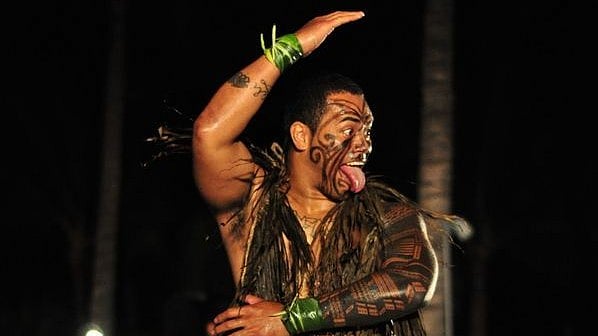
Haka is a traditional Maori form of ceremonial expression that combines chanting, body movements, stamping of feet, and controlled facial expressions. The Maori word “haka” broadly means a performance or posture dance, though it is not a dance in the recreational sense. Instead, haka is a structured and meaningful expression used to convey messages, emotions, and intent.
Cultural origins of Haka
Historically, haka was performed for many reasons, including welcoming visitors, celebrating achievements, marking funerals, and preparing warriors for battle. Some haka were assertive and forceful, while others were respectful or reflective. Each haka carries its own words, actions, and purpose, often linked to genealogy, land, and ancestral history.
Today, haka is widely recognised as part of New Zealand’s national identity. It is famously performed by the All Blacks before rugby matches and is also used by the New Zealand Defence Force during ceremonial occasions. Beyond sport and state events, haka is commonly seen at schools, graduations, weddings, and memorial services.
RECENT STORIES
-
-
-
-
-