Mumbai Walkways To Nowhere? ₹900 Crore Projects Face Questions Over Use And Safety
Mumbai’s ₹900 crore pedestrian walkways are under scrutiny for poor usage, safety concerns, and lack of accessibility. Experts and commuters stress better planning and connectivity before new projects like BKC and Worli tunnels proceed.

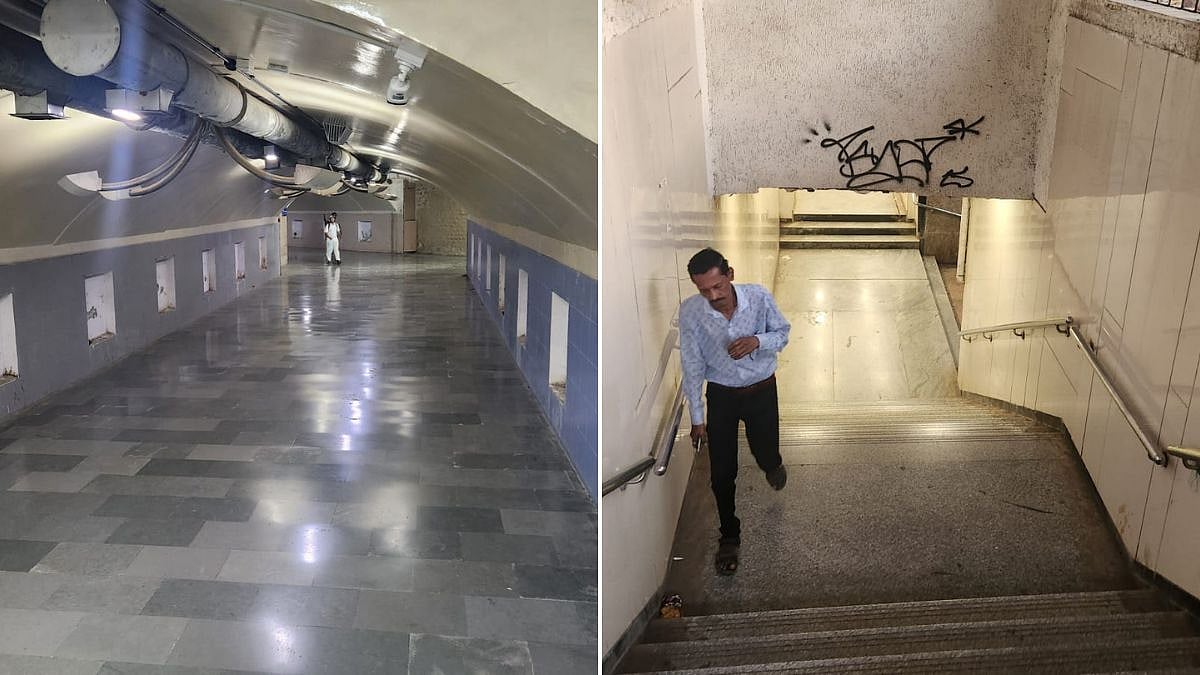
Underused skywalks and subways in Mumbai raise concerns over planning and commuter safety | File Photo
Recently, the MMRCL announced that it will construct underground walkways at BKC and Worli to make travel to Aqua Line Metro stations easier for commuters. The government has already spent around Rs 900 crore on walkways in Mumbai in the last few years.
However, some of these walkways are rarely used, making them isolated places where, quite often, antisocial activities thrive. This kind of confirms that the entire purpose of these underground tunnels and/or skywalks has failed. There have been instances where the walks have been demolished after a few years of building because they were not being used.
On this backdrop, how much sense does spending money on new underground walks make? Urban planner at Urban Centre Mumbai, Urban Centre Trust, Urmi Kenia says, “Underground tunnels/subways and skywalks for pedestrians have not always been successful in Mumbai. Take the examples of Bandra West, Nana Chowk and Andheri East skywalks, and Mahim and Bandra East subways, which just became superfluous infrastructure, barely used.”
When it comes to connecting public transport hubs, these tunnels could work well if they are planned seamlessly, easily accessible, and connect important entry/exit points. “Escalators and elevators conveniently located at every entry/exit point are non-negotiable to ensure universal accessibility. They must ensure that there will be heavy footfall for it to feel and be safe, such as the CSMT station subway,” she adds.
Use, non-use and misuse
The residents of Mumbai who travel regularly and use these subways and skywalks lament their issues with the connectivity of these walkways. Simona Terron, a resident of Mumbai and a regular commuter in the city, says, “In the case of walkways, there is no planning. In the metro, there is a lot of improvement in terms of quality, and construction is amazing, but when you step outside, there is a stark contrast. I am worried when they say they are going to make one more tunnel because first, take care of the infrastructure you have already made. Before making anything, I wish they plan properly. Speak to residents, to actual commuters, and get feedback.”
Another resident of Mumbai, Feroza Syed, who works for a private bank at BKC, is hopeful and says, “Today, we have metros, but they are not well-connected. For example, if I get off at the metro, the entrance itself is BKC. From there, BKC to the MTNL is a straight road, but it is very difficult to travel. You don’t get rickshaws. The underground tunnel should give us better connectivity.” But she is concerned about safety. “If you see Bandra station, it is scary at night. So the tunnel should also have safety. They should ensure it is maintained in terms of hygiene because people will be littering out there. There should be surveillance.”
Rati Mahatme, a homemaker, often needs to commute from the west to the east of Bandra to go to her parents' house. “I tried using the skywalk initially via the station. It was a scary experience with gamblers, charsis, and other elements of society. Once I even witnessed a fight between a pimp and a pro.”
Disability-friendly concerns
Mumbai’s walkways are not disability-friendly because access to that level has no escalators, and lifts are not provided everywhere. Sudhir Badami, transportation expert and author of Making Commuting in Mumbai Enviable, says, “At Jogeshwari, I didn’t realise they had provided a lift there. There is an escalator at the side, but it is not guaranteed to be working all the time.” While the metro stations have disability access, the footpaths are not so friendly. “These underground pathways will probably be helpful only if they have wheelchair access,” says Deepak Malhotra, 72. “Otherwise, for senior citizens like me, or wheelchair-bound people, this investment will prove to be redundant.”
What’s the future?
Vedant Mhatre, programme manager at Walking Project, says, “I think subways can be very effective for certain journeys, but only if they’re planned and designed well. Since they are expensive to build, they really need to be backed by proper demand studies so that they’re placed in locations where people will actually use them. Some alignments make much more sense than others—for example, connecting Dadar Metro station to the railway station is almost a no-brainer, because it links two major transit points and creates a strong interchange.”
Safety and proper maintenance are crucial. He further says, “Beyond just location, the design of the subway is critical. They need to be safe, well-ventilated, and well-maintained, with attention to things like lighting, temperature control, and overall aesthetics. If these basics are done right, subways can actually feel comfortable and inviting rather than something people try to avoid.”
ALSO READ
Government plans
The new tunnel under planning will increase the convenience of commuters. The MMRC spokesperson concludes, saying, “The project aims to provide safe, seamless, and weather-protected access to underground metro stations, improve first- and last-mile connectivity, reduce congestion, and promote walkability and non-motorised transport. Designed with a focus on safety, accessibility for all, including the elderly and children, and commuter comfort.”
RECENT STORIES
-
-
-
-
-