Last Supermoon Of 2025: When & Where To Watch December 'Cold Moon' In India?
December is set to showcase the final supermoon of the year, and it happens to be the Cold Moon—a full moon that will rise closer, brighter, and more striking than usual. As reported by Almanac, the last supermoon will reach its brightest point on Thursday, December 4, at 6:14 pm ET, which means in India, it'll be visible at 4:44 am on Friday, December 5.

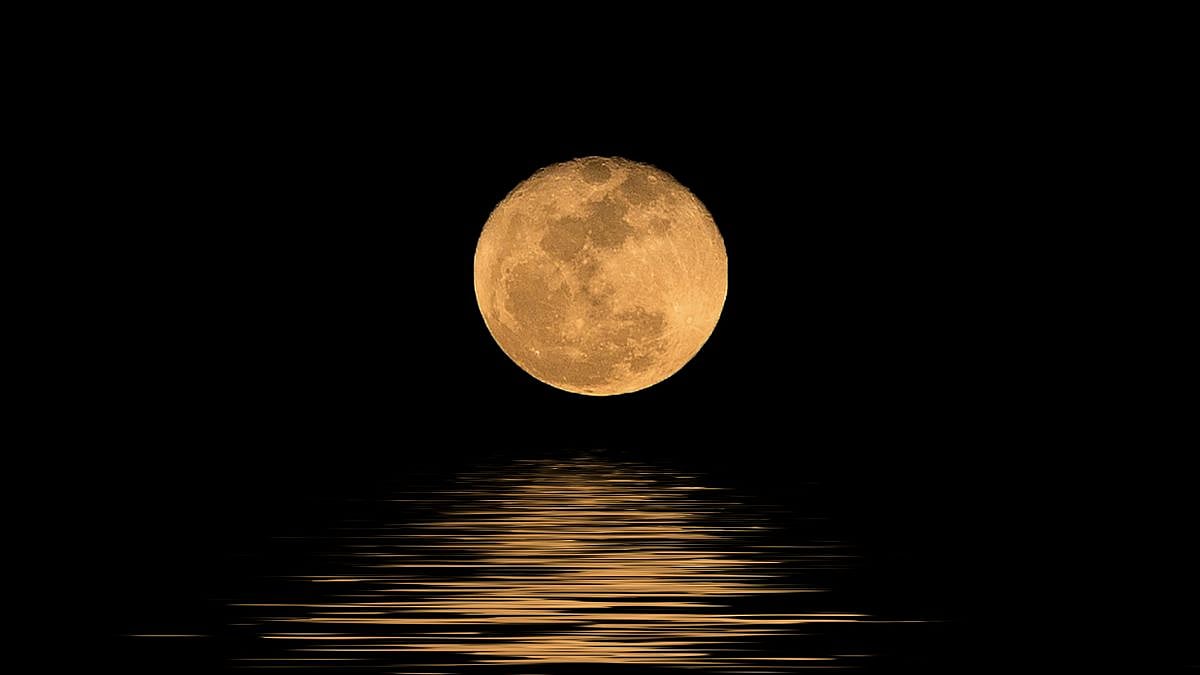
Canva
If you’re hoping for one last celestial highlight before 2025 comes to an end, the night sky is offering a perfect finale. December is set to showcase the final supermoon of the year, and it happens to be the Cold Moon—a full moon that will rise closer, brighter, and more striking than usual. For sky-watchers, this is the final chance in 2025 to witness the Moon at its most impressive. Before we get into when and where to watch it in India, let's understand what "Cold Moon" actually means.
What exactly is the Cold Moon?
The December full moon has long been called the Cold Moon, a name rooted in seasonal tradition. Referenced by the Old Farmer’s Almanac and drawn from Native American cultural understanding of winter cycles, the term reflects the arrival of colder, darker nights near the winter solstice.
Then, why is it a Supermoon?
NASA explains that a supermoon occurs when the Moon reaches perigee, the point where its orbit brings it closest to Earth, at the same time as a full moon. During this alignment, the lunar disc appears noticeably enhanced.
According to NASA, a supermoon can look up to 14 percent larger and about 30 percent brighter compared to the faintest full moon of the year. So, this Cold Moon marks the third consecutive supermoon after those seen in October and November.
When India can see the Supermoon
As reported by Almanac, the last supermoon will reach its brightest point on Thursday, December 4, at 6:14 pm ET, which means in India, it'll be visible at 4:44 am on Friday, December 5.
Where to watch the Supermoon in India
The December supermoon will light up skies across the globe, including every corner of India. Whether you’re in Mumbai, Delhi, Bengaluru, Kolkata, or Chennai, you’ll be able to catch this celestial event, though air pollution in major cities may slightly dim the view.
For the best experience, head to rooftops, open terraces, beaches, lakesides, hilltops, or city outskirts where light pollution is minimal. While no special equipment is necessary, using binoculars or a telescope can make the experience even more immersive.
RECENT STORIES
-
-
-
-
-