India’s New Status Symbol Is A Luxury MPV, Not A Sedan
Luxury MPVs are gaining traction among buyers seeking comfort, space, and premium in-cabin experiences

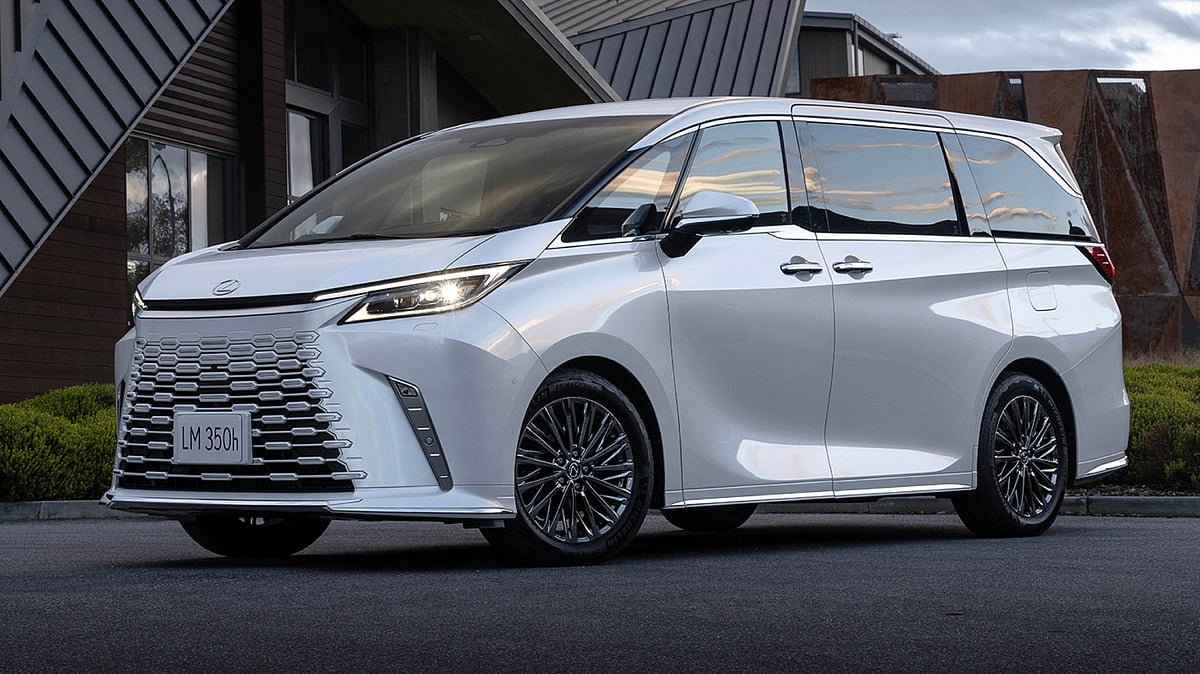
Lexus LM 350h | Pic: Lexus India
In India’s luxury car market, dominated by SUVs across all price levels, Multi-Purpose Vehicles (MPVs) are a natural progression. What comes as a surprise is that luxury MPVs have already left their mark on the luxury sedan segment. According to Mordor Intelligence, the Indian luxury car market size is expected to grow from $1.44 billion in 2025 to $1.96 billion by 2031 at 5.16% CAGR. In this lucrative market, luxury vans are becoming the fastest-growing segment.
Lounge on wheels
It was the Japanese automaker, Toyota, that opened up the luxury tier for MPVs in 2019 with the Toyota Vellfire. Three years later, in 2023, the strong hybrid electric vehicle received an upgrade, and it continues to retail at ₹1.2-1.3 crore, ex-showroom price, based on the model. Mercedes-Benz V-Class was also first introduced in India around the same time but was withdrawn in 2022, only to be brought back amidst great fanfare in 2026. The MPV will be built locally and will be priced at ₹1.4 crore ex-showroom, all India. Also in the fray is Toyota’s luxury vehicle division, Lexus, with the Lexus LMh 350. Introduced in India in 2024, with an ex-showroom price of ₹2.2 crore, the Lexus LMh 350 is available in seven-seater and four-seater variants and is the most expensive in the market.
Together, these MPVs dominate the luxury market. According to reports, Toyota clocked 5000 units sold for Vellfire, LM 350h recorded 40% growth in November 2025 and a cumulative 15% growth from January to November 2025, compared to the same period last year. “This sustained pan-India demand, from cities such as Delhi and Mumbai as well as Hyderabad and Chennai, reflects a growing preference for thoughtfully designed private luxury lounges on wheels,” shared Lexus India president Hikaru Ikeuchi in the announcement.
The V-Class boosted the sales performance for Mercedes-Benz India with the highest-ever first-half sales, retailing 9,768 vehicles in H1 2026, up 9% year-on-year, while second-quarter sales rose 10% to 4,637 units. “The V-Class addresses a growing trend amongst India’s opulent customers and trend setters, who seek an oasis of personal space, tranquillity, and privacy, while travelling in the lap of luxury,” Santosh Iyer, Managing Director & CEO, Mercedes-Benz India had shared during the launch of the car. JATO Dynamics, an automotive market intelligence provider, tracked a unit sales increase from 493 in 2020 to about 2,485 units in 2025. These are not high-volume products. But volume was never really the point.
The new power play
Ashish Merchant, Founder of BrokerDalal Premium, a Mumbai-based auto consultancy that caters to HNIs for their automotive needs, shares that the consumer profile for these luxury vans includes actors, singers, and industrialists. “A luxury MPV is typically purchased by families who already have a fleet of four to six luxury vehicles and are looking to replace one or two of them with a comfortable ride that does not compromise on space and luxury,” he adds.
More than the horsepower and torque, these chauffeur-first vehicles currently epitomise practical luxury. The second-seat in-cabin comfort is the priority for this category; large touchscreens with connected features, reclining captain seats with massage and ventilation, high-end audio systems, plush interiors and upholstery and panoramic sunroofs are common. It is the seat configuration that provides the added luxury. Traditional MPVs have a seven-seater cabin layout, but luxury variants offer four seats that offer more space.
“The luxury MPV segment is only going to get more exciting in the future,” says auto journalist Kartikeya Singhee. He points just one step down the price ladder is the MG M9, priced at ₹80 Lakh ex-showroom, which offers many of the features of the top-tier creature comforts. This price belt is expected to see more MPVs launching in India, including the Hyundai Staria showcased at Bharat Mobility Global Expo 2025. The stronger upward trajectory of the mainstream MPV segment reflects a modest but tangible shift in consumer preferences, challenging a post-liberalisation market hierarchy long dominated by sedans and SUVs.
RECENT STORIES
-
-
-
-
-