Festive Fatigue Is Real: Simple Ways To Stay Energised Through Celebrations
With Ganpati celebrations kicking off a packed festive calendar, experts decode why fatigue sets in and how to keep energy levels steady

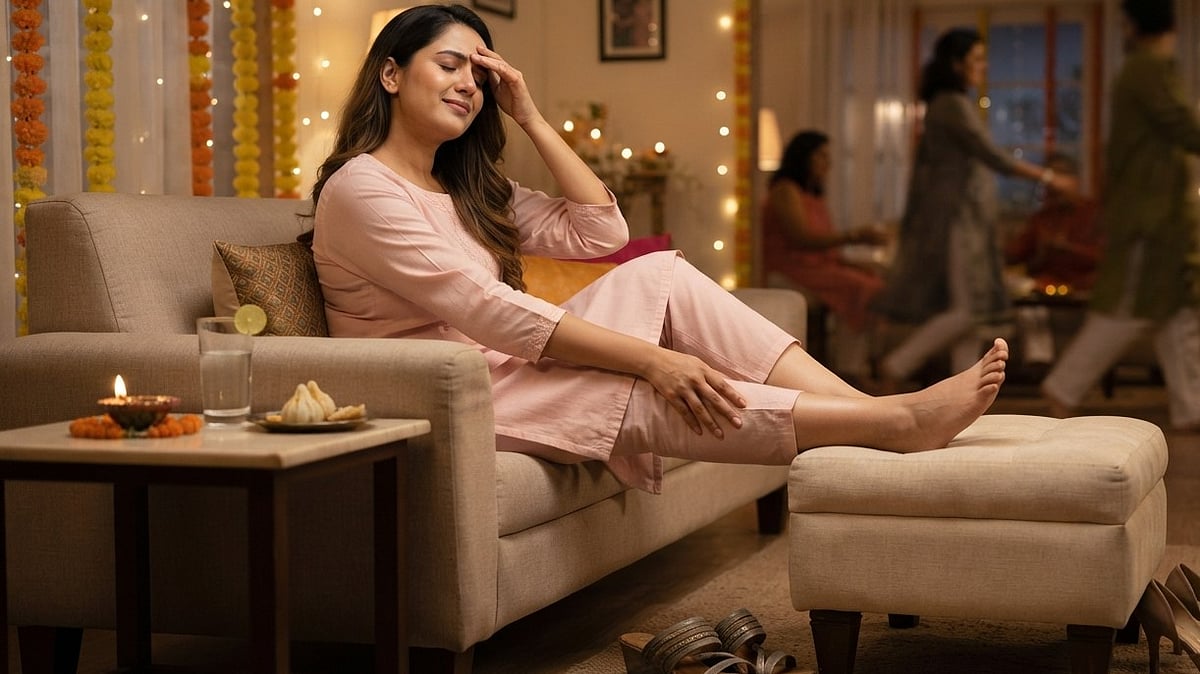
The festive season in India is rarely about just one celebration. It is a marathon of late nights, elaborate meals, social commitments, travel, shopping, dancing, hosting and, increasingly, the pressure to be everywhere and enjoy everything. As Ganpati celebrations get underway, followed by a packed calendar of Navratri, Dussehra, Diwali and other regional festivities, the excitement can often come with an unwelcome side effect: festive fatigue.
For many, the symptoms are familiar — swollen and aching feet after hours of standing at pandals, back and neck stiffness from cooking and hosting, bloating after repeated indulgent meals, acidity, disturbed sleep, brain fog and the dreaded afternoon energy crash. Experts say the problem is rarely caused by one extravagant meal or one late night. It is usually the cumulative effect of disrupted routines.
“A late night + alcohol + dehydration + a high-sugar/high-fat meal + poor sleep is a much more convincing recipe for next-day fatigue than any single dessert,” says clinical nutritionist Dr Nupur Krishnan.
When celebration starts taking a physical toll
Festivals often mean spending long hours on one’s feet — visiting pandals, attending pujas, helping with preparations or simply moving from one gathering to another. Add dancing, uncomfortable footwear and hours in the kitchen, and the musculoskeletal system can take a considerable hit.
Prof Ali Irani, Head of the Physiotherapy & Sports Medicine Department at Nanavati Max Hospital, says prolonged standing and repetitive festive activities can put sustained stress on the lumbar spine, calf muscles and feet. Dancing in unsupportive or high-heeled footwear can further increase the load on the ankles, knees and lower back, contributing to muscle fatigue, foot pain and postural strain.
“Fatigue reduces muscle endurance, coordination and reaction time,” Dr Irani explains, adding that this can compromise movement control and increase the likelihood of strains, sprains and minor injuries. The risk is particularly relevant when people suddenly engage in dancing or other strenuous activities after long periods of inactivity.
His advice is simple: get adequate sleep, stay hydrated, take short movement breaks, wear comfortable footwear and warm up before vigorous activity.
And when the feet finally protest after hours of standing, there is no need for an elaborate recovery ritual. Dr Irani recommends elevating the legs for 10–15 minutes, doing gentle ankle pumps, walking for a few minutes and lightly stretching the calves. A cool shower can also be soothing. However, persistent, significant, one-sided or painful swelling should not simply be dismissed as festive fatigue and warrants medical evaluation.
Festive feast — and the brain fog that follows
Food is inseparable from Indian celebrations, but the combination of refined sugar, fried foods, large portions and irregular meal timings can leave people feeling sluggish rather than energised.
Dr Krishnan explains that meals high in refined carbohydrates and sugar can cause a rapid rise in blood glucose followed by a fall, contributing to tiredness, hunger and difficulty concentrating. Large, high-fat meals can also slow gastric emptying, producing the familiar heaviness and lethargy after a festive feast.
The gut-brain axis adds another layer. The gut’s trillions of bacteria communicate with the brain through chemical signals, the nervous system and the immune system. Regularly eating too much refined sugar and unhealthy fat can disrupt this balance and increase inflammation, potentially affecting mood, focus and energy.
But the answer, experts stress, is not to give up festive food altogether.
Clinical nutritionist Prachi Mandholia says, “Partygoers don’t need to skip their favourite festive foods.” Instead, she recommends a few simple changes that allow people to participate without turning every celebration into a dietary free-for-all.
One of the first is to avoid arriving at an event extremely hungry. “Have a light meal or snack before heading to a party,” Mandholia advises, because this makes it easier to avoid overeating once the food arrives.
Her next recommendation is to think about the composition and sequence of a meal. “Start with some veggies in the form of salad or stir fry veggies followed by protein and carbs in the end,” she says, explaining that this can help prevent the glucose spike and slow the rise in blood glucose.
And rather than eliminating festive foods altogether, Dr Krishnan advocates choosing selectively. “Choose, don’t eliminate,” she says. Instead of sampling everything on the buffet, pick the foods you genuinely enjoy and have smaller portions.
Eating slowly matters too. “Take your time, chew well and avoid continuously grazing at the buffet,” she says, pointing out that this can reduce the chances of overeating and bloating.
Don't arrive at the party hungry — and don't fear the modak
The idea of “saving calories” all day before a festive dinner can easily backfire. Someone who has skipped lunch or eaten very little in anticipation of an indulgent evening may arrive ravenous and consume food much faster and in much larger quantities.
Mandholia’s approach is therefore one of balance rather than restriction — particularly relevant during a season when modaks, mithais, fried snacks and elaborate meals are part of the cultural experience.
“Instead of sampling everything, pick the foods you genuinely enjoy,” she says. Smaller portions, she adds, allow people to have festive treats “without feeling deprived.”
Acidity is another common festive complaint. Dr Krishnan advises people to watch out for very large meals, excessive fried or spicy food, alcohol and lying down soon after eating, all of which can worsen acidity in susceptible people.
Don't try to “detox” your way out
After several days or weeks of festive indulgence, many people respond by swinging to the opposite extreme — juice cleanses, prolonged fasting, severely restricted diets or so-called detox products.
Mandholia argues for something much less dramatic. “The body already has its own systems for processing and eliminating waste,” she says. Instead of a harsh detox, she recommends returning to simple, home-cooked meals, drinking enough water, eating vegetables, fruit, whole grains and pulses, including adequate protein, and cutting back on alcohol, sugary drinks and deep-fried foods for a few days.
“Regular movement and adequate sleep are equally important,” she adds. “In short, the best reset is not restriction, it is simply getting back to a balanced routine and allowing the body to settle.”
That return to routine can be particularly important when the festive calendar stretches across several weeks. Instead of alternating between indulgence and punishment, the body benefits from consistency.
Food combinations that can keep energy steady
For those navigating a weekend packed with pujas, family lunches, pandal visits and evening celebrations, the challenge is not simply avoiding fatigue — it is maintaining enough energy to get through the day.
Dr Krishnan recommends “timely meals packed with fibre and protein” and consistent hydration rather than eating irregularly and then relying on sugary snacks for a quick boost.
Her combinations are practical and familiar: “Salad + chole + rice or salad + vegetable + roti or stir fry veggies + grilled paneer + rice, in this order.”
The underlying principle is to combine protein and complex carbohydrates with fibre, rather than consuming refined carbohydrates or sugar on their own.
Hydration is equally important. Mandholia recommends sipping water regularly throughout the day and avoiding dependence on sugary soft drinks or energy drinks for a quick lift. “They can provide a short-lived lift rather than sustained energy,” she says.
Hydration is the forgotten festive essential
With people spending hours outdoors, walking between venues, dancing or simply staying up later than usual, hydration can easily fall by the wayside.
Dr Krishnan points out that dehydration can mimic extreme fatigue and brain fog. She recommends starting hydration early in the day and, during prolonged activity or warm conditions, considering coconut water or an unsweetened electrolyte drink.
Mandholia too stresses the importance of keeping water flowing through an event, particularly when alcohol is being consumed. Staying hydrated can also help prevent thirst from being mistaken for hunger.
For those relying on caffeine or energy drinks to power through packed festive days, moderation is key. A quick stimulant-driven lift may not translate into sustained energy and can interfere with sleep — creating another cycle of fatigue.
Five minutes can make a difference
For those who return home after a long night of celebrations with a stiff back, tight shoulders and tired legs, Dr Irani suggests a simple five-minute mobility reset: gentle neck rotations and chin tucks, shoulder rolls, cat-cow movements, pelvic tilts or gentle knee-to-chest movements, followed by calf and hamstring stretches.
Even 30–45 seconds of each movement can help reduce stiffness, he says, provided the exercises remain gentle and pain-free rather than aggressive.
There is also a surprisingly simple post-meal intervention: move. A gentle 10–15-minute walk rather than immediately lying down can support digestion and help avoid the sluggishness associated with a heavy meal.
Celebrate — but don't make exhaustion the price
India's festivals are designed around community, food, music, movement and togetherness. The answer to festive fatigue, therefore, is not to opt out of the festivities or turn celebration into a regime of restriction.
It is about recognising that the body has limits even when the calendar does not.
A comfortable pair of shoes instead of a fashionable but unsupportive one, a glass of water between drinks, a balanced plate instead of an overloaded one, a few minutes of movement after dinner, adequate sleep between late nights and a return to normal eating rather than an extreme “detox” can all help make the festive marathon more sustainable.
As Ganpati brings communities together, the message from the experts is not to celebrate less, but to celebrate more mindfully.
Enjoy the modak. Dance at the garba. Stay for the aarti. Visit the pandal. Say yes to the family feast. But also drink the water, wear comfortable shoes, eat something sensible before arriving ravenous, get some sleep and give your body a chance to recover. Because perhaps the healthiest way to navigate India’s festive marathon is not to choose between celebration and wellness — but to make sure there is room for both.
RECENT STORIES
-
-
-
-
-