Dr Kurush F Dalal Reveals The Mythological Roots Of Indian Cuisine
From the Ramayana and Mahabharata to modern-day biryanis and shraadh meals, the archaeologist and culinary anthropologist unravels how myths, reality, and history shape the foods we eat today

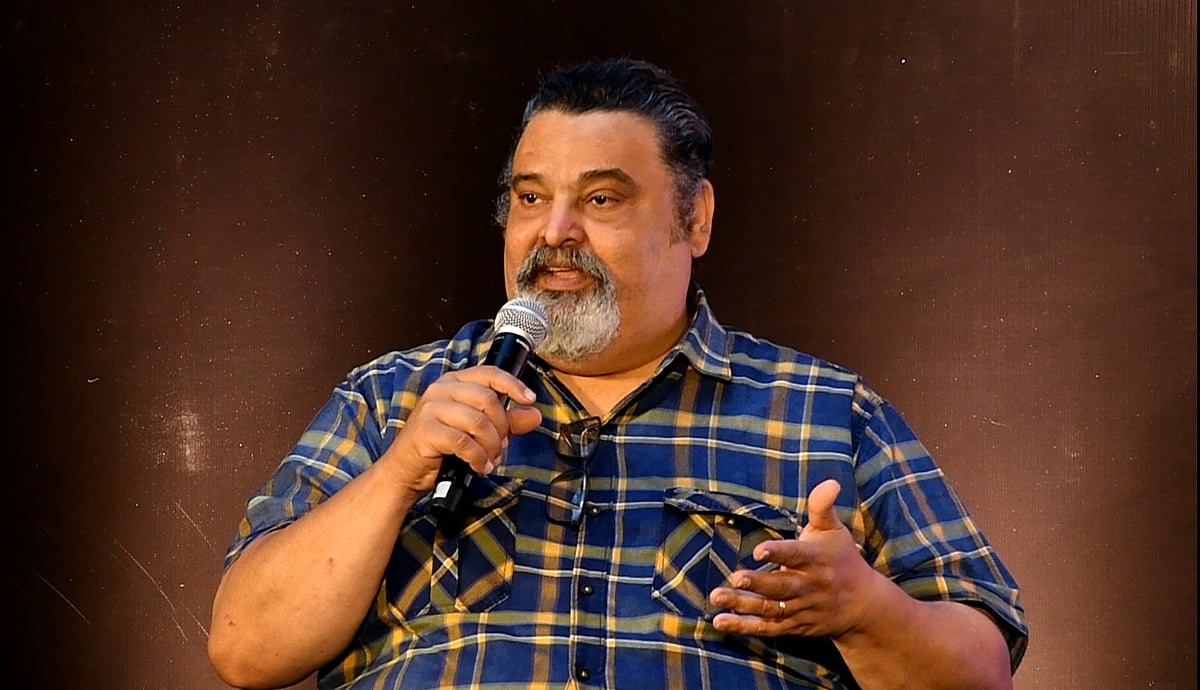
Be it the humble Pani Puri or the festive Fruit Salad, or the aromatic Biryani, the roots to quite a few dishes can be traced back to Ramayana and Mahabharata. Whether mythology influenced reality or reality influenced mythology, is a question that many have pondered on. Some comprehended the crux, some didn’t.
This was the base of the session – Myths & Mythologies Of Food at the Kalaghoda Festival 2026. Dr Kurush F Dalal, Archaeologist and Culinary Anthropologist, who was one of the speakers at the session, explains, “There’s a common notion that mythology inspires reality, but it's the other way around. The dishes and mythology are inspired by reality. For example, when you talk about the Apples of the Hesperides that were guarded by Hera, Atlas had to go and steal them for Hercules. The golden apples were a common fruit, and that is why they were written about.”
Mythology plays an important role in a society, especially in India. The influence of these stories is deeply rooted in our culture, religion and politics. Dr. Dalal adds, “The Greeks ate apples; they prized apples. The apple was a well-known commodity that was introduced to Greece from West Asia and Central Asia. So, a lot of food that comes to us through myths is food that we already know and use.”
He believes that the food discussed in the Mahabharata or Ramayana belongs to a certain period, and the ingredients we use today are not the same. “Also, there are some dishes that are attributed to Ramayana, like the biryani, which might not be accepted as Sita’s contribution today by some sects,” points out Dr. Dalal, reiterating that it’s a wrong perception that non-veg was not eaten by protagonists of mythological scriptures. “On the contrary, Ravana had forbidden his soldiers from eating non-veg if they were not on the battlefield!”
Dr Dalal busts the myth around vegetarian food. “We have been ‘cleaning up' mythology to remove references to non-vegetarian food. There is no compulsion that we should eat it, but to deny the fact that at one point our diet included all this is a lie. We don’t mind living with that lie in India.” He reminds that many historians have mentioned that Sage Yajnavalkya once had said: ‘I, for one, eat beef — provided it is tender.’
Another example cited by Dr. Dalal is of Samudra Manthan giving birth to Kamadhenu. “Do we seriously think that there were no cows before their birth during Samudra Manthan?” Dalal questions. “Cows are a very important part of our food chain and part of our existence. Therefore, we prize the cows so much that we place them in our mythology.”
It’s not just the cows, many things that we eat, drink have been part of our eco system for long and therefore perceived, at times, to be a part of our mythology.
However, food patterns, food culture, and ingredients have changed. Most obvious reason that can be seen is the trade transactions of the then Indian civilisation. Dr. Dalal says, “Today, we use foods from the Columbian exchange — potatoes, tomatoes, chillies, and so on. Many foods that we love, and call Indian are not of Indian origin. For example, Punjabi samosa and batata vada are not Indian. The samosa came from Central Asia as did the besan (chick pea flour).”
Then which food that’s eaten today comes closest to the food eaten in pre-historic era or ‘mythological’ era? “Shraadh food,” replies Dr. Dalal. “That is usually cooked in a very traditional way. Especially in South India, the food served to Brahmins during ritual meals — such as in Iyer community death rituals where many Brahmins sit together — does not use chillies, tomatoes, potatoes, and other ingredients that are part of Columbian or Central Asian culture and brought to India via trade.”
Dr. Dalal goes on to discuss dishes that can be traced back to scriptures. “Nala Pakdarpana – book of recipes by Raja Nal from Nala-Damyanti – is quite famous. It is believed that Nala took training from Bheem, the second Pandava. Bheem is supposed to have taken shelter in Virat’s kingdom when the Pandavas were supposed to be undercover. He was the head cook there that time. However, please remember that these are myths!”
Mythology and food are an integral part of Indian culture. They form a beautiful relationship, and people enjoy and savour them. Some think it’s a myth, some believe it as history… topic open for discussion!
Foods from Scriptures
Pani Puri supposed to be invented by Draupadi during vanvaas. Idea was to satiate all in the family in the meagre resources available
Fruit Salad is credited to Bheem when he was a cook at the courts of Virat when the Pandavas were under cover for one year
Biryani is credited to Sita. She was supposed to be an excellent cook. She created Biryani from the herbs, rice, vegetables, and meat that Rama got for her at the end of the day.
RECENT STORIES
-
-
-
-
-