From Mill Lands To Luxury Towers: Parel–Sewri Emerges As Mumbai’s Next Premium Redevelopment Hub
Once dominated by mills, the Parel–Sewri belt in Mumbai is being reshaped into a luxury residential corridor driven by redevelopment and infrastructure. Projects by L&T Realty and others mark this shift. A new Sattva Group and ORA Group venture with ₹5,500 crore revenue potential highlights strong demand, supported by Mumbai Trans Harbour Link connectivity and rising investor interest.

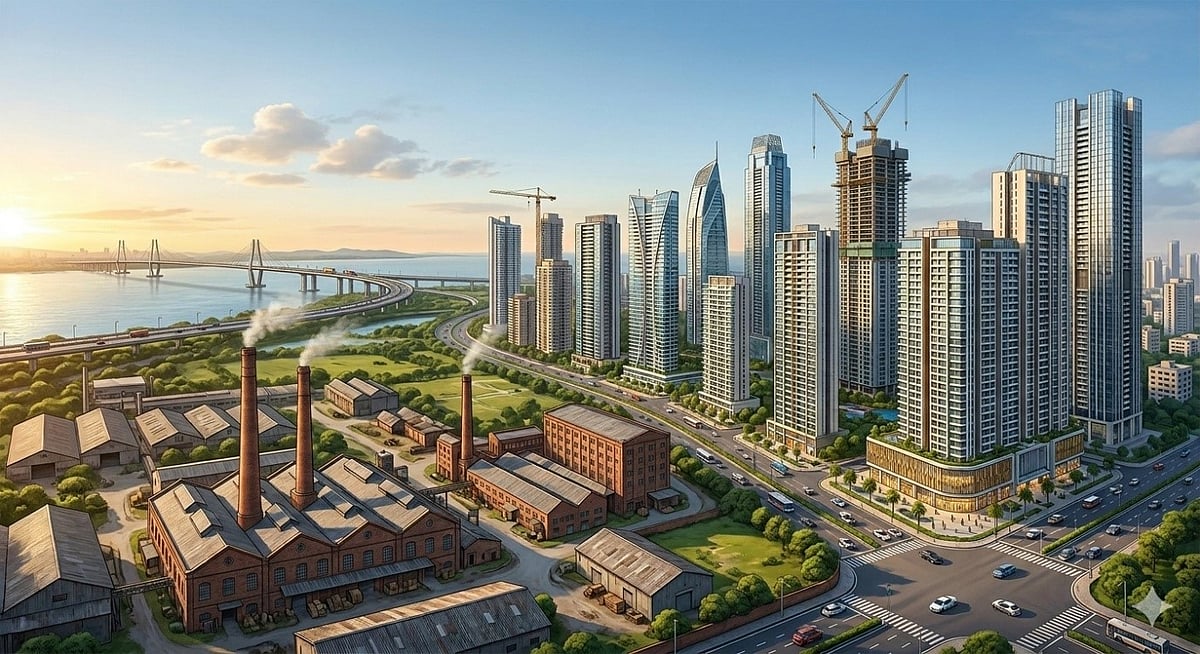
Parel–Sewri Reinvents Mumbai’s Skyline as Mill District Transforms into Luxury High-Rise Corridor |
Once dominated by textile mills and industrial warehouses, the Parel–Sewri belt is today undergoing one of Mumbai’s most dramatic urban transformations driven by large-scale redevelopment, infrastructure expansion, and the entry of marquee real estate developers. The redevelopment-led evolution of Parel and Sewri is perhaps best reflected through the scale and ambition of projects that have emerged across the micro-market over the last decade. What were once large industrial plots and mill compounds have steadily given way to premium residential enclaves, creating a new luxury residential belt in South-Central Mumbai.
Among the most prominent developments is L&T Realty's The Gateway, Parel, a premium residential development positioned within one of the city's most established urban precincts. The project reflects the growing preference among affluent homebuyers for centrally located residences that combine connectivity with modern lifestyle amenities. Another landmark development that significantly altered Sewri's skyline is L&T Realty's Crescent Bay, a large-scale luxury residential project spread across multiple high-rise towers. The project was among the earliest developments to demonstrate the potential of Sewri as a premium residential destination, long before infrastructure projects such as the Mumbai Trans Harbour Link transformed the area's connectivity profile. Similarly, Lodha Aureus, Sewri, developed on erstwhile industrial land parcels, showcased how large redevelopment sites could be transformed into luxury gated communities. The project attracted significant buyer interest due to its strategic location, premium offerings, and proximity to key commercial districts. Adding to the area's premiumization is The Canvas Residences, Sewri West, developed by Shapoorji Pallonji Real Estate. The project reflects the increasing focus on design-led luxury housing and highlights the growing confidence of institutional developers in the long-term potential of the Parel-Sewri corridor.
The broader region has also witnessed substantial investments from leading developers including Piramal Realty, Godrej Properties, Prestige Group, Dosti Realty, Ruparel Realty, Peninsula Land, Rustomjee, and others, many of whom have either completed or are pursuing redevelopment-led projects across South-Central Mumbai.
The latest addition to this redevelopment story is the partnership between Sattva Group and ORA Group, which are jointly developing a large-format redevelopment project in Parel with an estimated development potential of approximately 1.3 million sq. ft. and a projected revenue potential of around ₹5,500 crore. With an estimated project cost of around ₹3,100 crore, the development exemplifies the modern Mumbai redevelopment model, where free-sale monetization is strategically balanced with rehabilitation commitments to create long-term value generation. The project has already progressed substantially beyond the approval stage, with plot clearance completed and both rehabilitation and sale construction currently underway. The sales launch, which commenced on March 16, 2026, has reportedly witnessed strong Expressions of Interest (EOIs), indicating robust early demand and positive market sentiment.
Under the joint development structure, ORA Group is spearheading rehabilitation construction, tenant management, and regulatory approvals; areas that require deep execution expertise and stakeholder management capabilities. Sattva Group, meanwhile, is leading the development and monetization of the free-sale component, leveraging its design, branding, and sales strengths. The collaboration reflects a broader trend increasingly visible across Mumbai’s redevelopment ecosystem, where execution-focused local developers are partnering with established institutional or national platforms to optimize scale, reduce execution risks, and improve project monetization efficiency.
Industry observers note that projects across Parel and Sewri collectively represent several tens of thousands of crores of investment and development value, underscoring the region's importance in Mumbai's future growth trajectory. As redevelopment continues to unlock ageing industrial and residential precincts, the corridor is expected to remain one of the city's most active real estate markets for the foreseeable future.
The redevelopment follows a phased execution strategy, with rehabilitation delivery expected over a staggered timeline of approximately 18 to 40 months, depending on construction progress and regulatory milestones. Sale towers too will be developed in phases, allowing the developers to align inventory release with evolving market demand cycles and pricing opportunities.
What makes the Parel–Sewri region particularly compelling today is its rare combination of centrality, infrastructure growth, legacy land transformation, and premiumization. Unlike emerging suburban markets that are still developing social infrastructure, this belt already enjoys established commercial activity, healthcare institutions, educational facilities, and connectivity advantages, making it a preferred destination for both end-users and investors.
This transition has been accelerated by improving connectivity infrastructure such as the Mumbai Trans Harbour Link (MTHL), Sewri-Worli Elevated Connector, Coastal Road integration, Metro connectivity, and Eastern Freeway access, making the region increasingly attractive for affluent homebuyers and institutional investors alike.
Moreover, the shift from mill lands to vertical luxury communities has also elevated the region’s aspirational value. Premium residences offering skyline views, integrated amenities, branded experiences, and proximity to business districts are increasingly attracting HNIs, CXOs, entrepreneurs, and global Indians looking for centrally located luxury housing options.
As Mumbai continues to grapple with land scarcity, redevelopment-driven supply in established urban precincts like Parel and Sewri is expected to become the city’s primary growth engine over the next decade.
RECENT STORIES
-
-
-
-
-