Beyond Traffic: The Urgent Need To Fix Mumbai’s Parking Ecosystem
Mumbai’s parking crisis is worsening as rising vehicle numbers outpace limited infrastructure, leading to congestion, inefficiency, and economic costs. Experts highlight the need for smart parking solutions, better policy, and technology-driven systems to optimise space and improve urban mobility.

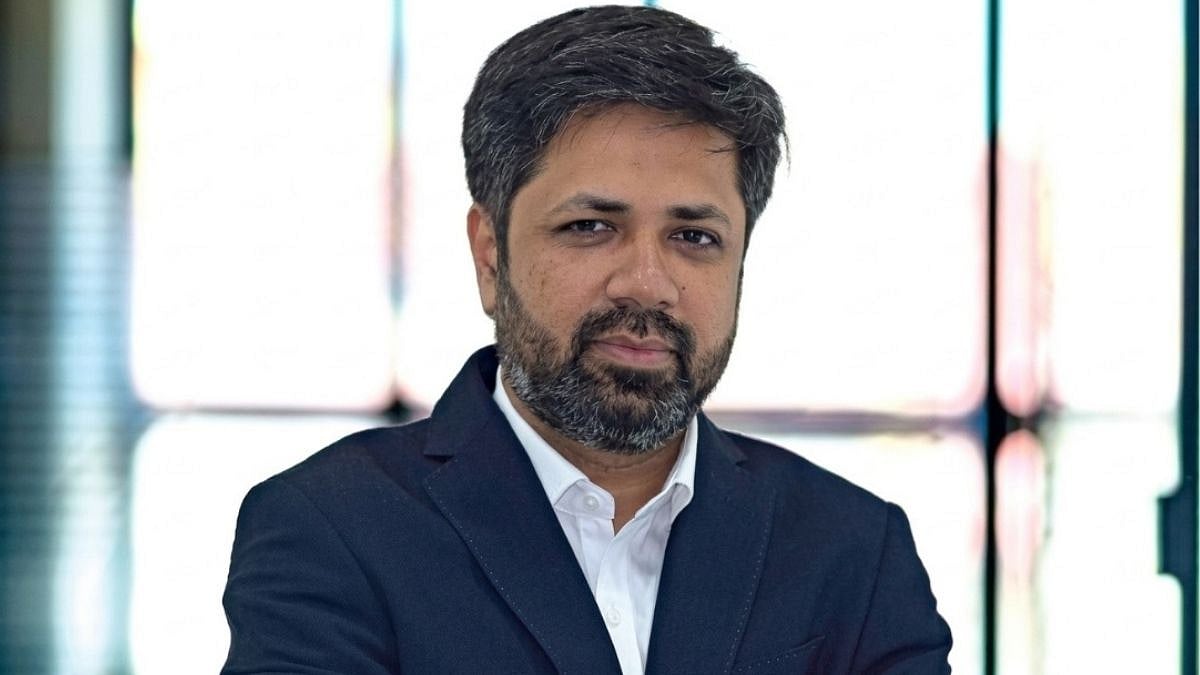
Mr. Ashish Majithia | File Photo
Mumbai, often celebrated as India’s financial capital, is also grappling with an increasingly invisible yet critical urban crisis i.e. parking. While traffic congestion and infrastructure upgrades dominate headlines, parking remains an under-addressed challenge that directly impacts mobility, real estate efficiency, and quality of life.
At its core, Mumbai’s parking crisis is not just about lack of space, but a widening gap between rapid urban growth and inadequate infrastructure planning.
The city’s vehicle population has surged dramatically, with over 23 lakh cars and 34 lakh two-wheelers navigating a limited road network. Nearly one-third of these vehicles are parked on roads, reducing usable carriage space and worsening congestion. Compounding this is Mumbai’s low road-to-vehicle ratio, making it structurally incapable of accommodating rising demand. In such a scenario, inadequate parking infrastructure does not just inconvenience citizens, it cripples mobility.
The impact is far-reaching. A significant portion of traffic is generated by vehicles searching for parking, leading to bottlenecks across high-density zones. This results in lost productivity, increased fuel consumption, and mounting economic costs. At the same time, haphazard parking disrupts pedestrian movement, blocks emergency access, and contributes to urban chaos. In several commercial hubs and residential pockets, even basic parking availability has become a daily struggle.
However, the issue is not just scarcity, but also the need for better optimization. Public parking facilities often operate at only 40–60% utilization due to poor accessibility, lack of awareness, safety concerns, and weak last-mile connectivity. This highlights a crucial gap: infrastructure must not only be built, but also be smart, accessible, and user-friendly.
Mumbai’s biggest constraint is land. With some of the highest real estate prices globally and population densities exceeding 20,000 people per sq km, conventional parking models are simply unsustainable. Conventional parking consumes up to 50–60% of space for ramps and circulation, making it highly inefficient.
The future, therefore, lies in reimagining parking through technology-driven solutions. Automated Parking Systems (APS) can significantly enhance space efficiency by eliminating ramps and reducing footprint. Vertical parking solutions allow cities to build upwards rather than outwards, a necessity in dense urban environments. Additionally, digital integration through real-time availability, app-based booking, and seamless payments can improve utilization and user convenience. Integrating parking with transit hubs and business districts can further reduce congestion.
Parking is also emerging as a key differentiator in real estate. Homebuyers today increasingly prioritize projects with efficient parking, often willing to pay a premium for it. For developers, investing in advanced parking solutions is no longer optional, it directly influences project value and long-term sustainability.
Addressing this challenge requires a coordinated approach. A comprehensive parking policy, stricter enforcement against illegal parking, incentives for adopting smart technologies, and public-private partnerships are essential to building a scalable ecosystem.
Mumbai stands at a critical juncture. As the city continues to grow, parking must be recognized as a core component of urban infrastructure, not an afterthought.
A future-ready Mumbai will not just be defined by its skyline, but by how efficiently it manages the spaces in between. And that transformation must begin with reimagining parking — intelligently, sustainably, and at scale.
*The author is Founder & CEO, Nextkraft Parking Technologies
RECENT STORIES
-
-
-
-
-