Supreme Court Clarifies Prohibitory Orders Near Its Premises Remain In Force, Allows Display Of Notice Board
The Supreme Court has clarified that its October 11 direction to remove a notice board did not suspend prohibitory orders under Section 163 of the BNSS. Authorities may display the notice again, provided court access remains unobstructed. The court also divided 33 related matters into 11 categories, scheduling hearings for November 18 and 26, 2026.

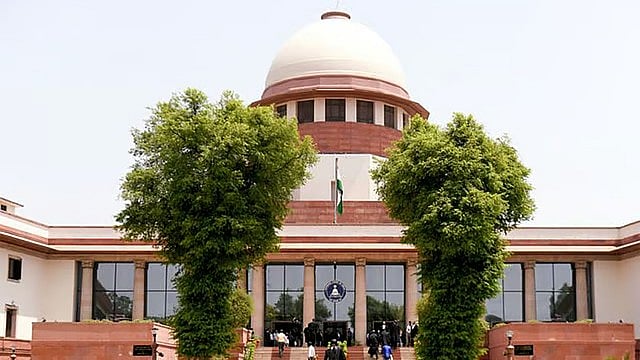
The Supreme Court has emphasised that administrative restrictions must not interfere with advocates' and litigants' access to justice | Representative image
The Supreme Court has clarified that its earlier direction to remove a notice board announcing prohibitory orders around its premises did not mean that the restrictions had been lifted or suspended.
The clarification comes in connection with petitions concerning the police handling of protests held in Delhi against Chief Election Commissioner (CEC) Gyanesh Kumar on October 10.
A bench comprising Chief Justice of India Surya Kant, Justice Joymalya Bagchi and Justice V Mohana said the authorities could put up the notice board again.
However, they must ensure that advocates, litigants and others visiting the Supreme Court or any other court for official or legal work can move freely without obstruction, Live Law reported.
Why The Court Issued A Clarification
The clarification follows concerns that the Supreme Court’s October 11 direction was being misunderstood and misused by certain elements. The bench addressed the issue in an order passed on November 3, making it clear that removing the notice board did not affect the validity of the prohibitory orders imposed under Section 163 of the Bharatiya Nagarik Suraksha Sanhita (BNSS).
The court explained that its earlier direction was intended only to ensure that people could enter and leave court premises without facing unnecessary restrictions. It was particularly concerned about protecting access to justice for advocates, litigants and people seeking legal advice.
What The Earlier Order Said
In paragraph 16(e) of its October 11 order, the Supreme Court had directed the authorities to remove a notice board stating that Section 163 of the BNSS had been invoked in and around the court premises.
The court had issued the direction to prevent confusion or apprehension among people entering or leaving the Supreme Court and other courts. However, the bench subsequently found it necessary to clarify that the direction concerned the display of the notice and not the prohibitory orders themselves.
Prohibitory Orders Remain Unaffected
In its November 3 order, the bench explained that its earlier direction was issued to protect unhindered access to courts and ensure that no advocate, litigant or person visiting an advocate for professional consultation was obstructed or discouraged.
The bench stated, “It did not stay, suspend or otherwise dilute any prohibitory order issued under Section 163 of the BNSS.” It also noted that the validity of these orders was already under consideration in two pending criminal writ petitions, numbered 427/2026 and 429/2026.
Authorities Can Put Up Notice Again
The Supreme Court recalled paragraph 16(e) of its October 11 order and permitted the competent authorities to display the notice board again, subject to conditions protecting free movement around court premises.
The bench observed that its previous direction was being interpreted as though the prohibitory orders had been lifted. The clarification draws an important distinction between restrictions imposed by the authorities and the right of people to access courts without obstruction.
33 Cases Divided Into 11 Categories
Apart from clarifying the position on prohibitory orders, the Supreme Court reorganised a batch of 33 related matters into 11 categories. The division was based on categorisations submitted by the nodal counsel representing both sides.
The court directed that the matters be listed and heard category-wise. It also allowed the respondents to file separate counter-affidavits for each category, making it possible to address the issues raised in the different petitions separately.
Court Sets Dates For Further Hearings
The bench directed counsel appearing in each category to coordinate through the nodal counsel and submit in advance the time required for oral arguments. The arrangement is intended to avoid duplication and ensure that the hearings proceed in an organised manner.
Also Watch:
ALSO READ
The main writ petition and contempt petitions are scheduled for hearing on November 18, 2026. Meanwhile, challenges to the prohibitory orders issued under Section 163 of the BNSS will be heard alongside other petitions concerning restrictions on protests on November 26, 2026.
Level up your brain the fun way. Play daily games and quizzes on FPJ Smart!
To get details on exclusive and budget-friendly property deals in Mumbai & surrounding regions, do visit: https://budgetproperties.in/
RECENT STORIES
-
-
-
-
-