Sikkim Tunnel Collapse: How Methane Gas Turns Underground Rescues Into A Race Against Time
The Sikkim tunnel collapse at the Teesta Stage-VI Hydroelectric Project has highlighted the hidden dangers of underground construction. Experts explain that while methane is not directly poisonous, it can displace oxygen, causing suffocation, unconsciousness and potentially fatal complications

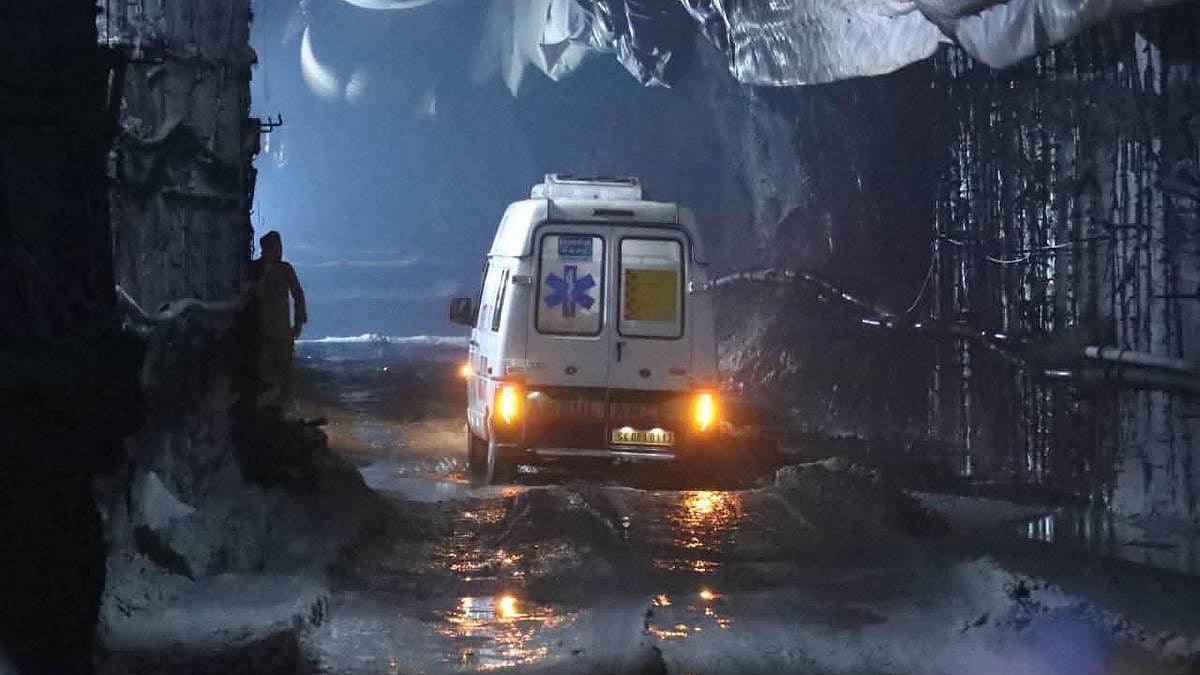
Search-and-rescue operations to evacuate the remaining trapped workers are ongoing | PTI
A tragic accident in Sikkim has brought the hidden dangers of underground tunnelling into sharp focus. On Monday, heavy continuous rainfall destabilised mountain terrain in the northeastern state's Namchi district, triggering a massive landslide that collapsed an under-construction tunnel at the Teesta Stage-VI Hydroelectric Project near Samardung.
At least nine people were killed in the initial collapse, while emergency teams rescued 12 others. Between 18 and 20 personnel—including senior officers from the National Hydroelectric Power Corporation (NHPC) and project developer Patel Engineering who were conducting a routine inspection—remained trapped roughly 3 kilometres underground within the 7-kilometre shaft.
While joint rescue operations involving the National Disaster Response Force, State Disaster Response Force, Sikkim Police, fire department and volunteers intensified, progress was severely hindered. Beyond the shifting debris and rain-soaked earth, responders faced an invisible, deadly obstacle, which is suspected toxic gas leaks inside the shaft, primarily methane.
How does methane affect the human body?
Contrary to common belief, methane is not toxic in the traditional sense. It does not poison human tissue directly. Instead, methane acts as a simple asphyxiant. When high concentrations seep into an enclosed space, the gas physically crowds out breathable air, displacing the oxygen necessary to sustain human life.
Medical experts emphasise that the danger lies in how quickly oxygen depletion damages vital organs. As Dr Manas Mengar, Senior Consultant in Pulmonology at KIMS Hospitals in Thane, explains:
"Methane is not a poisonous gas, but that does not mean it is harmless. The real danger is that when methane builds up in an enclosed space, it pushes oxygen out of the air. As oxygen levels start dropping, it is difficult for the brain to function normally."
Dr Mengar notes that early exposure symptoms include dizziness, headaches, unusual fatigue or difficulty concentrating, which rapidly progress to breathlessness, confusion and loss of consciousness as oxygen levels decline further.
The physiological impact escalates when body tissues are starved of oxygen, a condition known as hypoxia. Highlighting the critical need for constant oxygen supply, Dr Geetanjali Patil, Consultant Pulmonologist at Ruby Hall Clinic in Pune, outlines the clinical progression:
"When methane accumulates in enclosed or poorly ventilated spaces, the amount of oxygen available for breathing decreases, leading to a condition known as hypoxia or oxygen deprivation. The brain and heart are the first organs to be affected, as they require a constant supply of oxygen to function normally."
Dr Patil warns that sustained hypoxia can trigger severe outcomes, including seizures, coma, permanent brain injury and respiratory failure, making confined-space methane exposure an immediate medical emergency.
What is methane gas and why is it found underground?
According to ScienceDirect, methane is a simple hydrocarbon composed of one carbon atom and four hydrogen atoms. In subterranean environments, it forms naturally over millions of years through the decomposition of organic matter trapped beneath rock layers, inside coal seams or within sedimentary formations.
The primary danger of methane stems from its physical properties. It is completely colourless and odourless, meaning human beings cannot smell, see or taste its presence. Without automated, electronic gas detectors calibrated to monitor atmospheric changes, subterranean workers have no sensory warning that methane is accumulating around them.
Because methane is lighter than surrounding ambient air, it naturally rises. In underground shafts, it migrates upward to settle in unventilated roof arches, rock pockets and ceiling cavities, creating hidden reservoirs of gas directly above working areas.
How does methane cause explosions in tunnels?
Underground engineering encounters two major threats from methane gas -- extreme flammability and dust-triggered chain reactions.
When methane mixes with normal air at concentrations between 5 per cent and 15per cent—a window known as its explosive limits—it becomes volatile. Within this range, any minor heat source can ignite the gas instantly. Everyday construction activities, such as mechanical friction from drilling, static discharge, exposed electrical wiring or hot cutting tools, can trigger a catastrophic explosion.
In environments containing organic or coal dust particles, a primary methane ignition creates a powerful shockwave. This blast kicks floating dust into the air, igniting secondary explosions that can sweep rapidly through an entire interconnected tunnel network. To mitigate this risk, subterranean projects rely on heavy forced-ventilation systems, explosion-proof electrical machinery and automated shutoff sensors.
How are trapped workers and rescuers protected?
Managing methane hazards in a disaster zone requires strict safety protocols for both trapped individuals and rescue crews. When atmospheric monitoring confirms methane accumulation, rescue teams must enter the shaft equipped with self-contained breathing apparatuses and portable oxygen supplies to avoid inhaling oxygen-depleted air.
Emergency protocol dictates that anyone exposed to high methane levels must be moved to open air immediately, regardless of whether they appear conscious or alert. Both medical experts stress that because oxygen deprivation causes delayed neurological and respiratory damage, victims require urgent hospital evaluation even if they claim to feel better shortly after rescue.
RECENT STORIES
-
-
-
-
-