CEC Gyanesh Kumar Faces Fresh Kerala Vigilance Probe Over 2006 PWD Corruption Allegations Linked To State Transport Project
Kerala has ordered a fresh Vigilance inquiry into corruption allegations against CEC Gyanesh Kumar dating to his 2006 tenure as PWD secretary. The probe concerns the Kerala State Transport Project and claims an earlier investigation was derailed by external pressure.

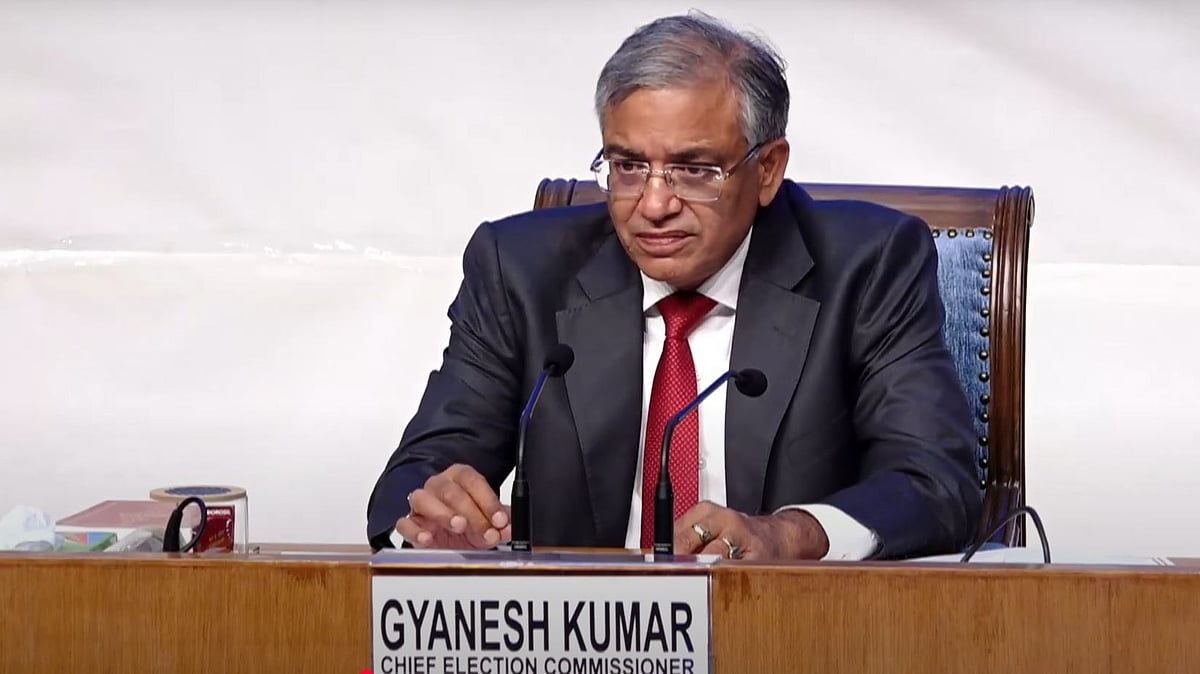
CEC Gyanesh Kumar Faces Fresh Kerala Vigilance Probe Over 2006 PWD Corruption Allegations Linked To State Transport Project | File photo
Thiruvananthapuram: CEC Gyanesh Kumar faces a separate legal challenge in Kerala alongside the nationwide political campaign seeking his resignation: the state government has ordered a new Vigilance inquiry into corruption allegations dating from his tenure as the state’s Public Works Department secretary in 2006.
State Home Minister Ramesh Chennithala has directed the Vigilance and Anti-Corruption Bureau to examine allegations connected with the Kerala State Transport Project and claims that an earlier inquiry was derailed by external pressure.
The decision followed a complaint from Congress leader Malayinkeezhu Venugopal after consultation with Chief Minister VD Satheesan.
The distinction between Kumar’s present office and his position two decades ago is legally significant. Section 16 of the Chief Election Commissioner and Other Election Commissioners Act, 2023, bars courts from entertaining or continuing civil or criminal proceedings against commissioners for acts, things or words done while discharging, or purporting to discharge, their official Election Commission duties. The provision is not a general personal immunity covering conduct before taking office.
ALSO READ
The Kerala allegations concern Kumar’s conduct as an IAS officer heading the PWD, long before he became an Election Commissioner and subsequently CEC. On the statutory language, that makes the 2006 allegations fundamentally different from accusations concerning decisions he has taken within the Election Commission.
Another qualification matters. Section 16 is framed as a restriction on courts entertaining or continuing proceedings arising from protected official conduct; it does not expressly impose a blanket prohibition on police or Vigilance investigation. Any attempt to prosecute Kumar would still have to comply with other applicable procedural safeguards, sanction requirements and judicial scrutiny. The inquiry establishes no wrongdoing based on information presently available publicly.
ALSO READ
The case centres on the World Bank-funded upgrading of the MC Road under the Kerala State Transport Project. PATI-BEL, an Indo-Malaysian joint venture, handled work worth about Rs 215 crore. Malaysian civil engineer Lee See Been, the consortium’s chief project manager, died by suicide in Kuala Lumpur in November 2006.
Chennithala said notes left by Lee mentioned Kumar, then PWD secretary. Allegations surrounding the project included delayed payments, harassment and corruption, but no court has found Kumar criminally liable. The minister said the new inquiry would follow the evidence and that nobody would be prejudged.
A preliminary Vigilance inquiry was initiated under the V S Achuthanandan government after Lee’s death. Kumar was moved out of the PWD and later went on central deputation, while the investigation yielded no definitive outcome. The present government has sought the old Vigilance files and asked the bureau to examine whether outside influence obstructed the earlier process.
ALSO READ
That history gives the Kerala action a character distinct from the nationwide confrontation over Kumar’s stewardship of the Election Commission. Opposition parties and groups have demanded his resignation over the Special Intensive Revision of electoral rolls and allegations that he has taken unilateral decisions. Kumar and the Election Commission have faced demonstrations in Delhi and Mumbai, while opposition parties are planning further protests.
Those political challenges depend heavily on questions of institutional conduct, parliamentary accountability and the protected constitutional position of the Chief Election Commissioner. Removing a CEC is deliberately difficult: the Constitution gives the office safeguards comparable to those governing removal of a Supreme Court judge.
Kerala’s inquiry travels on another track. It asks whether alleged misconduct occurred when Kumar was a state bureaucrat, and whether the investigation launched at the time was improperly stopped. If investigators find material warranting further action, the legal dispute is likely to centre on ordinary anti-corruption and criminal procedure rather than protection for Election Commission functions.
RECENT STORIES
-
-
-
-
-