‘Bail Is The Rule Even Under UAPA’: Supreme Court Raises Concerns Over Its Own Umar Khalid Order
The Supreme Court on Monday questioned its January 5 verdict denying bail to activists Umar Khalid and Sharjeel Imam in the Delhi riots conspiracy case. A bench led by Justice Ujjal Bhuyan said the ruling failed to correctly apply principles on prolonged incarceration under UAPA. The court reaffirmed that “bail is the rule and jail an exception” even in stringent anti-terror cases.

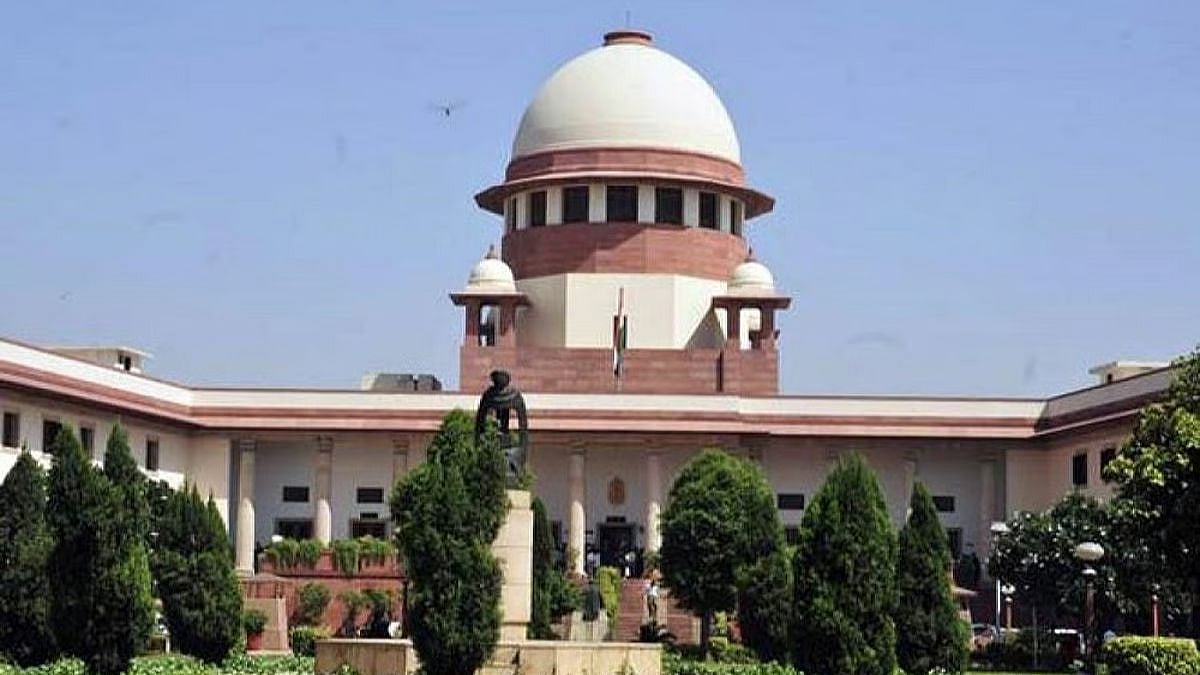
File
New Delhi: The Supreme Court raised concerns over its recent verdict denying bail to activist Umar Khalid and Sharjeel Imam in the Delhi riots conspiracy case.
The court observed that the ruling failed to properly apply the principles laid down by it on prolonged incarceration under the stringent Unlawful Activities (Prevention) Act (UAPA).
The top court on Monday strongly reaffirmed that "bail is the rule and jail the exception" even in cases under the stringent Unlawful Activities (Prevention) Act (UAPA).
A bench comprising Justice B. V. Nagarathna and Justice Ujjal Bhuyan made these observations while allowing the bail plea of one Syed Iftikhar Andrabi, who has been under custody for over five years in a case under the UAPA for alleged narco-terrorism, reported TOI.
The court highlighted that the January 5 verdict failed to correctly apply the binding principles laid down by a larger three-judge bench in Union of India vs K. A. Najeeb (2021), which recognised that prolonged incarceration and delay in trial can override the statutory restrictions on bail under Section 43D(5) of the UAPA, reported Hindustan Times.
For the unversed, the January 5 judgment rejected bail pleas filed by Khalid and Imam in the Delhi Riots conspiracy case while granting relief to five co-accused, Gulfisha Fatima, Meeran Haider, Shifa-ur-Rehman, Mohd Saleem Khan and Shadab Ahmed.
At the time, the bench of Justices Kumar and Anjaria held that Khalid and Imam occupied a “central and formative role” in the alleged conspiracy behind the February 2020 northeast Delhi riots, and ruled that prolonged incarceration alone could not justify bail in UAPA cases where courts found a prima facie case.
“Bail is not an empty statutory slogan. It is a constitutional principle flowing from Article 21, and the presumption of innocence is the cornerstone of any civilised society governed by the rule of law,” Justice Bhuyan said while reading out the operative portions of the judgment.
“Even under UAPA, bail is the rule and jail an exception. Bail can only be denied in a particular case depending on the facts of that particular case,” the bench added.
The ruling marks one of the sharpest judicial critiques by a coordinate bench of a recent Supreme Court judgment dealing with bail under anti-terror laws.
RECENT STORIES
-
-
-
-
-