Dr. Anshul: “Devices In Catalogues Mean Nothing Without Trained Hands”
Associate Professor of Anaesthesia at Pt. BD Sharma Medical College and a 25-publication airway-safety researcher on why Indian government hospitals already hold answers the country will need before hosting the World Congress of Anaesthesiologists in 2030.

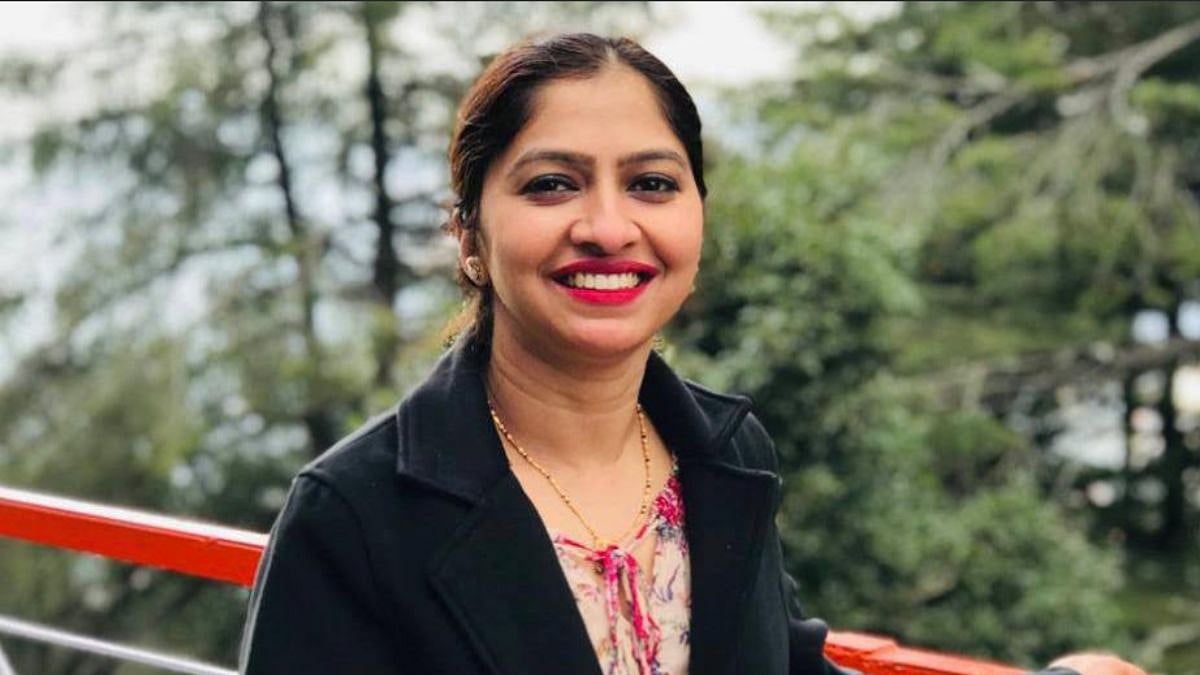
Dr. Anshul: “Devices In Catalogues Mean Nothing Without Trained Hands” | File photo
The 19th World Congress of Anaesthesiologists closed in Marrakech on 19 April 2026, with 3,705 in-person delegates from 132 countries — the first WCA on the African continent since 2008. Programme tracks returned repeatedly to a question that no national system has yet solved at scale: how to close the gap between modern airway management technology and the clinicians actually trained to use it under pressure. For India, the question is not abstract. According to WFSA workforce data, the country has roughly 1.27 physician anaesthesia providers per 100,000 people, well below the WFSA-recommended floor of five — a shortfall estimated at more than 60,000 specialists over the next decade. Most of that surgical caseload moves through government teaching hospitals, where a small number of consultants, residents, and interns handle high-risk procedures with constrained budgets and limited simulation infrastructure. India will host WCA 2030. The four years between Marrakech and that congress are the window in which the country's anaesthesia training system has to demonstrate it can match its own clinical volume.
Dr. Anshul, Associate Professor in the Department of Anaesthesia at Pt. Bhagwat Dayal Sharma Postgraduate Institute of Medical Sciences in Rohtak, Haryana, has spent her career inside that system. Her record covers 25 peer-reviewed publications in national and international journals, a 2026 study in the Journal of Emergency Medicine, Trauma & Acute Care evaluating the STOP-BANG score as a screening tool for predicting difficult airways, a first-prize comparative study of supraglottic airway devices at the 7th International Airway Congress of the Airway Management Foundation in 2024, and a second-prize award at ICACON 2025 in Jodhpur for research on a novel airway introducer. She sits in five anaesthesia societies — among them the Airway Management Foundation and AORA — and teaches residents on the same shop floor where her research is generated.
We asked her what frontline practice at a government medical college can tell India about the four years it now has to prepare.
Dr. Anshul, the WCA this year focused heavily on the gap between technology and trained hands. From your experience at a government teaching hospital, where does that gap show up most clearly?
It shows up in devices that sit unused. A hospital might acquire a video laryngoscope or a fibreoptic bronchoscope through a government tender, but if residents have never practised with them under supervision, they reach for the Macintosh blade every time, even when it is the wrong choice. Equipment procurement and training exist on separate timelines, and nobody is responsible for connecting them. In our department, I try to close that gap through structured workshops. I have served as faculty for airway management sessions, ultrasound-guided regional anaesthesia courses, and basic life support training, but one hospital cannot solve a systemic problem. We need training budgets tied to equipment purchases at the policy level. Otherwise, you end up with expensive machines gathering dust in a storeroom while a resident struggles with a conventional laryngoscope on a patient whose anatomy demands something better. A device in a catalogue means nothing until a resident in a district hospital can use it at 3 a.m.
Your 2026 paper in the Journal of Emergency Medicine evaluates the STOP-BANG tool (originally for sleep apnoea screening) as a difficult airway predictor. Why repurpose an existing tool instead of developing a new one?
Because the best screening tool is the one that actually gets used. Mallampati, thyromental distance, upper lip bite test: we teach all of them, and individually, each has limitations. STOP-BANG captures anatomical and physiological factors together, including neck circumference, BMI, age, and jaw mobility. It takes two minutes, needs no equipment, and a junior resident can administer it reliably during a rushed pre-operative assessment. We tested whether the composite score could flag patients whose airways might cause trouble once general anaesthesia is induced. In a setting where one anaesthesiologist covers multiple operating theatres, anything that improves early detection without adding complexity is worth investigating.
Your comparative study of the Ambu Aura40 and ProSeal LMA won first prize at IACON 2024. What was the clinical question?
Whether a newer supraglottic device could match an established standard under real surgical conditions. Single-use devices reduce cross-contamination risk, but only if they perform comparably in seal pressure and insertion success. We compared both across a range of patients. For administrators deciding how to spend a limited budget, head-to-head data from an Indian public hospital carries more weight than a manufacturer's datasheet.
What was the goal of your ICACON 2025 research comparing the AIROD airway introducer with the standard gum elastic bougie?
Bougies save lives, but they are not perfect. Tip trauma is a risk, tracheal placement confirmation requires experience, and junior trainees sometimes struggle with the technique under pressure. We tested AIROD against the bougie in simulated difficult airway conditions to see whether it could offer comparable or better performance for operators across different experience levels. That last part matters: in a teaching hospital, residents are frequently the first to manage an airway in the middle of the night. If a tool only works well in expert hands, it does not solve the real problem.
You are a member of five anaesthesia societies, including AORA and the Airway Management Foundation. You have also served as faculty at workshops on ultrasound-guided nerve blocks, airway management, and trauma life support. How does teaching reshape your clinical thinking?
It exposes blind spots. At a workshop on ultrasound-guided lower limb blocks for the ISA Haryana chapter, a resident challenged my probe orientation for sciatic blocks — and was right. I changed my technique the following week. You cannot hide behind instinct when twenty people are watching you explain each step.
With 25 publications, how do you find research questions while managing clinical load at a government hospital?
Research questions find me. Patients keep showing up with problems that existing data does not address locally. My work on medial branch blocks for chronic low back pain started because I watched the same patients cycle through the pain clinic without adequate relief: three visits, four visits, the same complaint. A facet joint injection study came from noticing that colleagues in the same department used different approaches for the same condition, and nobody had comparative data from our population to settle the argument. A government teaching hospital generates an enormous volume of clinical material. Hundreds of complex cases every month, outcomes that nobody is systematically recording. Writing happens between cases, on weekends, sometimes at midnight after a long shift. But even publishing one study from that volume gives the next clinician somewhere better to start than guesswork. And when the study comes from your own institution, from your own patient population, it answers questions that imported literature simply cannot.
You have been involved in cadaveric organ retrieval and kidney transplant procedures. How does that work differ from the rest of anaesthesia practice?
Completely. You are keeping a brain-dead donor haemodynamically stable while multiple surgical teams harvest organs simultaneously – every decision you make determines whether a kidney will function in the recipient. On the transplant side, patients arrive with end-stage renal disease and cardiac comorbidities. No protocols cover every variable. You adapt for hours.
India will host the World Congress of Anaesthesiologists in 2030. What would you want the global community to see when they arrive?
Evidence. Not imported evidence but Indian evidence, from Indian hospitals, about Indian patients. We have the clinical volume to generate world-class data, but we underinvest in research infrastructure at government medical colleges. If by 2030 every state-level teaching hospital had a functioning difficult airway registry, a simulation lab with basic mannequins, and protected time for faculty to publish, we would not need to borrow protocols from countries with completely different patient demographics. Talent exists. What we lack is the system that lets it produce results at scale.
Published on: Thursday, September 03, 2026, 03:04 PM ISTRECENT STORIES
-
-
-
-
-