'I Will Not Produce Again': Kerala Story Director Sudipto Sen Opens Up On His Film Charak – Face of Faith: FPJ Exclusive
In an exclusive interview with FPJ, filmmaker Sudipto Sen said he received death threats and bounty offers before The Kerala Story’s release but remained firm on his subject. Speaking about his new film Charak – Face of Faith, he said backlash was politically motivated and stressed his years of research on sensitive themes.

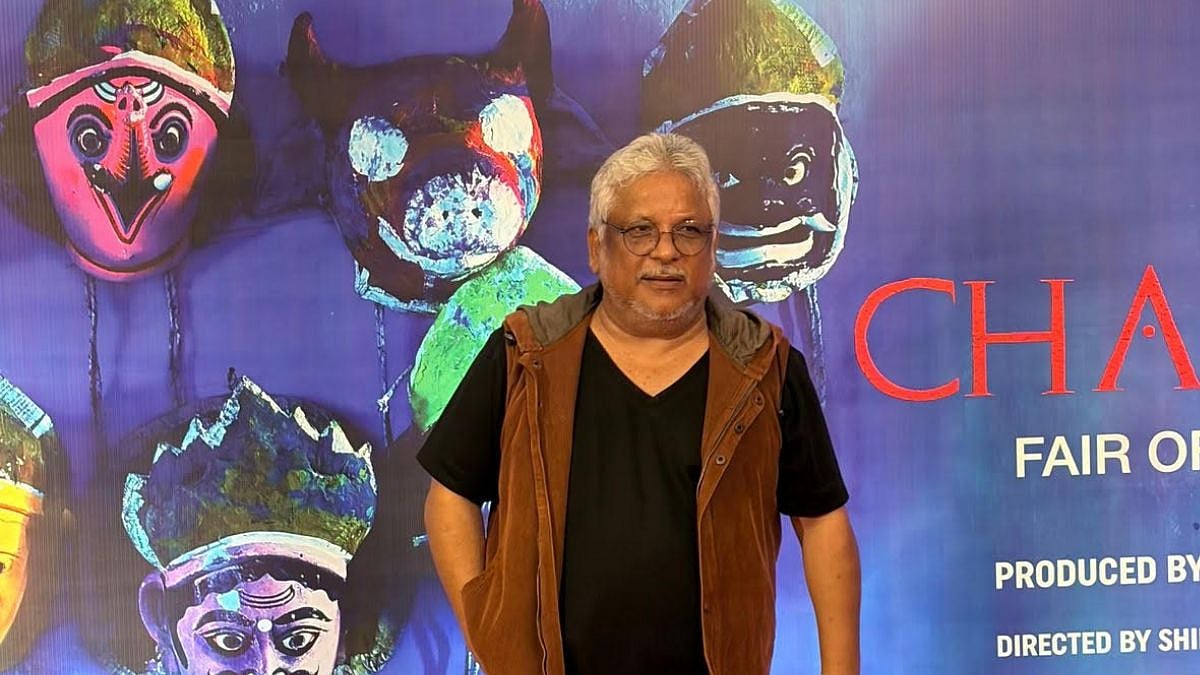
Sudipto Sen |
In an exclusive conversation, filmmaker Sudipto Sen opened up about the challenges he faced during The Kerala Story and his debut film as a producer, Charak – Face of Faith, which is set to hit the big screens on March 6.
You won a national award for The Kerala Story (2023). How did you deal with the backlash the film received?
I shall answer this question in two parts. One is, before the release of the film, there was a politically motivated campaign against us. I mean, you know the politics of this country. Muslims have never been understood as citizens of this country. They have been taken as a vote bank. So in Kerala, it is like, whoever the Muslims vote for, they get the power. That is the reason every five years, it is Congress and CPM. Like a pendulum it happens, same in Bengal, and the same with a few other states also.
ALSO READ
So what happened is, when people started understanding that we are delving into the chapter which is dealing with some sensitive issues, which was not supposed to be spoken about because of our political system, I decided to charter that territory. So there is a political manoeuvring that it was a propaganda film. But when on Netflix, there is a series called ‘Caliphate’, ‘Layla M.’ is there. They are the most popular web series on Netflix. Then it is not political? The same thing when i told it in Kerala, that became a political story. That is the dichotomy we are living with.
So whatever campaign, whatever backlash I had to face pre-release, I understood that was a little unnerving, a little scary. Because the threat came, they put a price tag on one eye, it is 15 lakhs, hand 20 lakhs. If anybody can kill me, then one crore. So these were a little unnerving. But later, when people started watching the film, then the situation became much more normal. Very few people continued calling names, still continuing because I understand that is a politically motivated campaign they've had.
A film, no matter how big propaganda it is, no matter how largely it is being supported by any political party, even three years after the release, if people discuss that film, then you have to accept the fact that it is not merely propaganda, it has content. Otherwise, there are hundreds of propaganda films that have come after The Kerala Story, including Bengal Files, Udaipur Files and all. Nothing worked! Even Ekta Kapoor’s film also did not work, that is on Godhra. But even three years after the release, if people are talking about my film, that means you cannot push it under the carpet.
So I am absolutely content that I made it. I am proud that I made this film and I managed to bring the subject of the film, that is the girls from Kerala, into the national focus.
These girls, these survivors, who were hiding in the darkness of Kerala, now they are seen everywhere on the television channels, going to places and all. So I think I am being vindicated. I am absolutely humble that whatever I did for the last 10 years, I had no idea, nothing to do with any religion. I am not Islamophobic. It was a subject, a plot, that ISIS laid in every European country. Thousands of European girls have been taken to ISIS-controlled areas, girls from England, Australia, America. So they laid a trap in India as well. But Kerala being the epicentre, it was hidden under the carpet. But I worked on this for the last 10 years and I came up with the film.
Did you receive any support from the government when the threats were issued?
The first two days I used the security which the Maharashtra government had provided me. On the third day I said please don't send them. Only Adah, my lead actress, is a single girl, she lives alone. So she continued taking the security, but my producer Vipul Shah and I never took it.
When you are dealing with such sensitive topics as a filmmaker what are the things that one has to take care of?
That is the reason I take a lot of time to decide that yes, this is the time to go for shooting. I started my research for Kerala Story in 2012. In fact, before that, but physically it is 2012. Like Kerala Story, in 2018, I made a documentary film. It was named ‘In the Name of Love’.
That documentary got the best documentary award at the London International Film Festival. In JNU, there was a riot-like situation when I tried to screen the film. So Delhi Police asked me not to show the film. It was a great disappointment. I decided to make a feature film to reach out to the right audience. It is neither that I do my films reading any news in the newspaper or getting a WhatsApp forward. I go to the core of the subject. I convinced myself that yes, this is the subject I should talk about.
Your upcoming film Charak - Face of Faith, is about blind faith. So how does one differentiate between faith and blind faith according to you?
Number one, you have to see the film for the answer. But generally it's a very thin line. And in the beginning of the film I put the definition of faith, that when your world of logic is over, the domain next to it is called faith.
So when you don't find any logic, when you don't find any analysis of a particular situation, we call it faith. So we started the film with that definition from Webster Dictionary, that ‘what is faith’. It's a very blurred line actually.
Your ignorance or my ignorance has a limit. Maybe where my ignorance limit starts, somebody has the answer to my question. So there are things which are kind of absolute understanding, like human sacrifice, I question those superstitious beliefs that come from the Aghori sadhus and all.
Where did the idea for this subject come from?
I lived with Charak for all my life because I am from North Bengal. Charak is a very popular festival in Chaitra Mahina. And I saw them, every year it was our childhood attraction. It is really colourful, musical, fun, frolic kind of, it's a roller-coaster ride kind of festival.
And it has a darker side also, which is the tantric practices of eating human flesh. Even there are issues of child sacrifice happening. But the issue of child sacrifice is not only Charak-centric. That is what I tried to tell. Though Charak is the centre of the story, we discussed superstition and obscurantism in general.
In Latin America, in Africa, human sacrifice is happening. Even last to last year, in 2024, in Hathras, which is 180 kilometres from Lucknow, there was a child sacrifice that happened in the school. The school was continuously having bad results and the school management sat to decide what to do. Then they decided on the advice of a tantric, they decided to sacrifice a child for the betterment of their school result. So just imagine in which layer of our existence, which layer of our civilisation, these obscurantist beliefs entered.
So a few years back, I came across the story, a very small three-page story by Sanjay Halder. So I picked that up to tell the story and then we started working on the script and that is how the film happened.
Don't you think a subject like this might have performed better on an OTT as a series rather than a film?
I don't make films for OTT. I have a very fundamental issue with OTT. So far, you will be surprised to know, being a part of the mainstream Indian cinema, I have never applied to any OTT yet. Because I don't think that after struggling for 10 years, people will watch my film on their mobile phone.
That is not accepted. I'm a very traditional filmmaker. I want to see my film on the big screen. OTT, I don't consider it cinema. It is an extension of television and I don't do television.
This is your debut as a producer. Could share some of your experience?
One thing I understood is that you can be a good human being or a good producer. You cannot be both together. So I decided to be a good human being. So I will not produce again. It's a very bad experience. I can't handle money. I'm not very expert in accounting and all. And being a producer, this cannot be the excuse. So I ended up spending more than the budget, which is not my cup of tea, I realised. But it's a good experience in the sense that I could see another aspect of filmmaking.
RECENT STORIES
-
-
-
-
-