IndiGo Unveils FY30 Growth Plan Targeting 200 Million Passengers, Global Hub Status
IndiGo aims to carry 200 million passengers annually by FY30, expanding international operations to 40% of capacity and operating over 550 aircraft with nearly 3,000 daily departures. The airline plans new A321XLR and A350 aircraft, premium business-class expansion, and India’s positioning as a global transit hub amid cautious near-term capacity growth

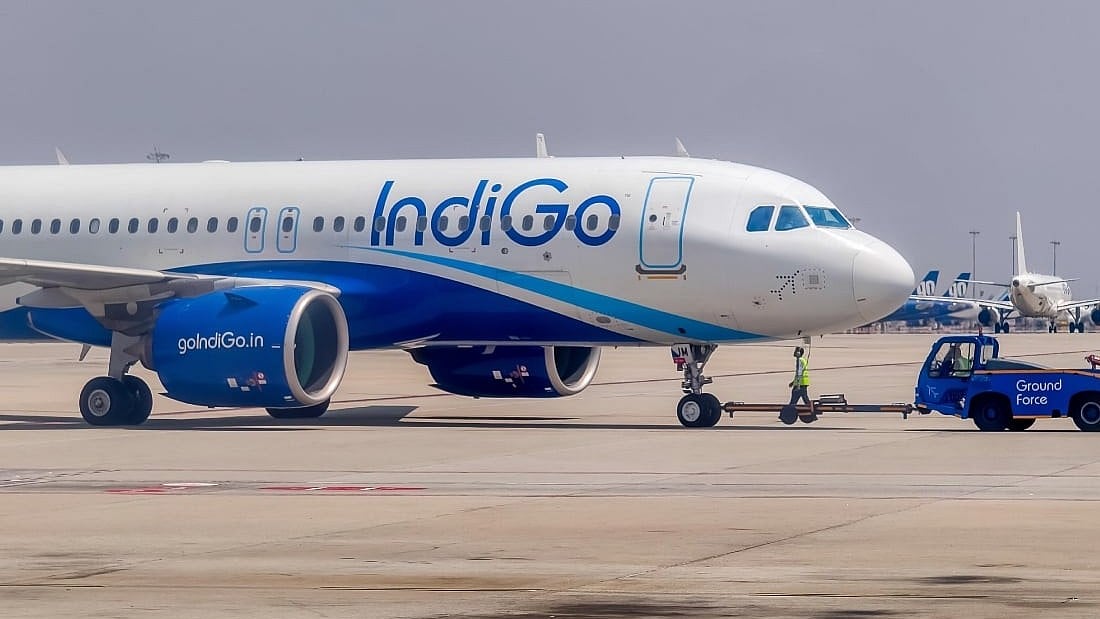
India’s largest airline, IndiGo, has unveiled an ambitious FY30 growth roadmap, aiming to carry around 200 million passengers annually, expand its international footprint, and establish India as a major global aviation transit hub.
Presented at the airline’s analyst day on June 8, the plan outlines operating more than 550 aircraft, nearly 3,000 daily departures, and raising international operations to 40% of total capacity by FY30.
IndiGo also aims to increase capacity to about 300 billion available seat kilometres (ASKs), nearly doubling current levels.
Despite long-term ambitions, IndiGo is adopting a cautious approach to near-term capacity deployment amid softer travel demand triggered by the West Asia conflict. The airline expects 3-4% capacity growth in the first fiscal quarter and will take a “measured approach” as market conditions remain uncertain.
ALSO READ
International markets form a central pillar of IndiGo’s strategy. The airline plans to increase international capacity to 40% by FY30 from around 30% currently, supported by the induction of Airbus A321XLR aircraft and Airbus A350 widebody jets. Nine A321XLR planes are expected this fiscal, enabling expansion into longer-haul destinations such as Athens, Istanbul, Bali, and Seoul.
IndiGo is also positioning India as a global transit hub connecting Europe, Southeast Asia, the Middle East, and Africa, leveraging the country’s strategic location to capture connecting traffic currently routed through Gulf and Southeast Asian hubs.
The airline ended FY26 with a fleet of 441 aircraft and carried over 123 million passengers. IndiGo is accelerating its premiumisation strategy with an expanded stretch business-class product, offering dedicated cabins, complimentary meals, and enhanced services on the incoming A321XLR fleet.
At the same time, older damp-leased aircraft, including Airbus A320 CEOs, A321 NEOs, Boeing 737s, and Boeing 787s, will be phased out to improve fuel efficiency and reduce operating costs.
Geopolitical tensions temporarily affected travel demand on West Asia East routes, disrupting nearly 160 daily frequencies. Management said two-thirds of the disrupted capacity has been restored, with full restoration expected by the end of June.
The reporting quarter highlighted sector challenges. IndiGo posted a net loss of ₹2,536.9 crore in Q4FY26, impacted by a ₹4,823 crore foreign exchange loss from rupee depreciation, higher aviation turbine fuel prices, and flight disruptions.
RECENT STORIES
-
-
-
-
-