FCNR(B) Inflows Won’t Trigger Excess Lending, SBI Chairman Says Amid ₹10.5 Trillion Liquidity Surge
SBI Chairman CS Setty said the large inflows through FCNR(B) deposits will be deployed gradually over three to four months and are unlikely to cause abnormal lending. Banks mobilised $127.2 billion under the RBI’s swap facility, pushing system liquidity higher. Setty also highlighted AI’s future role in banking

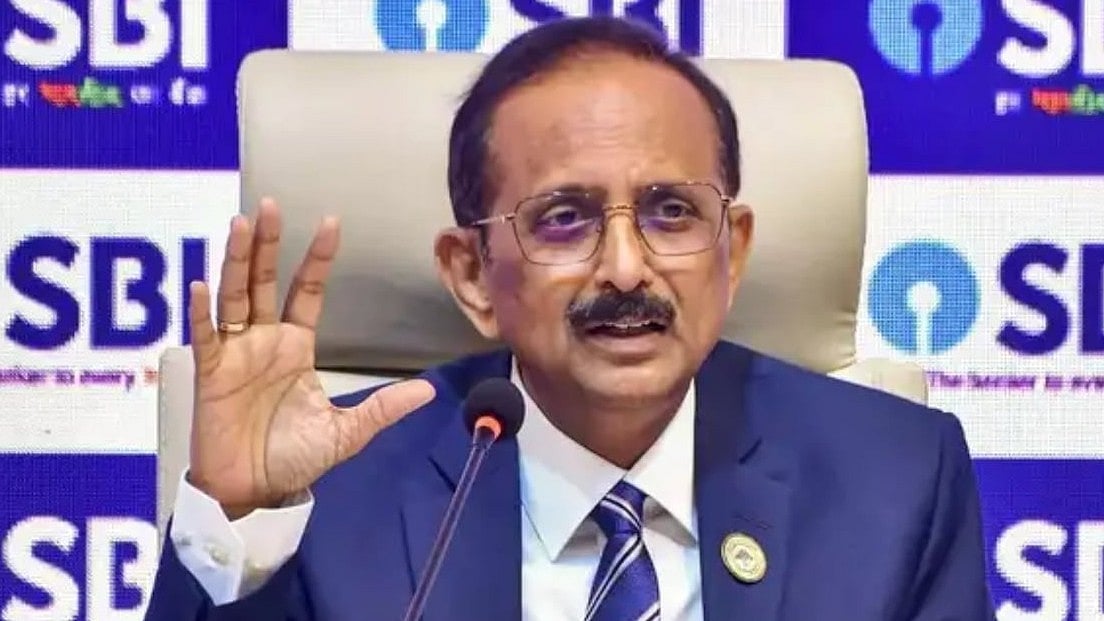
SBI Chairman C. S. Setty |
State Bank of India (SBI) Chairman CS Setty said the substantial funds raised through foreign currency non-resident (bank), or FCNR(B), deposits will be absorbed by banks over the next few months and are unlikely to result in excessive credit expansion.
The comments come after banks raised more funds than expected through the Reserve Bank of India’s concessional swap facility, leading to concerns that surplus liquidity could accelerate lending growth.
“It will take about three to four months for the deployment of the liquidity,” Setty said, while declining to disclose SBI’s mobilisation through FCNR(B) deposits. The bank had earlier set a target of around $10 billion.
FCNR(B) inflows push banking liquidity higher
Under the RBI’s swap facility, banks mobilised $127.2 billion through FCNR(B) deposits, taking total inflows to $136.4 billion by August 31. The figure exceeded market expectations of $90-100 billion.
The FCNR(B) window was closed on August 31 after receiving a strong response. The RBI had launched the facility on June 8 for FCNR(B) deposits, overseas foreign currency bonds and external commercial borrowings.
The higher-than-expected inflows pushed banking system liquidity to nearly ₹10.5 trillion. Banks now have multiple options to deploy these funds, including buying government securities, replacing expensive deposits or extending loans.
However, industry experts said strong corporate credit growth could limit the extent of fresh lending.
SBI chief highlights AI opportunities in banking
Setty also spoke about the potential of agentic artificial intelligence (AI) in the financial sector, saying adoption would depend on reducing initial costs and developing scalable technology.
“While the initial fixed cost of agentic AI can be high, the incremental cost can be low, creating the economics of scale,” Setty said at the Global Fintech Fest 2026.
He said agentic AI could help banks across areas such as fraud detection, KYC, anti-money laundering checks, loan assessment and reconciliation.
Setty said the next stage for India’s financial sector would be a shift from digital banking to “intelligent banking”.
“The next frontier for Indian AI is not merely about building larger models, but building models that understand India’s diversity and uniqueness,” Setty said.
RECENT STORIES
-
-
-
-
-