E20 Petrol Debate: CEA V Anantha Nageswaran Backs E10 Option For Older Vehicles
Chief Economic Adviser V Anantha Nageswaran has suggested restoring E10 petrol alongside E20 for older vehicles, citing compatibility concerns among millions of two-wheelers designed for lower ethanol blends. The ethanol industry opposes any rollback, arguing E20 supports energy security, reduces fossil-fuel imports and strengthens India’s domestic biofuel ecosystem

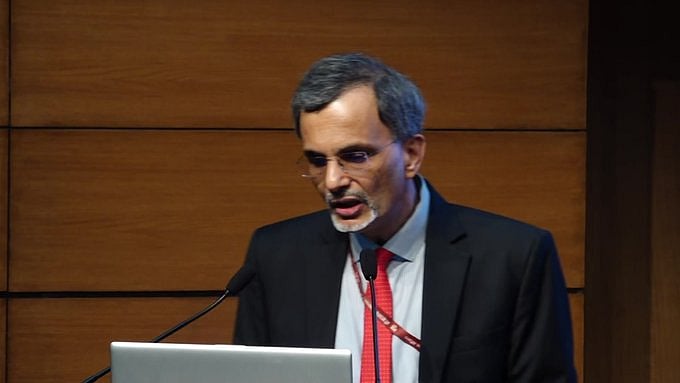
Chief Economic Advisor V Anantha Nageswaran | PTI
India’s transition to E20 petrol has sparked a fresh debate over whether older vehicles should be given access to a lower ethanol blend.
Chief Economic Adviser V Anantha Nageswaran has proposed allowing E10 petrol alongside E20, arguing that millions of older vehicles may not be suited to higher ethanol content.
In an op-ed in The Indian Express with co-author Akash Poojari, Nageswaran said India has an estimated 75-80 million two-wheelers designed for E10. Many of these vehicles were manufactured before higher ethanol blends became standard.
Why older vehicles are at the centre of the E10-E20 debate
According to Nageswaran, the concerns extend beyond fuel efficiency. Ethanol can affect components such as rubber seals and other parts of older fuel systems. Carburettor-based vehicles may also experience compatibility issues with higher ethanol blends.
He argued that making E10 available at fuel stations would give owners of older vehicles an alternative while newer vehicles continue using E20. Such a dual-fuel approach, he suggested, could protect the existing vehicle fleet until owners either retrofit or replace their vehicles.
Nageswaran also disputed claims that E20 causes a 30% reduction in fuel efficiency, saying the energy penalty should be around 6-7%. However, he acknowledged that ageing rubber components that were not designed for ethanol can deteriorate when exposed to the fuel.
India's ethanol programme is intended to reduce dependence on imported crude oil while creating demand for domestically produced ethanol. But the CEA also flagged the broader food-versus-fuel concerns associated with rising demand for ethanol feedstocks.
Ethanol industry rejects E10 rollback
The proposal has drawn opposition from the ethanol industry. Kushal Mittal, vice-president of the All India Distillers' Association, said India should not reconsider E20 based on public sentiment or perceptions. He argued that energy policy should instead be guided by scientific evidence, testing and data.
Mittal said the government had conducted pilot trials beginning in 2016, followed by wider evaluations in 2022 involving automobile manufacturers. He described E20 as important for India's energy and national security, citing its potential to reduce fossil-fuel imports and support the domestic biofuel industry.
The debate, therefore, is increasingly focused on managing India's transition to higher ethanol blending rather than abandoning the programme altogether.
RECENT STORIES
-
-
-
-
-