Bonds Emerge As Cornerstone, Powering India’s Investment Future
For decades, Indian households have followed a familiar investment playbook—fixed deposits for safety and equities for growth. Bonds have rarely featured in everyday financial conversations. But as India’s financial ecosystem evolves and the country moves towards its “Viksit Bharat 2047” ambition, Goenka believes investors may need to rethink this traditional binary.

For decades, Indian households have followed a familiar investment playbook—fixed deposits for safety and equities for growth. |
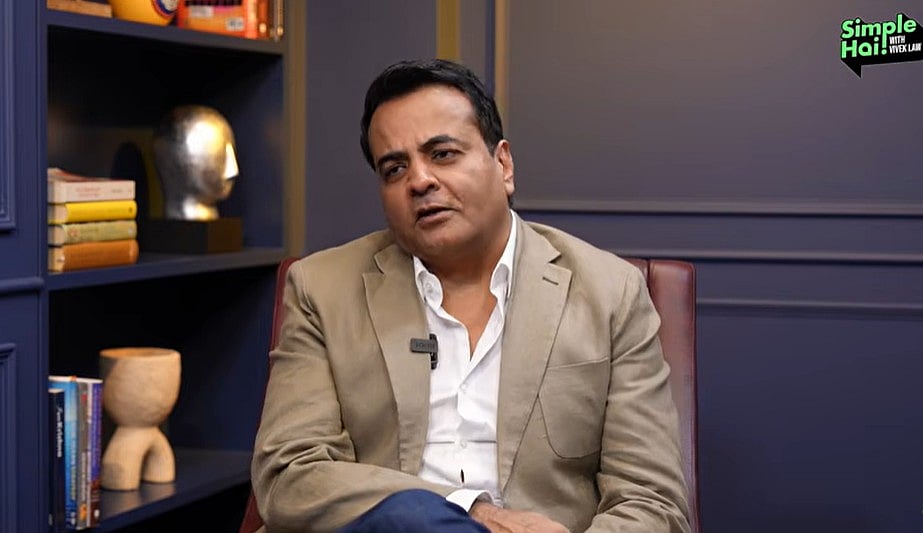
In a recent episode of the Simple Hai! podcast, host Vivek Law sat down with Vishal Goenka, co-founder of IndiaBonds, to unpack a long-standing gap in Indian investing: why bonds have remained under-represented in retail portfolios, and whether that is now beginning to change.
For decades, Indian households have followed a familiar investment playbook—fixed deposits for safety and equities for growth. Bonds, despite being one of the largest asset classes globally, have rarely featured in everyday financial conversations. But as India’s financial ecosystem evolves and the country moves towards its “Viksit Bharat 2047” ambition, Goenka believes investors may need to rethink this traditional binary.
Understanding bonds beyond fixed deposits
Goenka began by demystifying bonds for retail investors. “Most Indians understand lending money to a bank via fixed deposits,” he said. “A bond is simply lending directly to a company or a government institution, with clearly defined terms—interest rate, maturity, and repayments.” Law noted that while equity markets and mutual funds have gained popularity among retail investors, fixed income instruments still suffer from a perception gap.
According to Goenka, this is now slowly changing, driven by digital platforms that make bond investing more accessible and transparent for individuals. He added that easier access, combined with increasing financial awareness, is helping bonds move from being an institutional product to a viable option for retail investors.
Risk, returns and portfolio stability
A key theme in the conversation was risk perception. Goenka pushed back against the idea that all market-linked products carry similar risks. Unlike equities, bonds offer a predictable structure where investors know the interest payments and maturity timelines in advance. This predictability, he explained, becomes especially valuable during volatile market conditions. When equity markets react sharply to global or domestic shocks, bonds tend to exhibit lower volatility and can act as a cushion within a diversified portfolio.
“Bonds can help stabilise returns when markets are uncertain,” Goenka said, adding that even a modest allocation to fixed income can significantly improve overall portfolio resilience. Law observed that many investors still underestimate this balancing role, often focusing disproportionately on equity-driven growth.
Choosing the right bonds
The discussion also turned practical, focusing on how investors should evaluate bonds before investing. Goenka cautioned against chasing high yields without understanding the underlying risks. Instead, he advised investors to prioritise the credit quality of the issuer, check whether the bond is listed, and ensure that the investment platform operates within a regulated framework. “The biggest mistake retail investors make is focusing only on returns,” he said. “Understanding risk and issuer credibility is far more important.”
Bonds versus debt mutual funds
Another important question raised during the podcast was the comparison between direct bond investments and debt mutual funds. Goenka acknowledged that debt funds offer advantages such as diversification, liquidity, and professional management. However, he pointed out that direct bonds can sometimes deliver higher yields, particularly for investors willing to hold them until maturity. This approach allows investors to lock in returns and avoid the interim volatility that may affect bond prices in the secondary market. He emphasised that the choice ultimately depends on an investor’s financial goals, liquidity needs, and risk tolerance.
A larger role in India’s financial future
Beyond individual portfolios, Goenka framed the rise of bonds as part of a broader structural shift in India’s financial landscape. As the country works towards becoming a developed economy by 2047, mobilising household savings into productive investments will be critical. Currently, a large portion of savings remains parked in traditional, low-yield instruments. Expanding participation in bond markets, he argued, could help channel capital into infrastructure, corporate growth, and long-term economic development.
Law noted that as financial literacy improves and access barriers decline, Indian investors may increasingly adopt a more diversified approach—one that includes a meaningful allocation to fixed income alongside equities. The conversation ultimately underscored a quiet but significant transition. Bonds, once seen as complex or inaccessible, are gradually entering mainstream investment discourse. If this trend continues, they could evolve from a niche allocation into a core component of portfolios—helping investors balance risk, preserve capital, and build wealth over the long term.
RECENT STORIES
-
-
-
-
-