Shubhranshu Singh Offers Insight Into Tata Motors' Marketing Playbook
Driving the new era of mobility, Shubhranshu Singh tells us how Tata Motors Commercial Vehicles is blending innovation, sustainability and consumer-centric marketing.

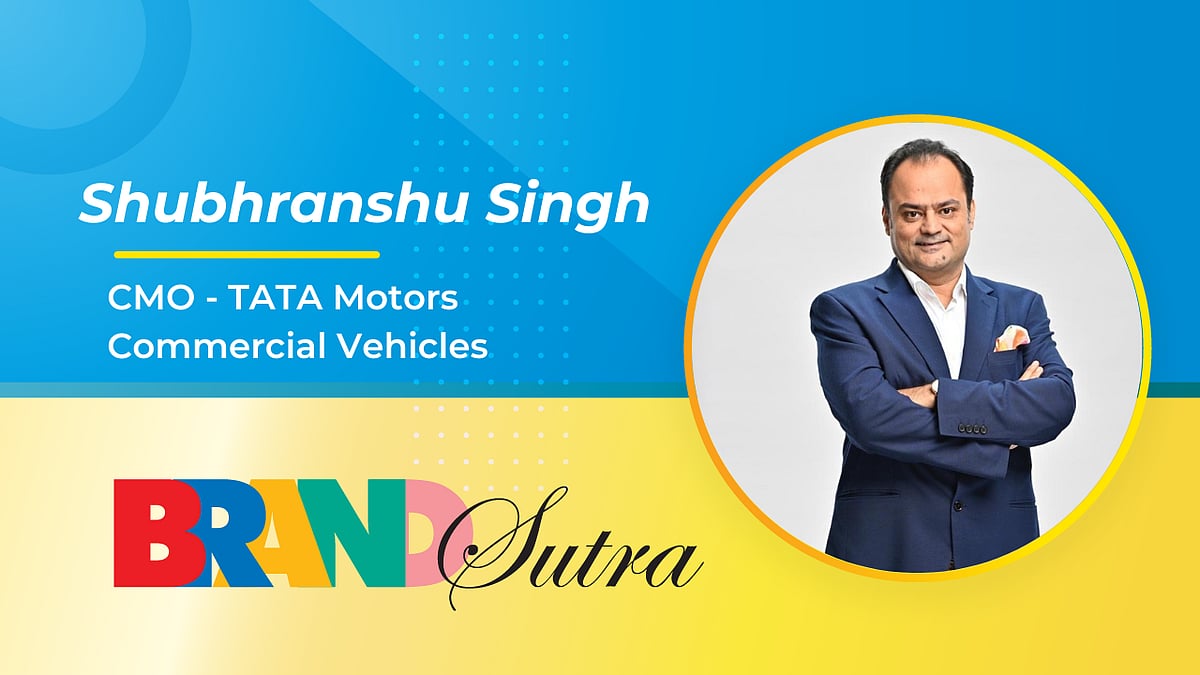
Tata Motors Commercial Vehicles (CV) division has firmly established itself as a leader in the Indian automotive sector by consistently adapting to shifting market dynamics, evolving customer preferences, and new technological advancements. Shubhranshu Singh, Chief Marketing Officer of Tata Motors CV, shares key insights into the brand’s marketing strategies, its approach to sustainability, and the trends shaping the future of mobility.
With decades of experience in marketing, Singh emphasises the critical importance of understanding consumer behaviour. Consumer decision-making is no longer linear; it spans multiple platforms and devices simultaneously. This highlights the need for seamless, consistent brand messaging across all touchpoints.
The rise of digital media has also shifted the paradigm, enabling data-driven personalisation. Leveraging first-party data responsibly allows brands to deliver personalised content and media strategies, driving both effectiveness and efficiency.
Moreover, the evolving role of artificial intelligence (AI) is blending creativity with technology. Tools like AI, programmatic advertising and performance metrics help craft impactful and measurable campaigns—success in media and marketing lies in harmonising creative excellence with technological advancements.
When Singh joined Tata Motors CV, he aimed to reshape the marketing approach by focusing on the brand rather than just the product. "Brand-first thinking is key. Consistency in both experience and communication creates memorability."
He also championed a balanced approach between branding and performance marketing. By shifting the emphasis towards leveraging performance marketing more aggressively, the company ensured branding efforts complemented sales objectives and brand health. This included implementing always-on performance campaigns, which allowed continuous analysis of user visitation patterns and optimisation of Return On Advertising Spend (ROAS).
They also integrated Salesforce for a unified customer view, enhancing marketing automation efforts. This enabled precise targeting, seamless campaign execution and personalised communication at scale.
A robust mechanism for capturing and leveraging first-party data has also been pivotal. First-party data provided actionable insights, allowed for the creation of lookalike audiences and activated these segments effectively, driving both retention and acquisition strategies.
The shift towards sustainability has become a cornerstone of Tata Motors CV’s strategy. Electric Vehicles (EVs) and alternate fuels are key drivers of change. Indian consumers are increasingly prioritising sustainability and lower running costs, leading to a growing interest in EVs. Government incentives and improved charging infrastructure are accelerating this trend, particularly in urban areas.
Beyond electrification, the brand is embracing sustainable manufacturing, alternative fuels like compressed natural gas (CNG) and biofuels, and circular economy initiatives. “We’ve implemented eco-friendly manufacturing processes, such as using renewable energy in factories, water conservation initiatives, and minimizing industrial waste.”
Tata Motors CV has also launched the Rewire initiative, with six centres in India dedicated to recycling and responsibly disposing of end-of-life vehicles. This initiative turns waste into resources, promoting refurbishing and remanufacturing parts to reduce waste and extend the life cycle of components.
In today’s digital age, platform-specific branding and omnichannel strategies are crucial. With most purchase journeys beginning online, having a strong presence on relevant search platforms is non-negotiable. Visibility is optimised through search engine optimisation (SEO) and performance-driven campaigns.
Collaborating with aggregators and leveraging first-party data also play key roles in Tata’s marketing strategy. First-party data combined with tools like Salesforce enables precise targeting and personalised marketing automation. This approach maximises customer engagement, nurtures leads and ensures a seamless conversion path.
"Search remains a pivotal point in consumer journeys, with ‘near me’ searches driving high-intent customers. Tata Motors CV ensures its presence on platforms like Google Maps and search engines to capture these audiences." Aggregator partnerships are equally vital, facilitating the evaluation phase for potential buyers and acting as an essential touchpoint in the purchase journey.
Influencers and content creators are the next important element in connecting with diverse consumer segments. "Influencers and content creators bridge the gap between brands and consumers by delivering authentic, relatable content." They play a pivotal role in reaching younger demographics and building trust among new audiences.
Localised and niche outreach have also been a focus. Collaborating with regional and niche influencers enables the brand to reach specific consumer segments, ensuring messaging resonates with diverse audiences across India’s varied markets.
Content creators are also integral in driving engagement. They spark interactive campaigns, challenges and discussions, encouraging consumer participation and amplifying brand visibility organically through shares and interactions.
As the industry evolves, the future of automobiles is exciting. The shift towards electric vehicles and sustainable practices in manufacturing and operations promises a cleaner, greener future. Connected and autonomous vehicles are also on the horizon. Innovations in connected car technologies and the progress towards autonomous vehicles have the potential to revolutionise convenience, safety and the overall driving experience.
The future also includes personalisation through AI and evolving mobility ecosystems. Advanced AI and data analytics enable hyper-personalised automotive solutions, from custom features to tailored user experiences.
Additionally, the rise of shared mobility, subscription models and integrated transportation systems pave the way for a holistic approach to mobility. The narrative is shifting from vehicle ownership to mobility as a service (MaaS) and battery as a service (BaaS).
In 2025, Singh believes that the continued expansion of Connected TV (CTV) and the evolving role of influencers will play a critical role. "Content creators will play a more strategic role in integrating brands into consumer lifestyles, moving beyond awareness to drive direct action."
Marketing strategies will also lean heavily on AI for hyper-personalised content delivery, dynamic creative optimisation and real-time campaign adjustments. With its focus on electrification, connected technologies and a consumer-first approach, the brand is ensuring it remains at the forefront of the mobility revolution.
RECENT STORIES
-
-
-
-
-