Swachh Vayu Survekshan-2026: Timeline Extended, Self-Assessment Process Raises Questions
Survey primarily relies on self-declaration across key pollution-control parameters, but field verification has been strengthened this year. While weather influences AQI, pollution-generating activities remain largely unchanged throughout the year, making long-term mitigation efforts more important than seasonal air quality trends.

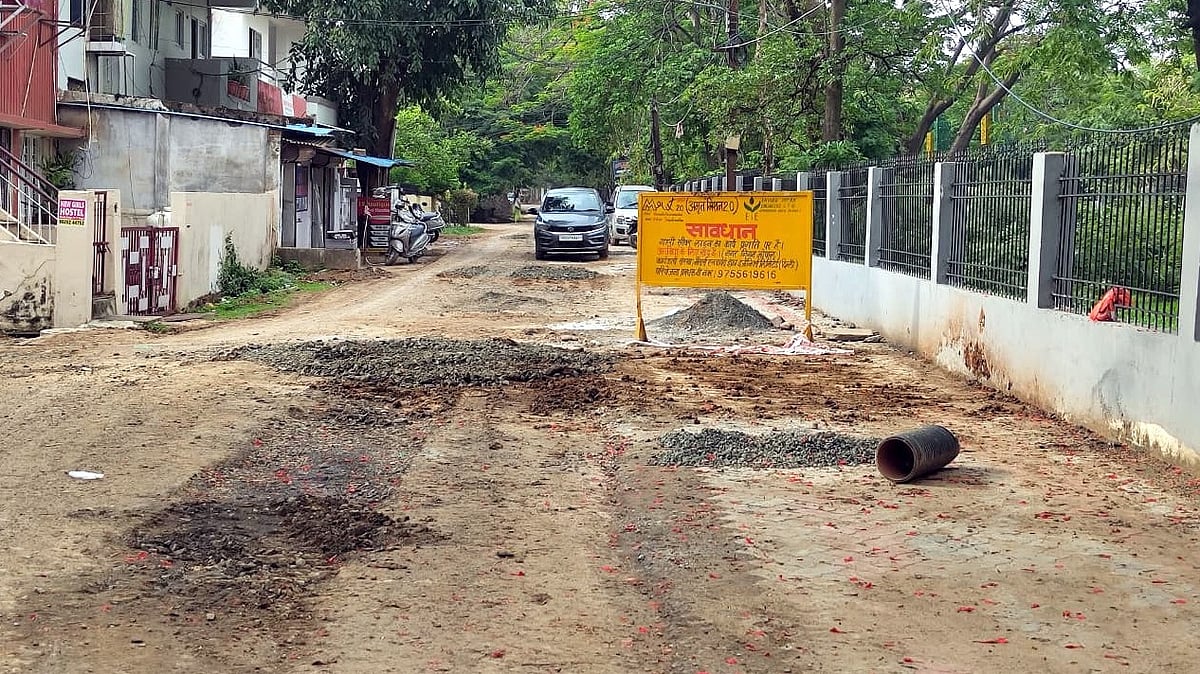
Bhopal (Madhya Pradesh): As Madhya Pradesh gears up for Swachh Vayu Survekshan (SVS) 2026-27, questions are being raised over the revised survey timeline and the self-assessment-based evaluation process.
The survey is being conducted during the monsoon, when the state's average Air Quality Index (AQI) generally remains below 100, despite cities witnessing severe pollution during winter.
In November 2025, Singrauli recorded an AQI of 356, while Bhopal touched 300, highlighting the seasonal spike in air pollution.
The Ministry of Environment, Forest and Climate Change (MoEF&CC) has extended the deadline for Urban Local Bodies (ULBs) to upload self-assessment reports on the PRANA portal from June 30 to July 7, 2026, following requests from participating cities.
The survey covers 130 National Clean Air Programme (NCAP) cities and evaluates performance across air quality management, waste burning, industries, vehicles, road dust, construction activities, public awareness and monitoring.
Field verification introduced
Central Pollution Control Board (CPCB) officials said concerns were raised last year after Jabalpur Municipal Corporation (JMC) reported higher self-assessment scores.
A subsequent field verification confirmed the improvements and awarded the city 199 out of 200 marks. Jabalpur went on to secure the second national rank and Rs 1 crore award.
Dust pollution continues in Bhopal
Despite the clean-air survey, Bhopal continues to battle dust pollution caused by metro construction, flyover projects, road widening and sewage excavation under AMRUT 2.0 across the city.
The entire state capital remains dust-prone, while excavated soil in residential colonies has further worsened the situation. Under the National Clean Air Programme (NCAP), Bhopal Municipal Corporation (BMC) has received Rs 242.56 crore since 2019, with Rs 195.01 crore already spent.
However, PM10 levels have shown limited improvement, raising concerns over the effectiveness of pollution-control measures.
Revised survey schedule
Activity
Revised deadline
ULBs upload self-assessment on PRANA
July 7, 2026
State approval of reports
July 15, 2026
CPCB evaluation
July 30, 2026
Field verification
August 15, 2026
Award announcement
September 7, 2026
Quote
Survey primarily relies on self-declaration across key pollution-control parameters but field verification has been strengthened this year. While weather influences AQI, pollution-generating activities remain largely unchanged throughout the year, making long-term mitigation efforts more important than seasonal air quality trends.
Sunil Meena, CPCB senior scientist
RECENT STORIES
-
-
-
-
-