West Bengal Elections 2026: BJP’s Spectacular Win Marks A Tectonic Shift In Indian Politics
The BJP’s massive victory in the 2026 West Bengal Assembly elections has reshaped the state’s political landscape, ending Mamata Banerjee’s dominance. Analysts attribute the shift to unemployment concerns, anti-incumbency, law-and-order issues, and a broader realignment of voter support across Bengal.

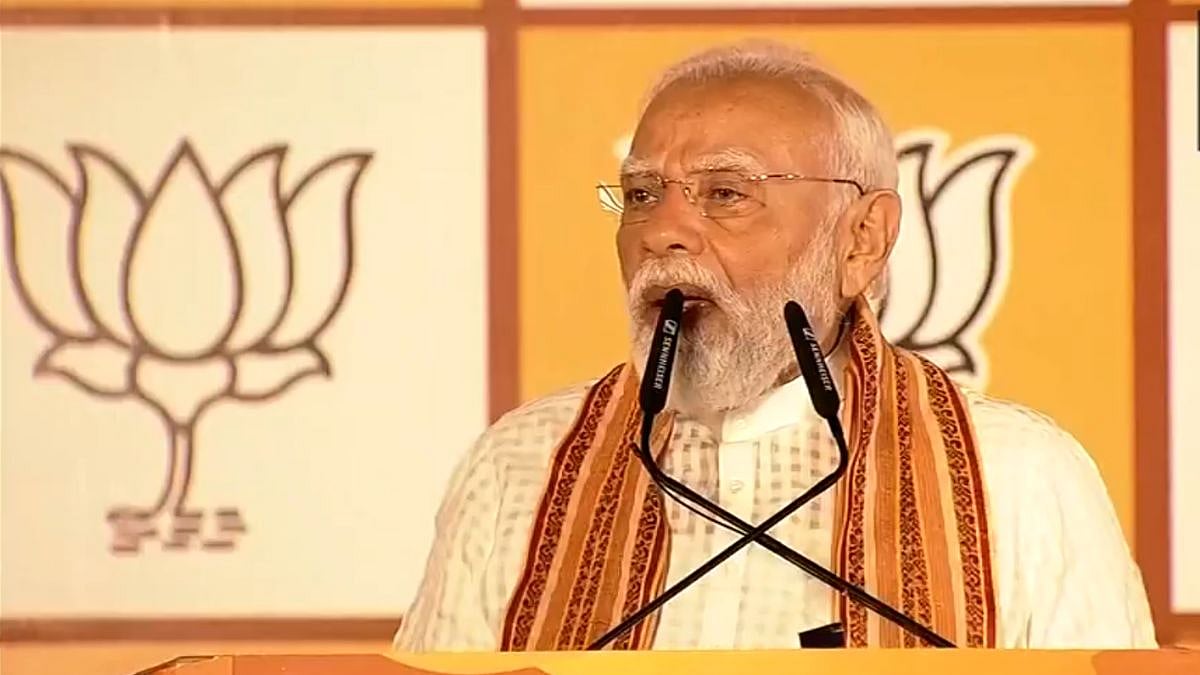
PM Modi | ANI
Even before May 4, when counting began for the West Bengal Assembly election, a sense of inevitability prevailed in the state — that, despite intense anti-incumbency against the TMC, it would still cross the 150-mark needed to stake a claim to another term in office. But nothing of that sort happened. Instead, the TMC, despite winning 80 seats, was swept away by the BJP’s electoral tsunami.
The BJP won 207 seats, as compared to the 77 seats it won during the 2021 elections. The conclusion: Mamata Banerjee, the three-time West Bengal CM, had met her Waterloo. She even lost to Suvendu Adhikari from the Bhabanipur constituency in south Kolkata in a high-profile contest.
Bhabanipur presents a distinctly composite electorate, reflecting a rich social and cultural mix. Approximately 42% of its voters are Bengali Hindus, while non-Bengali Hindus constitute about 34%. Muslims account for nearly a quarter of the electorate, alongside notable migrant communities from Bihar, Odisha, and Jharkhand, adding further diversity to the constituency’s demographic profile.
Shift among Bengali Hindu voters strengthens BJP
This time, however, the BJP’s support was not confined to segments of the non-Bengali Hindu trading classes, such as Gujaratis and Marwaris. There are clear indications of a broader realignment, with a discernible shift among Bengali Hindu voters as well, which appears to have significantly strengthened Suvendu Adhikari’s position.
The BJP’s landslide victory in West Bengal was driven in part by gains in Muslim-majority constituencies, particularly in Murshidabad, Malda, and North Dinajpur. These gains stemmed from a consolidation of Hindu votes alongside a split in the Trinamool Congress’s Muslim support, against the backdrop of the Special Intensive Revision (SIR) of electoral rolls.
Muslim votes appear to have fragmented among the Congress, the Communist Party of India (Marxist), and, to a lesser extent, Humayun Kabir’s Aam Janata Unnayan Party (AJUP). In the 2021 election, the BJP drew a blank in Muslim-majority areas despite securing over 21.6% of the Muslim vote across the state.
Economic concerns and unemployment shaped voter mood
For the BJP, it was a historic moment. The people of Bengal appeared to be yearning for poriborton (change), as concerns over youth unemployment and the persistent lack of industrial growth had weighed heavily on voters for decades. The industrial decline that began under the CPM rule in the late seventies continued unabated even after the TMC assumed power in 2011. Economic prosperity in the state had, for many, become a mirage.
Though Mamata left no stone unturned to foreground cultural identity as a source of state pride and portrayed the BJP as ‘outsiders’, she failed to read the writing on the wall: the people of Bengal, especially its youth, wanted more than cultural symbolism — they sought jobs and financial security, not a modest monthly allowance of Rs 1,500.
The West Bengal teacher recruitment scam proved to be another millstone around Mamata’s neck, eroding public faith in the TMC’s governance model and fuelling anti-incumbency. Mamata also committed the cardinal faux pas of fostering a fear that a BJP government would ban non-vegetarian food. This again was nothing but a delusional rant that betrayed her disconnect from reality.
Law and order issues dented TMC’s image
A deteriorating law-and-order situation was another factor that eroded the TMC’s political sheen. Women increasingly felt unsafe on the streets. The RG Kar rape incident and the Sandeshkhali episode in 2024 emerged as major inflection points for the Mamata government, casting serious doubts on her credibility as chief minister. Wasn’t it ironical that a party led by Mamata Banerjee, which has consistently highlighted its high number of women representatives, was found wanting in ensuring the safety of women?
The party has always asserted that it has the highest proportion of women elected to both Parliament and the West Bengal State Legislature. For the 2026 West Bengal Assembly polls, reports indicate that the TMC fielded 55 women candidates, which is the highest among all parties in the state.
BJP now faces governance and investment challenges
The BJP has announced that it has a slew of industrial projects lined up for the state, with the potential to provide jobs. The BJP’s foremost priority should be to create a conducive climate for investment and job creation, while also ensuring communal harmony in the state.
The Singur agitation in 2007, during CPM rule, led by Mamata Banerjee against the setting up of Tata Motors’ Nano project, scuppered a major opportunity for the state to create jobs and emerge as an industrial powerhouse. Instead, it witnessed violence and bloodshed. In fact, West Bengal, since the seventies, has rarely been seen as an investment-friendly state. A culture of dharnas and lockdowns during the CPM’s reign weakened the state’s economy, triggering a flight of capital. Nor did Mamata Banerjee’s tenure witness any truly transformative shift on the economic front.
By resorting to a self-serving moral dynamic — criticising the BJP while neglecting issues in her own backyard — Mamata paid the price electorally. Once the BJP finds itself in the saddle, it may have to contend with the mercurial Mamata’s disruptive brand of politics as an opposition leader. We can expect more high-octane street dharnas in the coming days. It won’t be easy for the BJP to settle into its administrative rhythm without running into one protest or another by the TMC on a daily basis.
Balancing nationalism with Bengal’s cultural legacy
Going forward, the BJP faces the delicate task of aligning itself with Bengal’s cultural renaissance legacy — shaped by figures like Rabindranath Tagore, Kazi Nazrul Islam, and Satyajit Ray — balancing assertive nationalism with regional pride, linguistic identity, and a tradition of intellectual pluralism that often resists overt homogenisation.
The writer is an independent journalist.
RECENT STORIES
-
-
-
-
-