Rapidly Depleting Aquifers Leave India In Choppy Waters
India is facing a deepening water crisis as El Nino conditions and a reported 60 per cent southwest monsoon deficiency raise concerns over supply. Overreliance on groundwater, falling reservoir levels, and urban dependence on tankers highlight systemic stress. Experts warn that agriculture, drinking water access, and food security are increasingly under threat across regions nationwide.

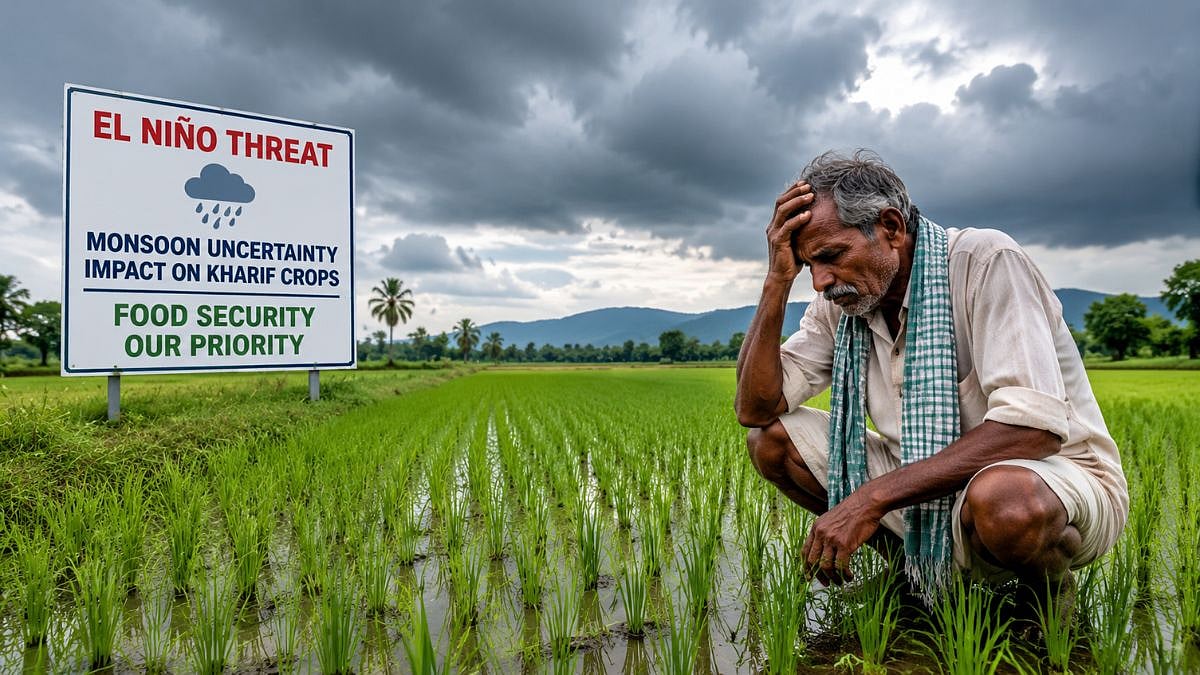
Rapidly Depleting Aquifers Leave India In Choppy Waters | AI Generated Representational Image
Now that the government has finally accepted that India is facing the El Nino factor, with a 60 per cent deficiency in the crucial southwest monsoon, the question uppermost in the mind of the average Indian is how it will impact his water needs.
There is no doubt that the farming community is going to be hit hard. The government has launched a ‘pre-emptive agricultural defence plan’ across 315 vulnerable districts. Such a contingency plan will divide these districts into strict priority zones based on their lack of irrigation access. A strategy like this sounds excellent on paper, but if one cuts all the clutter, what it will amount to is falling back on our dwindling groundwater resources to tackle this crisis.
India has emerged as the largest user of ground water in the world. Our extraction rates exceed the combined extraction rates of China and the United States. Ground water is meeting over 65 per cent of our agricultural needs and 85 per cent of our rural drinking water demands. This over-reliance has led to a severe aquifer depletion, with a net loss of about 450 cubic km recorded in North India between 2002 and 2021.
There is a double bind in this wholesale extraction.
The more ground water we extract, the lower our water levels drop. The main failure of the Jal Jeevan Mission, tasked with supplying piped water to rural India, is that while the infrastructure of taps has been put up in place in 70 per cent of our villages, the majority of them do not have access to even tube-well water during these scorching summer months. Village women are walking up to 20 km or more every day in search of two to three buckets of drinking water.
Not that the situation in our urban cities is better. Large swathes across all our metros and smaller cities are now dependent on expensive tanker water. In Gurgaon, tanker water is available in premium colonies, sometimes at over Rs 6000 per tanker. In Delhi, the struggle for water has become so acute that people’s sleep routines are being worked around the availability of tanker water. In the NCR, one family member is being deputed to skip work in order to collect water from the tanker. Some villages in Maharashtra have seen men opt for a second marriage in order to get a “water wife” whose only job will be to fetch water for the household.
Water availability in India’s 91 reservoirs has reached an all-time low, with stocks in Maharashtra, Jharkhand, Chhattisgarh, and Madhya Pradesh dipping to less than ten per cent of their total storage capacity, according to the Central Water Commission. Levels in aquifers have also dropped to alarming levels.
Down south, reports of the Central Water Commission indicate that all major reservoirs across rural Karnataka, Telangana, and Andhra Pradesh are filled to less than 20 per cent of their capacity, with some dams not even holding five per cent of their total capacity.
“There is a massive rural-to-urban diversion of water taking place," agricultural expert P Sainath told this author some years ago. "While water is rural in its generation, its consumption is urban. And even in the cities, slum dwellers receive between 40 and 70 litres per person per day, while those living in (the posh) Malabar Hill in Mumbai get up to 500 litres per person per day."
"Water allocation is extremely lopsided," he adds. "Maharashtra has 38 districts. While Mumbai, Pune, and Thane receive 53 per cent of the water allocated in the state, 17 districts receive only one per cent of drinking water. Beed gets one per cent of drinking water, though it is the most drought-affected."
The last few years have seen the situation only worsen. Today, posh colonies like Colaba in Mumbai and Vasant Vihar in New Delhi are totally dependent on tanker water during the summer months.
Corresponding to the water shortage is the poor quality of water being made available, which is often contaminated and foul-smelling or muddy. India’s rivers—which continue to be our main source of drinking water—are heavily polluted. In August 2024, a study commissioned by the Central Water Commission revealed that 81 rivers and tributaries showed either traces or an extremely high concentration of one or more toxic heavy metals, including arsenic, cadmium, copper, iron, lead, mercury, and nickel.
India faces a deepening water crisis rooted in an imbalance between supply and demand that threatens its population and economic future. Home to approximately 18% of the world’s population, the nation possesses only 4% of the planet’s renewable freshwater resources. This disproportionate share places immense strain on natural systems, elevating water scarcity from a localised problem to a defining national concern.
India ranks among the most water-stressed countries. According to the 2023 Aqueduct Water Risk Atlas released by the World Resources Institute, India stands 24th out of 25 nations facing “extremely high” water stress. According to the report, this means the country is using at least 80% of its available supply. A World Bank report highlights that while India is feeding almost 18 per cent of the world’s population with only 4 per cent of global water resources, the physical availability of water per person has declined sharply, pushing the country into a state of water stress. India’s annual per capita water availability is currently roughly 1,513 cubic metres, falling below the 1,700 cubic metre threshold that defines water stress.
Water stress combined with a reduction in forest cover and vegetation has resulted in an increased erosion of our soil, affecting its fertility and productivity. This is causing increasing land degradation, which has emerged as a major environmental challenge for us. According to the Desertification and Land Degradation Atlas of India (ISRO), around 30% of India’s geographical area is under land degradation, affecting approximately 97.85 million hectares. Declining water resources and decreasing soil fertility are both going to impact our food security. Sadly, this security is not something that will affect us in the near future. Its impact is already being felt in every aspect of our lives.
Rashme Sehgal is an author and an independent journalist.
RECENT STORIES
-
-
-
-
-