‘Behnon Aur Bhaiyon…’: Radio Ceylon Turns 100 And Celebrates A Shared South Asian Legacy
As Sri Lanka marks 100 years of Radio Ceylon, the editorial revisits its global wartime role and its deep cultural bond with India—especially through Hindi film music and Binaca Geetmala—highlighting a shared broadcasting legacy that shaped South Asian popular culture.

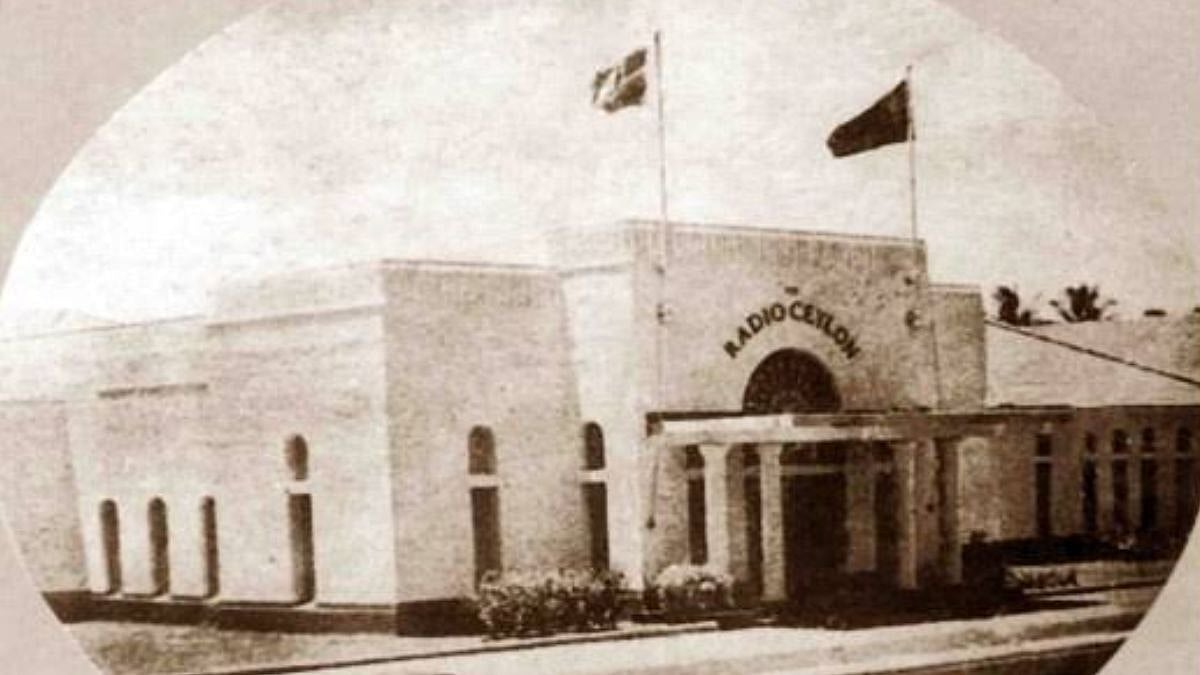
‘Behnon Aur Bhaiyon…’: Radio Ceylon Turns 100 And Celebrates A Shared South Asian Legacy | X - @DPrasanthNair
Sri Lanka is celebrating the Centenary year of its radio service this year. It was indeed a momentous event when the Sri Lankan radio service, Radio Ceylon, was launched on December 16, 1925, making it the second-oldest radio station in the world. But that is not its only claim to fame.
Radio Ceylon became a game changer in the sphere of mass communication in Asia, which makes this historical event equally important for India as well as the rest of the world.
For the world, because of the significant role it played during World War II in communicating war news to listeners in South Asia. During the war, the Allied Forces took control of the station, establishing Radio South East Asia Command, which controlled the Allied operations in Asia during the war.
British announcers David Jacobs and Desmond Carrington, who were based in Colombo, presented news and other programmes for the Allied forces stationed in Southeast Asia.
For India, because of the great service it provided to the Indian film industry as well as film music lovers in India at a time when the All India Radio had banned film music from its airwaves altogether. In 1952, following a directive from the Ministry of Information and Broadcasting, under BV Keskar, the All India Radio imposed a ban on film music.
Keskar believed that classical Indian music was losing ground to westernised film music and youngsters were getting influenced by non-Indian elements. “We must make (ourselves) familiar with our traditional music,” he observed. Even if a song was aired on AIR, after intense scrutiny, the name of the movie was not mentioned because the station would not advertise the movie.
AIR’s loss became Radio Ceylon’s gain, and the station started its Hindi music station with Binaca Geetmala, making its presenter, Amin Sayani, a household name in India. It is thanks to this one programme that the magical journey of the Hindi film industry and its music through the 50s, till the launch of Vivid Bharati in 1957, including songs as well as interviews of yesteryear stars, lyricists, and music composers, could be chronicled.
Today, the library at the Sri Lanka Broadcasting Corporation (SLBC) has rare recordings of songs, some of which, sadly, have been lost in India. For instance, out of a total of 170 recordings of KL Saigal that survive today, the SLBC has 85, comprising both film and non-film songs.
The SLBC has over 70,000 music records, considered to be the best in Asia, going back to low-fidelity 78 rpm records with metadata. For the music connoisseurs, it is literally a treasure trove.
If the Hindi service recorded the greatest moments of Hindi cinema, the All Asia English service, which was scrapped in the mid-1990s, became witness to major events of the 30s, 40s, 50s, and 60s, from the changing face of British dominion to wars, the first climb of Mt. Everest, and the moon landing.
By celebrating 100 years of SLBC, it is this shared bit of historical, social, and cultural legacy that we celebrate with this pearl of the Indian Ocean.
Published on: Tuesday, December 23, 2025, 05:03 AM ISTRECENT STORIES
-
-
-
-
-