A Difficult Inheritance: Kavinder Gupta’s Constitutional Test In Himachal
The new Governor assumes office amid a legacy of friction between Raj Bhavan and the Congress government. Restoring institutional balance will be his first and most delicate challenge.

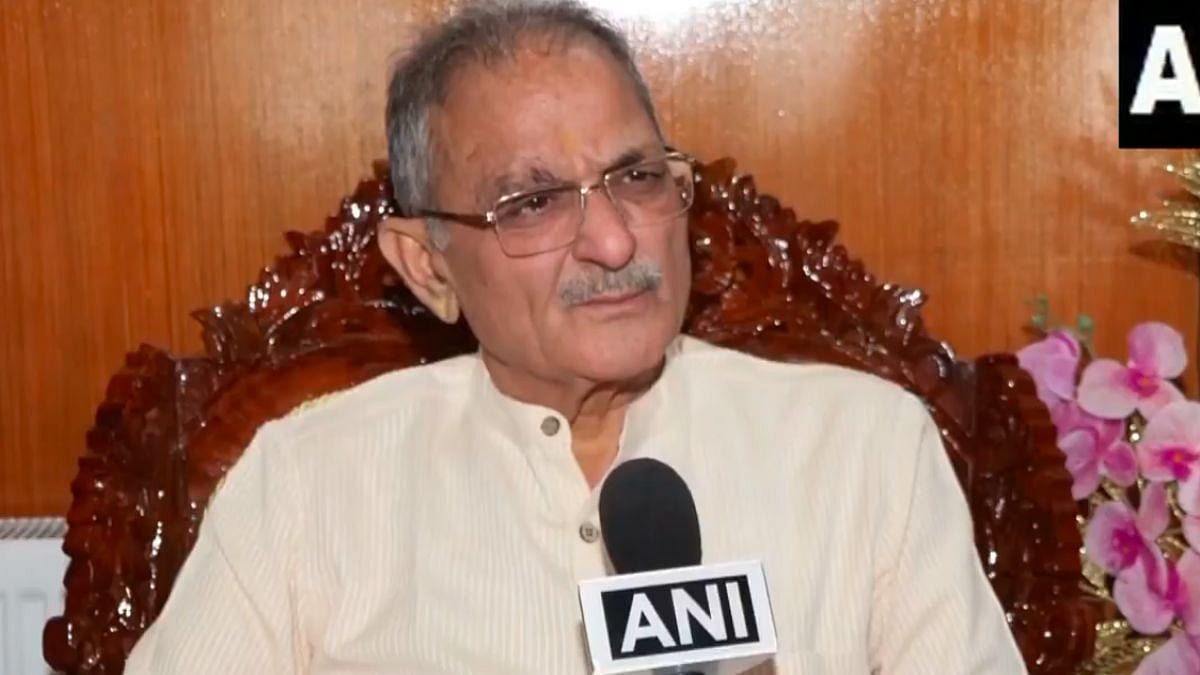
A Difficult Inheritance: Kavinder Gupta’s Constitutional Test In Himachal | X @ANI
Shimla: Keeping in view his long association with the Rashtriya Swayamsevak Sangh (RSS), his reputation for unwavering loyalty to the Centre, and the fact that Himachal Pradesh is governed by the Congress, the road ahead for the new Governor, Kavinder Gupta is unlikely to be easy.
He steps into Raj Bhavan at a time when relations between the Governor’s office and the government led by Chief Minister, Sukhvinder Singh Sukhu have been marked by visible bitterness.
Restoring normalcy and rebuilding a functional working relationship will therefore be an uphill and delicate task. Gupta inherits an atmosphere of mistrust that developed during the tenure of his predecessor Shiv Pratap Shukla, whose confrontational engagements with the state government placed him among a growing group of Governors in opposition-ruled states who found themselves at the centre of political controversy.
This wider pattern was evident in the recent reshuffle of Governors across the country. Transfers from non-BJP ruled states included R. N. Ravi moving from Tamil Nadu to West Bengal, Jishnu Dev Varma shifting from Telangana to Maharashtra, and Rajendra Vishwanath Arlekar moving from Kerala, where he was later given additional charge of Tamil Nadu.
In several of these states, the Governors had been locked in open confrontation with their respective Chief Ministers, often reinforcing the perception that Raj Bhavans had become arenas of political contestation rather than neutral constitutional institutions.
Against this politically charged background, Gupta’s swearing-in assumed special significance, consequence, and relevance. In a dignified yet understated ceremony at Lok Bhavan in Shimla on March 10, 2026,
he took oath as the 30th Governor of Himachal Pradesh, administered by Chief Justice, Gurmeet Singh Sandhawalia. The ceremony itself was modest, but the circumstances surrounding the transition lent it a deeper significance for the state’s political and administrative landscape.
A Subtle Signal of Constitutional Restraint;
Observers found a measure of reassurance in Gupta’s initial remarks after assuming office. Emphasising that the Governor’s position is a constitutional office that does not belong to any political party, he underlined the need for coordination and constructive engagement with the elected government. Such an assertion may appear routine, yet in the prevailing context it carried unmistakable political meaning.
His statement reflected both strategic restraint and political astuteness. By avoiding direct reference to past confrontations while implicitly acknowledging their consequences, Gupta managed to extend a conciliatory signal without reopening old disputes. The emphasis on cooperation suggested an attempt to reset institutional equations rather than perpetuate confrontation.
Repairing the Damage of the Past;
The first and foremost expectation from the new Governor is to consciously rebuild trust between Raj Bhavan and the elected government by ensuring that the constitutional office remains above partisan perceptions and functions as a bridge rather than a battleground.
In this manner, the most pressing challenge before the new Governor lies in repairing the trust deficit created during the previous tenure. The period was marked by repeated standoffs, accusations of partisanship and delays in administrative processes—developments that many in the state interpreted as Centre-driven interference in a Congress-ruled government.
The dispute over the appointment of Vice-Chancellors in key universities became the most persistent flashpoint. In June 2024, Shiv Pratap Shukla publicly alleged that the state government had attempted to pressure him into appointing Vice-Chancellors “of their choice against the rules.” The controversy forced Chief Minister Sukhvinder Singh Sukhu to personally visit Raj Bhavan in an effort to ease tensions.
The matter escalated in 2025 when advertisements were issued for permanent Vice-Chancellors at Dr Y.S. Parmar University of Horticulture and Forestry in Nauni and CSK Himachal Pradesh Agricultural University in Palampur—posts that had remained vacant for long periods. The state cabinet intervened, describing the move as legally untenable and directing that the advertisements be withdrawn, arguing that the Chancellor must act in accordance with government recommendations under the relevant state legislation.
The Governor rejected this interpretation, asserting that the statutory powers of the Chancellor were independent of ministerial advice. The disagreement soon evolved into a constitutional debate over the extent of gubernatorial authority under laws enacted by the Himachal Pradesh Vidhan Sabha, with both sides defending their positions vigorously.
Political Signals and Institutional Frictions;
The second expectancy from the new Governor is to avoid symbolic confrontations and maintain a steady culture of institutional dialogue so that political signalling does not overshadow governance.
Earlier the tensions were not confined to university appointments. During the February 2025 Budget Session, the Governor omitted sections of the government-drafted address that criticised the Centre’s decision to discontinue the Revenue Deficit Grant—an issue that the state government argued would lead to an annual financial loss of nearly ₹10,000 crore. The episode triggered political controversy and added to the perception of institutional discord.
Similarly, in December 2024 the Governor chose not to attend a Shimla function honouring B. R. Ambedkar because of protocol differences with the state government. Although seemingly minor, such gestures reinforced the impression that relations between Raj Bhavan and the Secretariat had become strained.
The Question of Delays;
The third ray of hope is that the new Governor ensures timely disposal of legislative and administrative files so that constitutional procedures do not become instruments of political friction.
Another source of friction was the alleged delay in clearing legislation passed by the Assembly. Several measures—including proposals relating to Nautor land rights for tribals, the Sukhashraya housing scheme, anti-corruption initiatives and rules governing contractual recruitment—remained pending for extended periods, prompting criticism from the government.
Public remarks by the former Governor also occasionally provoked controversy. His warning in July 2025 that unchecked drug abuse could turn Himachal into “Udta Punjab” was criticised by the state leadership as inappropriate. Similarly, his observation about the lack of a work culture in the state drew a sharp response from Revenue Minister Jagat Singh Negi, who described it as an insult to the people of Himachal.
The Opportunity before the New Governor;
These episodes collectively created an atmosphere of confrontation that inevitably affected governance in a state already confronting complex challenges—from ecological fragility and climate-induced disasters to youth migration and sensitive border districts.
In this context, Gupta’s administrative experience in Ladakh and Jammu and Kashmir could prove useful. Exposure to high-altitude governance, tribal welfare and border infrastructure provides him with insights that may help bridge the gap between the Centre and the state government.
A Test of Constitutional Balance;
Ultimately, the success of Gupta’s tenure will depend on whether he can translate his oath-day emphasis on constitutional propriety into consistent practice. If he succeeds in fostering dialogue, encouraging consensus-based decisions and ensuring timely administrative clearances, Raj Bhavan could gradually regain the image of a neutral constitutional institution.
For Himachal Pradesh, such a transformation would carry immense significance. Harmony between the Governor and the elected government would strengthen governance in crucial sectors such as tourism, environmental protection, higher education and border development.
Gupta thus begins his tenure with both a burden and an opportunity—the burden of a difficult inheritance and the opportunity to restore equilibrium in the state’s constitutional architecture. If handled with patience and restraint, the transition at Raj Bhavan could mark the beginning of a more cooperative chapter in Himachal’s political life.
RECENT STORIES
-
-
-
-
-