Voter Turnout Declines Compared To 2017 In Pune & Pimpri-Chinchwad; PMC Records 52.42%, PCMC 57.71% As Civic Poll Voting Ends
The voter turnout figures were announced quite late by both civic bodies. Although periodic updates were shared up to 3.30 pm, the final voter turnout data was released only in the wee hours of Friday, after polling ended at 5.30 pm. At the time of filing this report, the counting process had begun at both civic bodies across the district

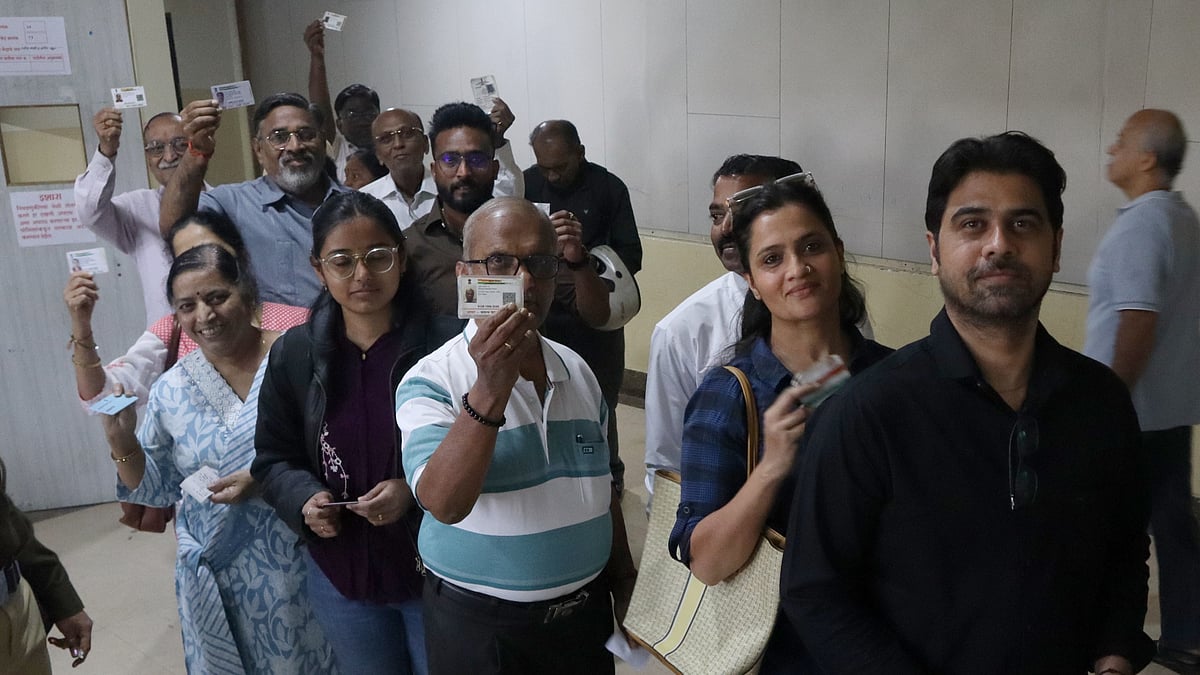
Voter Turnout Declines Compared To 2017 In Pune & Pimpri-Chinchwad; PMC Records 52.42%, PCMC 57.71% As Civic Poll Voting Ends | Anand Chaini
Pune: The chaos surrounding the civic polls in Pune district has nearly come to an end, as voting for the Pune Municipal Corporation (PMC) and Pimpri-Chinchwad Municipal Corporation (PCMC) concluded on Thursday evening (15th January). Voter turnout remained average, in line with recent election trends; however, a decline was recorded in both PMC and PCMC compared to the previous municipal elections.
The PMC polls recorded a voter turnout of 52.42% for 165 seats across 41 wards by the end of Thursday. Meanwhile, the PCMC registered a turnout of 57.71% for 128 seats across 32 wards. A noticeable decline was observed in both civic bodies when compared to the 2017 municipal elections. In the 2017 PMC polls, voter turnout stood at 55.56%, while PCMC had recorded a significantly higher turnout of 65.35%.
The voter turnout figures were announced quite late by both civic bodies. Although periodic updates were shared up to 3.30 pm, the final voter turnout data was released only in the wee hours of Friday, after polling ended at 5.30 pm. At the time of filing this report, the counting process had begun at both civic bodies across the district.
PMC’s Voter Turnout By Time:
- 9:30 AM: 6%
- 11:30 AM: 14.92%
- 1:30 PM: 26.28%
- 3:30 PM: 36.95%
- Final: 52.42%
This year’s PMC election was marked by several controversies. Chaos erupted on polling day due to changes in ward boundaries and polling centre locations. Difficulties for voters in finding their names on the electoral rolls were witnessed. There was confusion regarding the ban on mobile phones inside polling booths, and also in many places, inadequate facilities for senior citizens. There was also voter confusion regarding the process of pressing the button four times to cast their votes.
A total of 4,011 polling stations were set up, with a heavy deployment of police officers and administrative staff. Voting began at 7:30 AM. While housing society areas saw crowds in the morning, the numbers dwindled after 12:00 PM before picking up again after 3:00 PM.
By the end of the day, large crowds were seen at polling stations in slum areas, with queues lasting until 7:30 PM or 8:00 PM in some locations. Despite minor disputes in a few areas, the election for the 165 seats was generally peaceful.
A total of 1,155 candidates, including those from various political parties and independents, are in the fray for 165 seats across 41 wards. 40 wards consist of 4 members each, while one ward (Ward No. 38 Balajinagar, Ambegaon, Katraj) is a 5-member ward. Two candidates from the Bharatiya Janata Party (BJP), Manjusha Nagpure and Shrikant Jagtap, in Ward No. 35 were elected unopposed; therefore, polling was held for 163 seats.
The political battle saw unique shifts this year. Although part of the ruling Mahayuti alliance at the state level, the BJP, the Eknath Shinde-led Shiv Sena, and the Ajit Pawar-led Nationalist Congress Party (NCP) decided to contest the municipal elections independently rather than as a bloc. Shinde Sena fielded candidates in 119 seats, and both factions of NCP came together to contest. Congress, Shiv Sena (UBT), and MNS formed an alliance to field candidates, adding more intensity to the competition, and the BJP went solo. As a result, many wards witnessed three-way and four-way contests.
PCMC Voter Turnout By Time:
- 9:30 AM: 6.56%
- 11:30 AM: 16.03%
- 1:30 PM: 28.15%
- 3:30 PM: 40.05%
- Final: 57.71%
Voting for the PCMC elections was marked by a mixed pattern of voter participation and several on-the-ground challenges. Polling began with enthusiasm during the morning hours, witnessed a slowdown in the afternoon, and picked up pace again in the evening, particularly in slum pockets where long queues were seen during the final phase. Despite the late surge, overall voter turnout registered a decline compared to the 2017 civic polls, when PCMC had recorded a turnout of 65.35%.
ALSO READ
The elections were conducted under the four-member ward system, with four corporators to be elected from each ward. Of the total 128 seats, two candidates were elected unopposed, while polling was held for the remaining 126 seats across 2,067 polling stations. As many as 692 candidates contested the election, including 527 candidates from recognised political parties and 165 independents. The counting of votes began on Friday at 10 am at eight counting centres across the city.
Polling was extended until 8 pm at several booths due to long queues in the final hours.
The polling day, however, was marred by confusion at multiple centres owing to EVM malfunctions, discrepancies in voter lists, and disputes over the ban on mobile phones near polling stations. Several voters complained that their names had been shifted to different wards or distant polling centres, leading to frustration and delays. Arguments were also reported over mobile phone restrictions, while some candidates staged protests alleging bogus voting and procedural lapses, including voters not being marked with indelible ink.
Despite these issues, strong participation was observed among first-time voters and senior citizens. Areas such as Moshi, Wakad, Pimple Saudagar, Nigdi, Akurdi, and Charholi saw steady footfall throughout the day. Candidates and party workers remained active near polling stations, arranging transport for voters and setting up help desks to distribute voter slips. Facilities like wheelchairs, drinking water, and sheds were provided at several centres, while selfie points outside booths attracted considerable attention.
Political branding was also prominent, with rival parties using distinct colours at their booths. Additionally, voters were seen carefully reviewing candidate information displayed outside polling stations before casting their votes.
RECENT STORIES
-
-
-
-
-