Antarctica's Blood Falls Explained: Why This Glacier Appears To Bleed Red
Antarctica is home to some of the world's most extraordinary natural wonders, and one of its most fascinating is Blood Falls. Located at the terminus of the Taylor Glacier in East Antarctica's McMurdo Dry Valleys, the waterfall has intrigued scientists and explorers for more than a century due to its unusual deep red colour, which resembles flowing blood against the stark white ice.

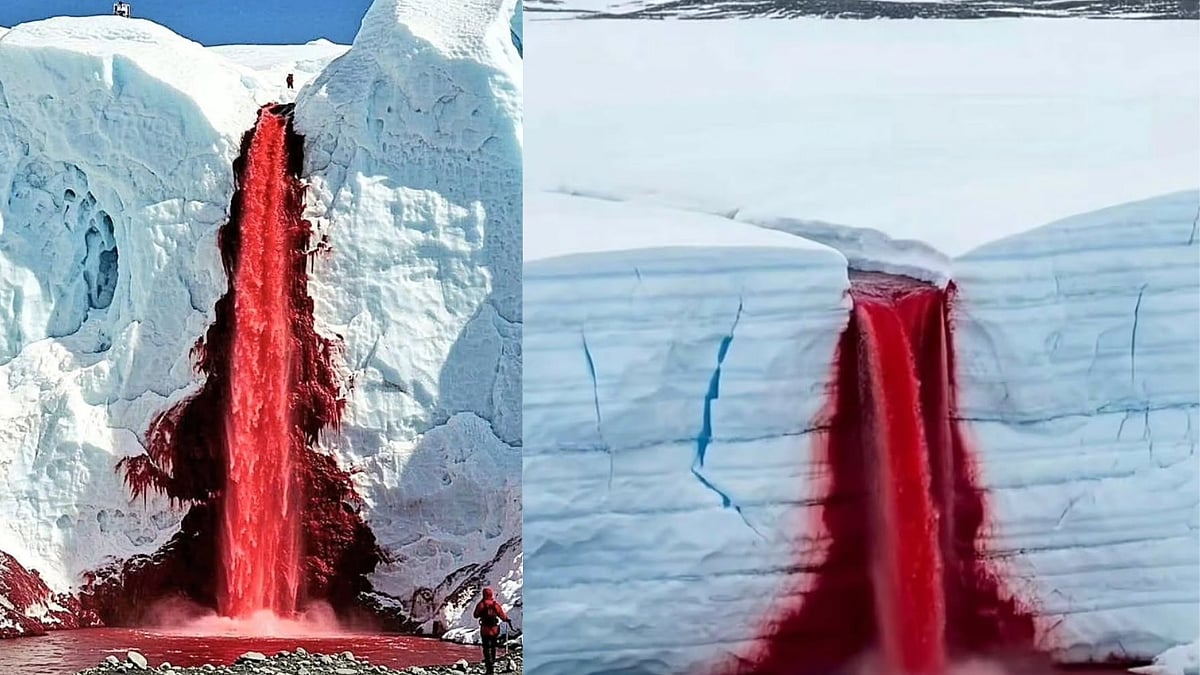
Why Is Antarctica's Blood Falls Red |
Antarctica is Earth's southernmost continent, situated almost entirely south of the Antarctic Circle. It is surrounded by the Southern Ocean, which is also known as the Antarctic Ocean. The White Desert (Antarctica is the fifth-largest continent on the blue planet and is about 40 per cent larger than Europe. It has an area of 14,200,000 km². Antarctica is the coldest, windiest, and least populated of the world's continents. As vast as the landscape of Antarctica in the South Pole region is, it contains many mysteries.
But did you know that the frozen continent is also home to Blood Falls? Keep reading to know more.
Unlocking the mystery behind Blood Falls
Antarctica is home to some of the world's most extraordinary natural wonders, and one of its most fascinating is Blood Falls. Located at the terminus of the Taylor Glacier in East Antarctica's McMurdo Dry Valleys, the waterfall has intrigued scientists and explorers for more than a century due to its unusual deep red colour, which resembles flowing blood against the stark white ice.
The fall has nothing to do with blood
Despite its dramatic appearance, Blood Falls has nothing to do with blood or any form of biological contamination. The striking red colour is caused by iron-rich salty water that emerges from beneath the glacier. This briny water originates from an ancient subglacial reservoir that has remained trapped beneath the ice for millions of years.
ALSO READ
Oxidation process
When the iron-rich water reaches the surface, it comes into contact with oxygen in the air. The iron then undergoes the process of oxidation. It is the same chemical process that causes iron to rust. This reaction produces iron oxides and gives the water its distinctive reddish-brown hue, creating the illusion of blood flowing from the glacier.
What makes it even more fascinating is that the water hosts unique microbes that survive without sunlight, offering clues about life in extreme conditions on Earth and possibly beyond.
RECENT STORIES
-
-
-
-
-