Who Was Ishwar Chandra Vidyasagar? Everything To Know About The Social Reformer On His 206th Birth Anniversary
Ishwar Chandra Vidyasagar was an educator and social reformer, a brilliant student and person with a lot of knowledge. He is best remembered for his social and educational reforms. In literature, he rationalised and simplified the Bengali alphabet and type, which had remained unchanged since Charles Wilkins and Panchanan Karmakar had cut the first (wooden) Bengali type in 1780.

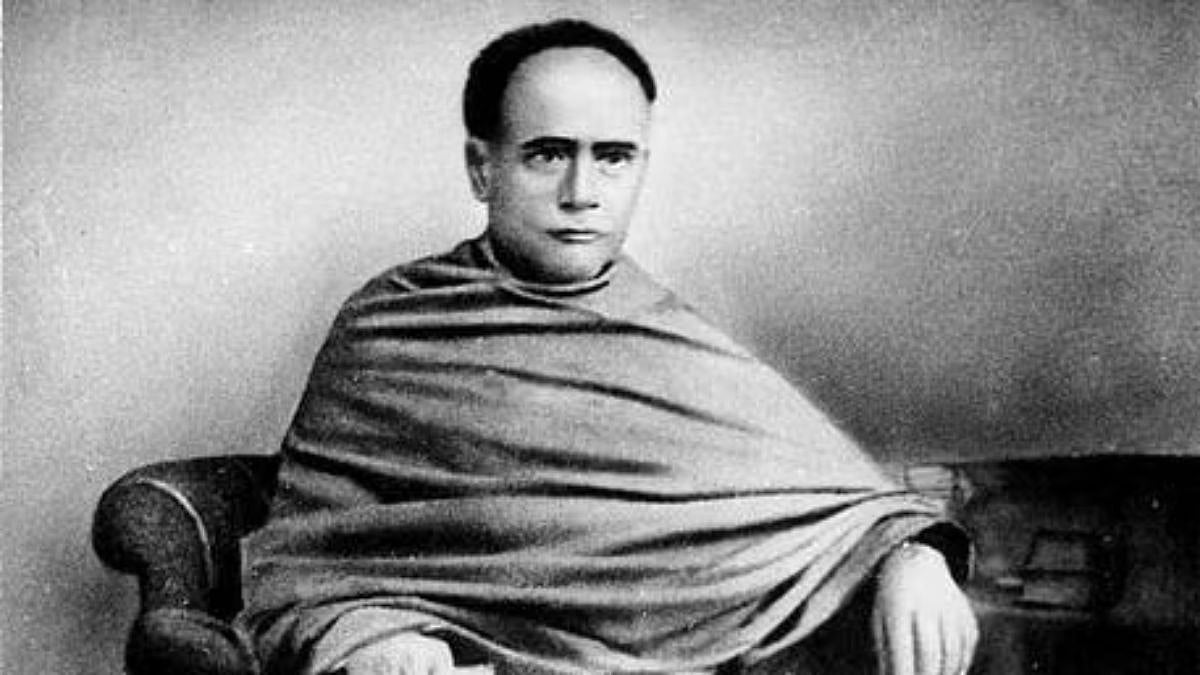
Who Was Ishwar Chandra Vidyasagar? Everything To Know About The Social Reformer On His 206th Birth Anniversary | Wikipedia
Ishwar Chandra Bandyopadhyay, popularly known as Ishwar Chandra Vidyasagar, was one of 19th-century India’s most prominent social reformers, educators and thinkers. Born on September 26, 1820, in Birsingha village in present-day West Bengal, he played a significant role in challenging social practices and promoting education, particularly for women. On his 205th birth anniversary, let's take a look at his contributions to society, struggle and more.
About Ishwar Chandra Vidyasagar
Ishwar Chandra Vidyasagar was an educator and social reformer, a brilliant student and person with a lot of knowledge. He is best remembered for his social and educational reforms. In literature, he rationalised and simplified the Bengali alphabet and type, which had remained unchanged since Charles Wilkins and Panchanan Karmakar had cut the first (wooden) Bengali type in 1780.
Born into a poor Bengali Brahmin family to Thakurdas Bandyopadhyay and Bhagvati Devi in Paschim Medinipur District, Vidyasagar moved to Kolkata at a young age to pursue education. He studied at Sanskrit College and earned the title “Vidyasagar”, meaning “Ocean of Knowledge”, because of his exceptional academic achievements. He later became associated with the institution as an educator and administrator.
Contribution to widow remarriage
Ishwar Chandra Vidyasagar was a prominent campaigner for Hindu widow remarriage, petitioning the Legislative Council despite severe opposition. The Hindu Widows' Remarriage Act, 1856, was finally passed by Lord Dalhousi, the Governor-General of India from 1848 to 1856. He even fought against child marriage; his efforts led to enactment of the Age of Consent Act, 1891. According to which, the minimum age of consummation of marriage was 12 years. Vidyasagar arranged the marriage of his son to a widow.
Promotion of women’s education
Vidyasagar was also a strong advocate of women’s education. He helped establish and support schools for girls in Bengal and believed that education was essential for social progress. Vidyasagar worked to make education more accessible beyond traditional elite institutions.
Contribution to Bengali language
Vidyasagar also made lasting contributions to Bengali literature and education. His book “Barnaparichay”, an introductory primer for learning the Bengali alphabet, became one of the most influential Bengali educational texts. He also simplified Bengali prose and helped develop a clearer, more accessible writing style.
ALSO READ
Legacy
Ishwar Chandra Vidyasagar died on July 29, 1891, in Kolkata. His work in education, women's rights and social reform continues to be remembered as an important part of India’s 19th-century reform movement. His birth anniversary on September 26 is observed as an occasion to remember his contribution to education and social change.
RECENT STORIES
-
-
-
-
-