'Where Does Your Waste Belong': Ministry Of Housing And Urban Affairs Shares Trash Management Rules Ahead Of Gandhi Jayanti
The Ministry of Housing and Urban Affairs (MoHUA) shared a reminder on responsible waste management, urging citizens to understand where different types of waste should be disposed of. Wet waste includes food scraps and other biodegradable kitchen waste, such as vegetable and fruit peels. Such waste should be placed separately from other household waste to facilitate appropriate processing.

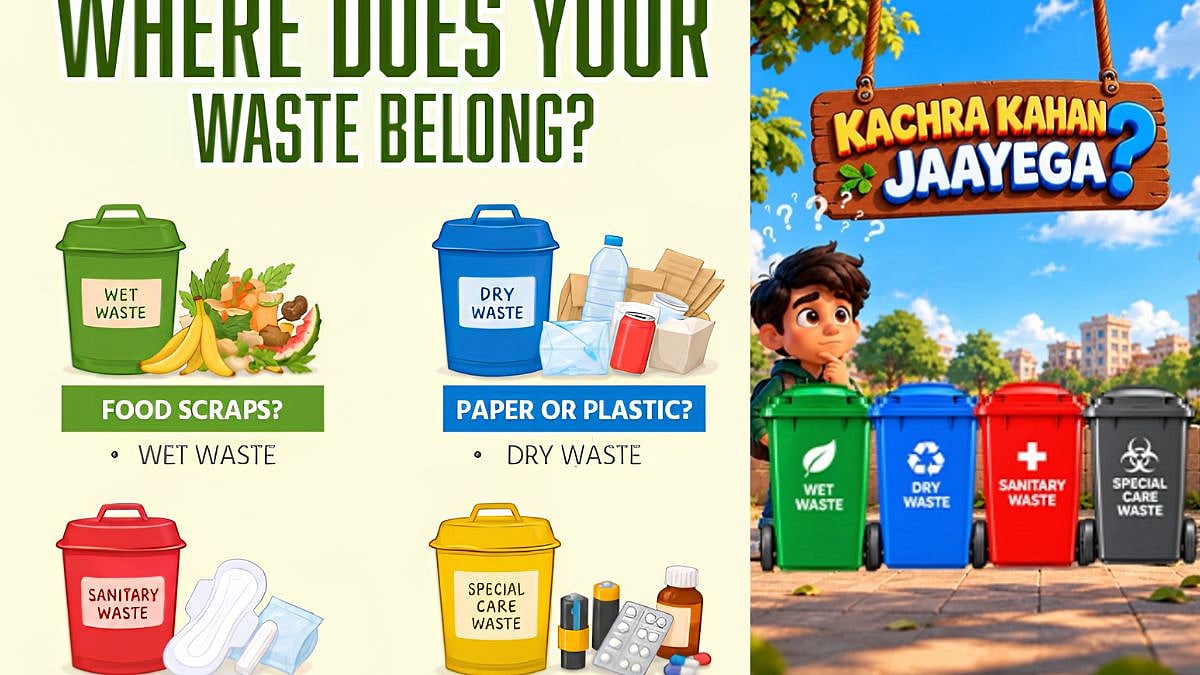
'Where Does Your Waste Belong': Ministry Of Housing And Urban Affairs Shares Waste Management Rules Ahead Of Gandhi Jayanti | X/ Ministry of Home And Urban Affairs
Ahead of Gandhi Jayanti on October 2, the Ministry of Housing and Urban Affairs (MoHUA) has shared a reminder on responsible waste management, urging citizens to understand where different types of waste should be disposed of. The initiative highlights the importance of segregation at source and responsible disposal for cleaner cities. The ministry also shared the different trash bins, including green, black, red and blue.
The campaign focuses on four-way source segregation, encouraging households to separate waste before handing it over for collection. The categories include wet waste, dry waste, sanitary waste and special care waste.
MoHUA shares waste management rules
The Ministry of Housing and Urban Affairs (MoHUA) shared a reminder on responsible waste management, urging citizens to understand where different types of waste should be disposed of. Wet waste includes food scraps and other biodegradable kitchen waste, such as vegetable and fruit peels. Such waste should be placed separately from other household waste to facilitate appropriate processing.
Dry waste covers materials such as paper and plastic, along with other recyclable or non-wet materials. Keeping these items separate can help improve their collection and recycling.
Sanitary and special care waste
The third category is sanitary waste, which includes used sanitary products. The ministry's awareness material highlights the need to keep such waste separate from regular household waste for safer handling and disposal.
The fourth category is special care waste, which includes items such as batteries and expired medicines. These materials require separate handling because they may contain substances that can pose risks if mixed with regular household waste.
ALSO READ
Awareness drive encourages responsible segregation
The message comes ahead of Gandhi Jayanti on October 2, a day associated with cleanliness and civic responsibility under the Swachh Bharat Mission. The campaign reiterates that responsible waste management begins at the point where waste is generated.
The awareness drive encourages citizens to follow the simple principle: “Sort it right. Keep it clean.” Proper segregation at source can make waste collection, processing and recycling more organised while reducing the amount of mixed waste reaching disposal sites.
RECENT STORIES
-
-
-
-
-