Left On Read? Why A Delayed Reply Can Send Your Mind Into Overdrive
Here’s how delayed replies trigger anxiety, overthinking and the fear of being ignored or misunderstood

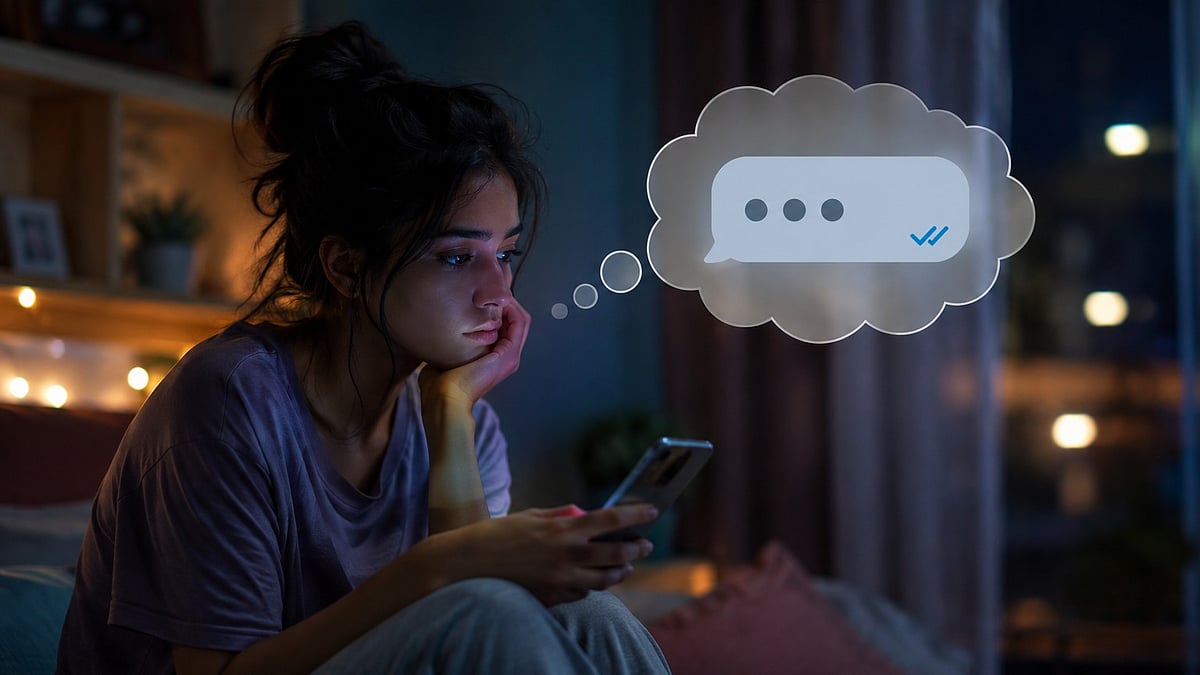
In the age of instant communication, even a few hours of silence can feel significant. A delayed reply may trigger uncertainty, overthinking, or anxiety, despite having little to do with the relationship itself. As messaging has become a central part of modern relationships, quick responses are often expected, making ordinary delays feel more personal than they really are.
Silence can feel like rejection
Our brains are naturally sensitive to social signals. When someone doesn't respond, the lack of information can leave room for negative assumptions. Instead of thinking, “They might be busy,” we may start imagining that they are upset, losing interest, or avoiding us. This is especially common when we care about the person. The more important the relationship, the more meaning we may attach to a simple delay.
Ekta Dharia, Clinical Psychologist and Psychotherapist, explains, “Delayed replies can trigger anxiety because digital communication leaves room for assumptions. Without tone or facial expressions, silence can feel like rejection, especially for people sensitive to it. The key is to separate facts from interpretations and recognise that a delayed response does not necessarily reflect the state of a relationship.”
Expecting instant replies
Phones have made communication almost immediate. Messages, notifications, and social media updates appear within seconds, so we can start expecting the same speed from everyone else. When a reply doesn't come quickly, it can feel unusual. We may forget that people have work, studies, family responsibilities, meetings, or simply moments when they don't want to be on their phones. The problem isn't always the delay itself. It is the expectation that everyone should always be available.
Created new social pressure
Messaging comes with its own set of unspoken rules. Reply too quickly and you may worry about looking too eager. Wait too long and you may seem uninterested. Double-text and you may feel embarrassed. Don't reply and you may worry about hurting someone's feelings. This pressure can make simple conversations feel like carefully planned social moves. Instead of focusing on what we actually want to say, we start thinking about how our timing will be interpreted.
Snehal D’Souza, a Gen Z content creator, shares, “I overthink double-texting quite a bit. Even when I genuinely have something to say, I hesitate because I don't want to seem like I'm chasing the conversation or being too much. Being left on read can make you question whether you said something wrong or whether texting again will make you look desperate. Sometimes, we're not afraid of double-texting- we're afraid of how it might make us look.”
Minds fill in the gaps
When we don't have an explanation for someone's silence, the brain tries to create one. Unfortunately, anxiety can push us toward negative explanations. A late reply can suddenly become proof that someone is angry, losing interest, or deliberately ignoring us. But there may be a much simpler reason: they are busy, distracted, tired, or haven't had the time or energy to respond.
Dipal Mehta, a Mumbai-based practising counsellor and psychotherapist, explains, “A delayed reply can become a blank canvas for our fears. Without tone, body language, or immediate feedback, the mind starts creating explanations. We may check someone’s online status, reread messages, or analyse every detail for reassurance, which can reinforce anxiety. The key is to pause between what happened and what we assume it means. A delayed response is a fact; what we believe it means is an assumption.”
Overthinking takes over
Sometimes the biggest problem isn't the unanswered message but what we do with the uncertainty. We may reread the conversation, analyse our words, check when the person was last online, or wonder whether we should send another message. The longer we think about it, the bigger the situation can feel. A simple delay can turn into an entire story in our heads. Remembering that a delayed reply is information about timing, not necessarily about how someone feels about you can help break this cycle.
How to stop seeking validation
The first step is to separate facts from assumptions: someone hasn't replied yet, but that doesn't necessarily mean anything is wrong. Instead of repeatedly checking your phone, put it away, turn off read receipts or notifications if they increase your anxiety, and focus on something else. Remember that healthy relationships aren't measured by response time – people have different schedules, communication styles, and boundaries.
Sejal Wakkar, PR Consultant at Vicara PR, shares, “As a Zillennial, I think we're more aware of how delayed replies can trigger overthinking, compulsive checking, and the urge to seek reassurance. What helps is recognising when you're getting caught in that cycle and consciously redirecting your attention – whether through reading, going for a walk, practising yoga, or simply stepping away from social media. Sometimes, the healthiest response to being left on read isn't another text, but returning to a life that exists beyond the screen.”
Double-texting isn't automatically a problem, and neither is taking time to reply. In a world of instant communication, learning to be comfortable with a little silence can be one of the healthiest digital habits we develop.
RECENT STORIES
-
-
-
-
-