Done With Hustling? Why Young Indians Are Choosing The ‘Soft Life’
Young professionals are questioning burnout culture and choosing balance, peace, and real life over constant grind

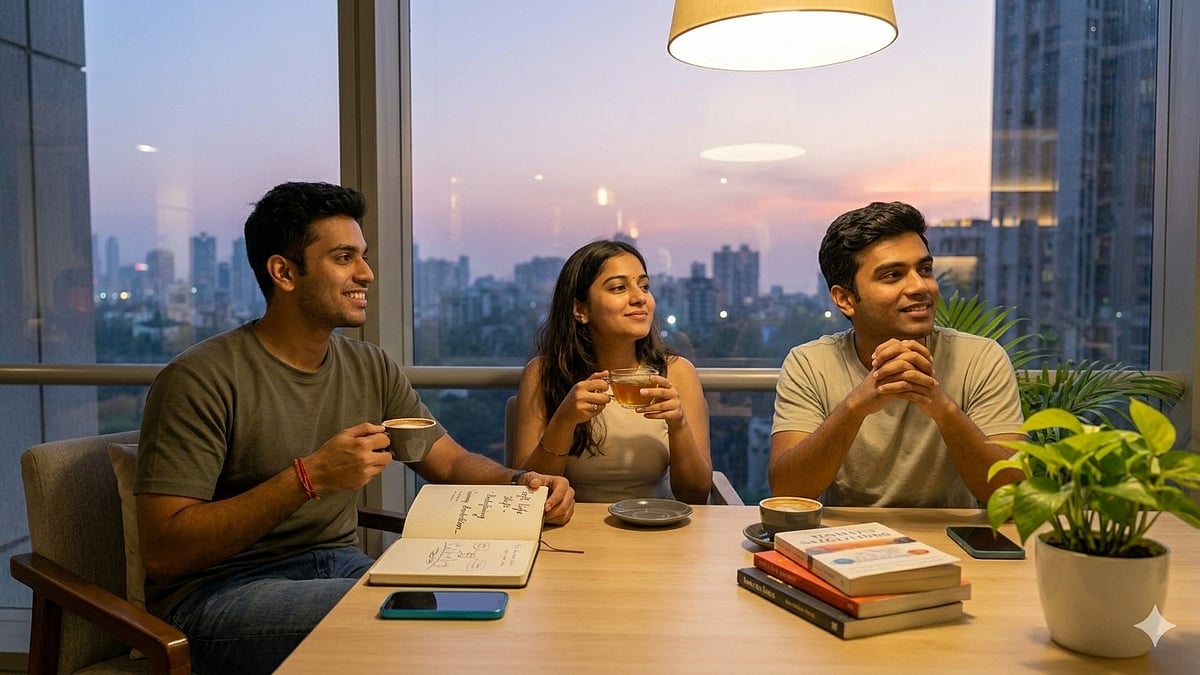
“The day you grind on presentations for money, that’s the wasted day. The day you chill with your people, that’s the productive one.” That one line from Samay Raina has travelled across Instagram reels, LinkedIn posts, and group chats over the past few weeks, resonating with thousands of young Indians exhausted by hustle culture.
In his recent stand-up special, Still Alive, Raina also opened up about financial anxiety, emotional exhaustion, depression, and the fear of losing everything after the controversy surrounding India’s Got Latent. Instead of glorifying nonstop work, his reflections repeatedly returned to family, peace, and emotional grounding.
For many urban Indians navigating hyper-competitive workplaces, unstable economies, rising burnout, and endless digital comparison, the sentiment felt deeply personal. “I believe in work-life balance. Call it a Gen Z thing, but I cannot just gush over work the whole time. Samay Raina’s recent stand-up really resonated with me,” says Piyush Gupta, 21, a Mumbai-based student.
Ankit Choudhary, 29, echoes a similar sentiment. “I have realised this very late in life that my health is my real asset, but now that I have realised it, I like to maintain a healthy balance. If health is lost, everything is lost, my grandfather has always told me this,” he says.
For Aman Arora, 26, the shift has been more subtle. “For me, I love hustling every day and night, but Samay Raina’s stand-up just hit very hard,” he shares. “Now I try to find at least one hour for myself and my family.”
Jasneet Kaur, a technology recruiter based in Gurugram, relates to this emotional shift closely. Having started working immediately after Class 12 while simultaneously pursuing higher education, she says ambition once meant constantly proving herself. “For years, success meant nonstop hustle. Today, after working in the corporate world for years, I’ve realised ambition is also about balance and peace of mind,” she says.
The emotional fatigue is becoming increasingly visible across urban India. A recent online debate around toxic corporate culture and burnout triggered thousands of responses from young professionals questioning whether endless hustle is worth sacrificing health, family, and emotional well-being for anymore.
Burnout no longer aspirational
For years, Indian work culture has almost romanticised exhaustion. Long working hours, weekend availability, and chronic stress were often treated as signs of ambition.
But the consequences are now showing up much earlier. Dr Kshitij Mody, robotic joint replacement surgeon and sports medicine specialist at Welcare Hospital, says young professionals in their 20s are increasingly dealing with cervical pain, chronic back issues, posture-related problems, muscle fatigue, sleep disturbances, and even early joint degeneration.
“The body keeps score, even when the mind learns to normalise burnout,” he says, adding that prioritising recovery and sustainable well-being is not laziness but a much-needed correction.
Mental health experts believe the shift is also deeply psychological. Dr Sujit Paul, certified mental health expert and life coach, says younger Indians today are becoming more conscious of the emotional cost of hyper-competitive lifestyles. “People now value health, flexibility, and emotionally supportive relationships more than material achievements alone,” he explains.
Radhika Iyer Talati, Founder of RAA Foundation, says many young people are actively turning towards meditation, mindfulness, and slower routines because they are searching for emotional clarity and healthier ways to cope with stress. According to her, many individuals today are consciously looking for spaces that help them reconnect with themselves instead of constantly chasing productivity.
Different definitions of success
Experts say what appears to be reduced ambition is actually a transformation of ambition itself. “What may seem like a decline in ambition is in fact a transformation of it,” says Dr Nikhil Mahindroo from K J Somaiya Institute of Management. “Success is no longer about status, position or never-ending hustle, but about finding meaning, striking a balance and saying ‘no’ with clear boundaries.”
Sonica Aron, Founder and Managing Partner of Marching Sheep, observes that younger employees no longer resonate with rigid workplace hierarchies or environments where they simply follow instructions silently. “They want to feel heard and valued,” she says. “Career growth is no longer just about titles or salary increments. People are evaluating whether organisations genuinely invest in mentorship, learning, emotional safety, and long-term growth.”
Similarly, Kumar Rajagopalan, Vice President and Country Head India at Dexian, believes success today is increasingly linked to stability, mental wellness, meaningful work, and the ability to maintain a personal life outside work. “The ‘soft life’ ideology is not about avoiding ambition,” he says. “It is about building a healthier and more sustainable way of living.”
The conversation is particularly significant among women professionals and entrepreneurs. Pallavee Dhaundiyal Panthry from World of Circular Economy questions why exhaustion became synonymous with ambition in the first place. “Why does rest become synonymous with laziness?” she asks. According to her, emotional stability and mental well-being directly influence decision-making, relationships, and long-term success.
Dipal Dutta, CEO at RedoQ, believes true ambition today is no longer measured by the gruelling hours spent at work but by “the clarity of the peace we actively protect outside of it.”
Workplaces are changing too
This cultural shift is now influencing workplaces themselves. Kiran D Chellaram from Featherlite Group says productivity is increasingly moving away from activity-based metrics towards outcome-based and sustainable productivity.
“If you look at how offices were planned earlier, it was fairly linear. Fixed layouts, assigned seating, and a predictable way of working. People adapted to the space. That worked for a long time, but the nature of work itself has shifted quite a bit since then, and spaces are having to catch up.”
Raghunandan Saraf, Founder and CEO of Saraf Furniture, says younger professionals are increasingly questioning the value of success if it comes at the cost of mental peace, relationships, and health. “Flexible working culture, discussions around mental wellness, and respecting individual space are not bonuses anymore,” he says. “They are essential.”
Educational institutions are noticing the same shift. Vani Khanna from Universal AI University says Gen Z students today want ambitious careers without sacrificing emotional well-being and identity. According to her, students are consciously rejecting burnout as the only pathway to success.
Rise of a more human ambition
ndia’s young workforce still wants growth, financial security, meaningful careers, and professional recognition. But increasingly, they are also asking a different question: What is success worth if it leaves no time to actually live?
Perhaps that is why Samay Raina’s words struck such a nerve online. Beneath the humour, many young Indians recognised something deeply familiar, the quiet exhaustion of constantly performing ambition. And maybe the real cultural shift unfolding today is this: ambition has not disappeared. It has simply become more human.
RECENT STORIES
-
-
-
-
-