Anukalp Goswami On Crafting Clean Comedy, Kapil Sharma’s Evolution & The Making Of 'Kis Kisko Pyaar Karoon 2'
In an exclusive conversation with The Free Press Journal, Goswami talks about why now is the right time for a sequel, crafting comedy in a sensitive era and what he hopes his legacy as a filmmaker will be.

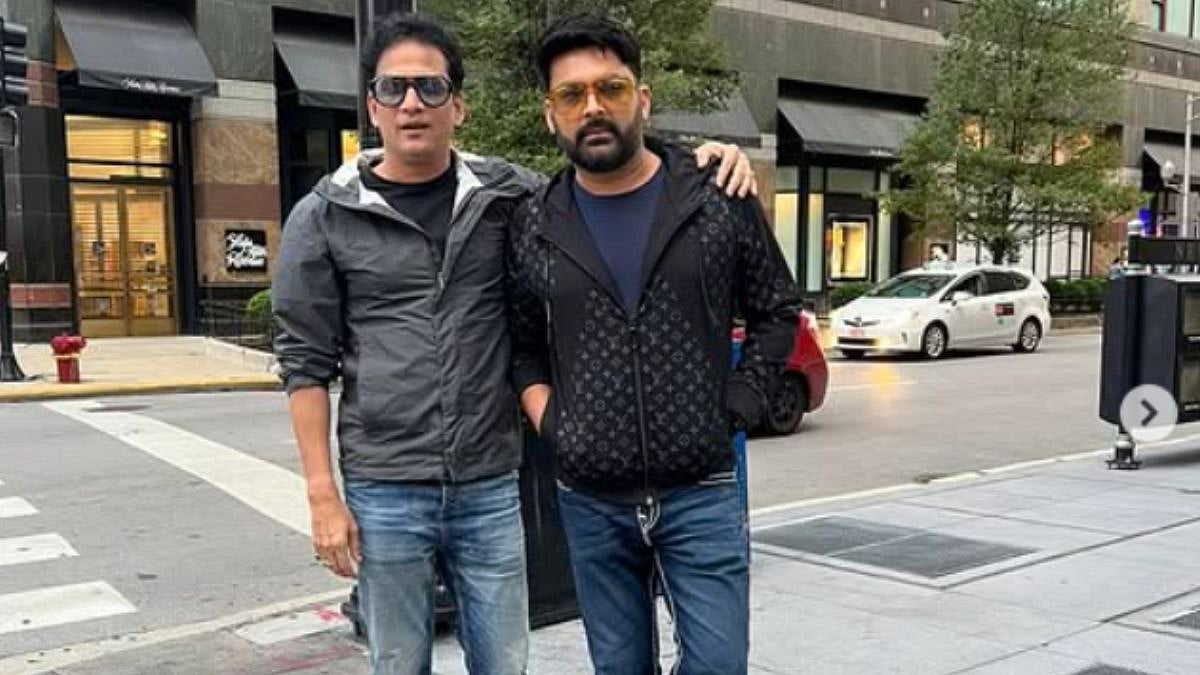
Director Anukalp Goswami talks about returning with Kis Kisko Pyaar Karoon 2 and working again with Kapil Sharma | Instagram
Ten years after the success of Kis Kisko Pyaar Karoon, director Anukalp Goswami is back with the sequel, set to release on December 12. Known for his work on The Kapil Sharma Show and the original film, Goswami reunites with Kapil Sharma along with a cast that includes Manjot Singh, Hira Warina, Tridha Choudhury, Parul Gulati, Ayesha Khan, Jamie Lever, Smita Jaykar and Supriya Shukla.
In an exclusive conversation with The Free Press Journal, Goswami talks about why now is the right time for a sequel, crafting comedy in a sensitive era and what he hopes his legacy as a filmmaker will be.
What convinced you that ‘now’ was the right time for a sequel?
It has been ten years since the first film, and people have been asking for a sequel everywhere we went. We received so much love that the demand for a second part never stopped. I felt this was the perfect time to bring the story back for the audience that has been waiting so eagerly.
Can you walk us through a scene in the sequel you’re most proud of, and why?
My favourite is the climax. It’s a full-blown chase sequence packed with situational comedy, almost like a roller-coaster ride. People will expect big comedy moments, and the climax delivers exactly that.
What was the biggest challenge during the shoot, logistically or creatively?
Creatively, the biggest challenge was matching and surpassing the expectations set by the first film. Comedy punches and storylines often become clichés over time, so we had to work hard to create something fresh for the sequel. I feel we’ve achieved that to a good extent.
How was your experience directing Kapil Sharma again, what has changed about him as an actor?
Kapil is very easy to work with, and I’ve seen tremendous growth in him as an actor. It’s been 10 years. We have done so many shows together. In the film, he plays a Hindu boy who loves a Muslim girl, but when he goes to marry her, she turns out to be Christian. He ends up stuck in three religious marriages, and how he navigates that situation is very interesting. Kapil understands the character very well and we can see that in his work. Developing that story with him was a great experience.
Any funny or memorable behind-the-scenes moments with the cast?
The entire shoot was filled with light moments because we had such a lively cast. Working with Kapil always brings spontaneous humour on set, and everyone enjoyed that energy. We will release a full BTS moments video soon on YouTube.
What does the writing process of a comedy look like for you? Do scenes come first or characters?
For me, characters come first. Once their personalities and dilemmas are clear, the scenes and comedy situations develop naturally around them. For this movie, I first got the idea how a Hindu boy falls in love with a Muslim girl and ends up getting married to girls from three different religions, and so that’s how the process started.
How do you ensure humour lands well without crossing into insensitive territory, especially today?
Kapil and I have worked together for 15 years, and we are very conscious about not hurting anyone. There’s always a thin line in comedy, and we make sure we stay on the right side. This film is possible only in India, where so many religions coexist with love and respect. The film celebrates that spirit.
You’ve also directed The Kapil Sharma Show, how has that shaped your approach to film comedy?
Working with Kapil for so many years helps a lot because we understand each other well. Kapil doesn’t like loud or cheesy comedy; he prefers clean humour. His audience loves him, and that’s a blessing. We’ve learned that if you make fun of someone, even that person should be able to laugh and appreciate it. People get offended when someone roasts them but with Kapil, he does it in a way that people enjoy.
What is one thing you learned from TV that you don’t get from film, and vice versa?
Television teaches you speed — you work fast, every day, with tight deadlines. We have to shoot so many episodes in a limited time. Films give you time. You can nurture a scene, think deeply and craft it with love. It’s like the difference between writing a newspaper article and writing a novel.
What kind of filmmaker do you aspire to be remembered as?
I’ve grown up watching the films of Kishore Kumar, Mahmood, David Dhawan and especially Hrishikesh Mukherjee. His simplicity and humanity inspired me. If someone ever says that I’m the Hrishikesh Mukherjee of this era, that would be the greatest compliment.
ALSO READ
If you weren’t a director, what would you be doing right now?
I would have been an actor. I have loved films since childhood and even did theatre. I never tried for a different job. I always knew I wanted to be in films.
RECENT STORIES
-
-
-
-
-