Central Government Has Decided Not To Allow Building Of New Dams In Uttarakhand
The Union government has told the Supreme Court it will not allow new dams in Uttarakhand's upper reaches, while seeking permission for seven completed or ongoing hydroelectric projects to continue. The affidavit says four projects are commissioned and three need about 30% work, even as the article warns existing dams may worsen fragile hill ecology.

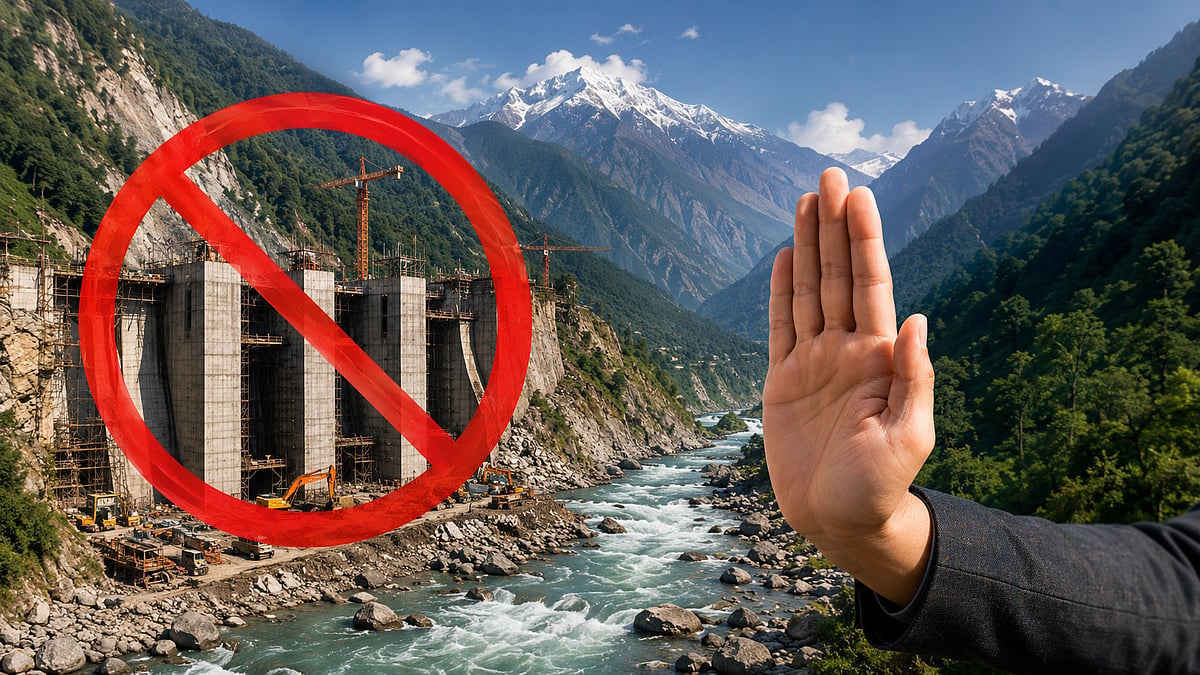
Central Government Has Decided Not To Allow Building Of New Dams In Uttarakhand | AI
Any feeling of relief at the union government's decision to not allow any more dams in the upper reaches of geologically precarious Uttarakhand should be tempered by the likely impacts of existing and ongoing dam projects in the hills. In a move that constitutes an admission of ill-advised dam-building, the government has filed an affidavit in the Supreme Court in a decade-old civil appeal on a hydroelectric project, offering to disallow any new dams. It suggests permitting seven projects that are completed or are in various stages of completion to continue. Four of these have been commissioned, the affidavit says, and the rest require about 30% of work to be done. It is important to note that Uttarakhand’s environmental risks are highlighted by many disasters: the catastrophic floods in Kedarnath in 2013 that killed over 6,000 people, the steady evacuation of residents of Joshimath because of subsidence and sliding slopes, hill roads cracked wide open, landslides, and flash floods affecting various sites. The union government clearly finds itself in a cleft stick since it has sunk enormous resources into dam building, and instances of environmental collapse are being reported frequently. A prominent example is the 12.25 km tunnel boring exercise through the Joshimath mountain for NTPC’s Tapovan Vishnugad hydroelectric project, a highly risky enterprise that has got repeatedly bogged down as the machine involved got stuck inside the mountain, prompting aggressive recovery efforts that damaged the town's ecology.
Credentialled experts who have served on Supreme Court committees have been warning for long that a headlong policy plunge in favour of more and more dams in Uttarakhand and facilitating mindless tourism through road building that brings vehicles, carbon pollution, and water stress is nothing but an invitation to disaster. A vehicle surge in the hills is depositing black carbon on glacier surfaces that leads to accelerated melting, endangering river health. In its recent affidavit, the government appears to have recognised the limits to dam building and has added a caveat to its otherwise positive view of large hydroelectric projects: that the basin, particularly the upper Ganga basin, has special environmental, geological, hydrological, ecological, social, cultural, and policy attributes. That fragility is confirmed by the active subsidence of Joshimath at a shocking rate, measured in 2022 at 5.4 cm in a matter of just 12 days. Governments deceive themselves when they strain every nerve to widen Char Dham roads to 10 metres, while the maximum possible is only 5.5 metres. Removing trees, blasting mountains for tunnelling and puncturing precious aquifers hasten the collapse of slopes and habitations. Worsening climate phenomena and extreme weather events, as in Kedarnath, may compel policymakers to not just think of a moratorium but actually abandon large dam projects that start acting as millstones.
RECENT STORIES
-
-
-
-
-