India Inc Welcomes Easing Of Tariff Tensions With US As Exporters And Industry See Renewed Stability
India Inc has welcomed the easing of tariff tensions with the US, as New Delhi secured an 18% tariff slab on exports. Industry leaders from manufacturing, finance and technology say the move boosts confidence, improves competitiveness and strengthens India’s position in global trade.

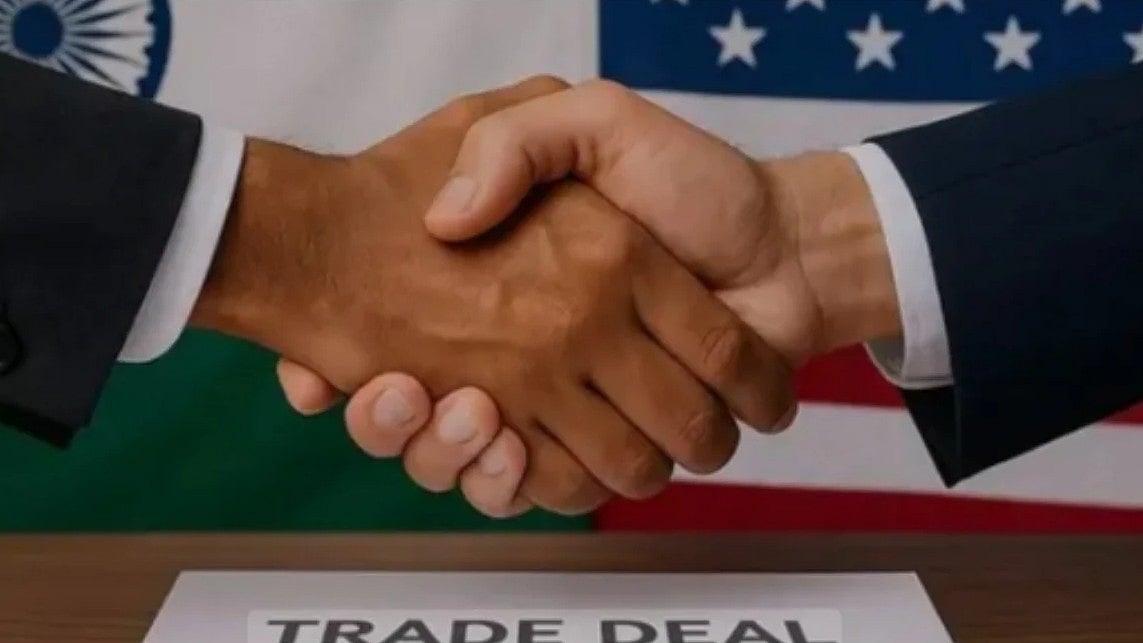
Industry leaders welcome India’s breakthrough tariff agreement with the US, calling it a boost for trade stability and export competitiveness | Representational Image
Industry leaders across sectors on Tuesday welcomed India’s breakthrough with the US on tariffs, calling it a confidence-boosting move that restores stability to bilateral trade ties. New Delhi has secured an 18% tariff slab on Indian exports to the US, ending a prolonged deadlock and rolling back steep duties imposed earlier.
Relief for exporters
The development comes as relief for exporters after US President Donald Trump had raised tariffs on Indian goods to 25%, along with an additional 25% “penalty” tax on certain exports over India’s oil purchases from Russia. With the revised tariff structure, industry believes export competitiveness will improve at a time of uncertainty in global trade.
Exporters see relief, optimism returns
Automobile and manufacturing companies were among the first to react. Sudarshan Venu, chairman of TVS Motor Company, said the reduction in reciprocal tariffs to 18% is a positive step that strengthens long-term economic ties between the two countries. He added that lower tariffs would boost export competitiveness and align with Prime Minister Narendra Modi’s vision of Viksit Bharat 2047.
Venu also underlined the importance of gradually reducing both tariff and non-tariff barriers. According to him, such measures can deepen supply-chain integration, speed up technology collaboration and attract investment into advanced manufacturing, giving Indian industry a stronger global foothold.
Financial sector reaction
The financial sector echoed similar views. George Alexander Muthoot, managing director of Muthoot Finance, said the clarity provided by the trade deal supports prudent capital deployment. He noted that a stable policy environment is essential for sustained growth and that the agreement creates a solid base for long-term economic momentum.
India’s rising role in global trade
Anil Talreja, partner at Deloitte India, said the agreement reflects India’s growing influence in the global economic order. Pointing out that India has signed two major trade deals in two weeks with economies collectively worth $50 trillion, he said the common factor in both agreements is India.
Talreja added that opening India’s consumer markets to European and US companies could significantly accelerate the country’s growth story. Along with recent Budget announcements focused on manufacturing, such moves have the potential to raise productivity, increase per capita income and improve living standards, reinforcing India’s long-term economic trajectory.
Caution over remaining challenges
However, experts have cautioned that some challenges remain. Gulzar Didwania, another partner at Deloitte India, said that while the reciprocal tariff rate is proposed to be lowered, several US tariffs will continue. These include duties imposed under Section 232 on national security grounds, covering products such as steel, aluminium, copper, automobiles and auto components.
Didwania also pointed out that no formal legal or procedural document outlining the scope, timelines or enforcement mechanisms of the agreement has been released so far. As a result, a portion of Indian exports to the US is likely to continue facing higher tariffs despite the deal.
Technology and talent boost
The agreement has also been welcomed by the technology and education ecosystem. Prabhat Kumar, chairman (IRS) of Pan IIT Alumni India, said the tariff agreement represents a strategic leap for technology and talent. He noted that improved market access for Indian engineering goods would strengthen the Make in India initiative, particularly in high-technology sectors.
Kumar also linked the trade deal with domestic policy measures, such as the reduction in Tax Collected at Source (TCS) on foreign education remittances announced in the Budget. He said easing financial pressures on students seeking education abroad would help Indian talent gain global exposure. Together, these steps could create a virtuous cycle by promoting trade, attracting technology and nurturing human capital.
Also Watch:
ALSO READ
While some uncertainty remains around implementation, the easing of tariff tensions has clearly lifted industry sentiment. For India Inc, the agreement signals not just immediate relief, but a renewed sense that India’s place in global trade is steadily strengthening.
RECENT STORIES
-
-
-
-
-