War’s Hidden Costs: How Conflict Reshapes Young Minds, Economies And Everyday Lives
From classrooms to households, war’s ripple effects reshape young minds, strain fragile economies, and deepen inequalities far beyond the battlefield.

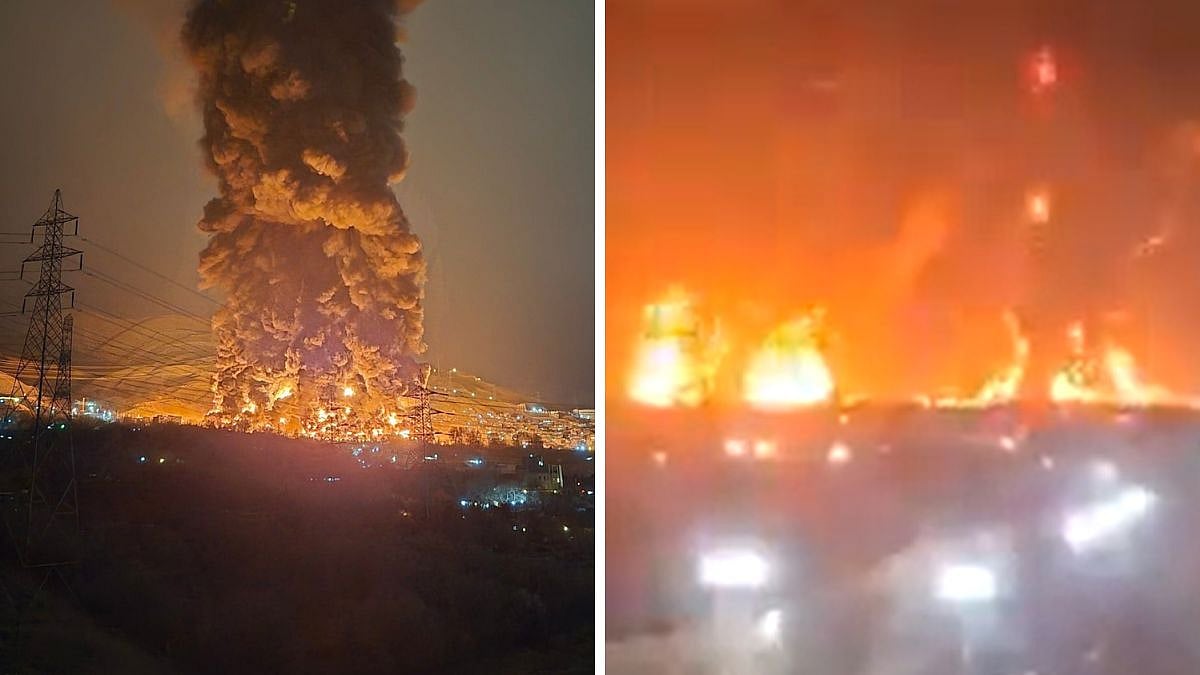
War’s ripple effects extend beyond battlefields, impacting children, households, and global economies | Representational Image
War, from a child’s eyes, is very different from the one fought with missiles, weapons of mass destruction, and the hard edges of national ego. For policymakers and strategists, conflict is often reduced to maps, alliances, and calibrated responses. For a child, it is something far more immediate. It is the quiet fear of disruption, the uncertainty of tomorrow, and the unsettling idea that history is no longer a chapter in a textbook but a lived possibility.
A few weeks ago, in the middle of Board examinations, a student remarked, almost casually, “Imagine if our next batches, a few decades from now, have to study history through the lens of a third world war.” The room fell silent.
In that moment, the abstraction of geopolitics gave way to something deeply human. It was no longer about distant borders or diplomatic tensions. It was about the possibility that today’s children could inherit a world shaped by decisions they had no role in making.
The policy question and human cost
This raises a fundamental question for public policy. What is the cost of national pride when measured against the lives and futures of those who have not yet had a chance to fully participate in society? Are we, in effect, rewarding brinkmanship and short-term displays of strength at the expense of long-term human development? Or worse, are we normalising a cycle where each generation is expected to absorb the consequences of decisions taken in haste?
Economic ripple effects of conflict
The economic consequences of prolonged conflict are well documented, but they are often discussed in aggregate terms. Gross domestic product slows, trade flows contract, and fiscal pressures rise. Yet beneath these indicators lies a more troubling reality. Wars ripple through supply chains in ways that disproportionately affect the most vulnerable. Energy prices surge, and with them the cost of transportation and basic goods. Cooking gas becomes more expensive, placing pressure on households and small businesses alike. For a restaurant owner, it may mean cutting back on menu offerings or raising prices. For a low-income family, it could mean reducing the number of meals cooked at home.
Healthcare is another area where the burden becomes stark. Medical equipment and essential implants often rely on global supply networks. Disruptions lead to higher costs and limited availability. In conflict-affected regions, this is particularly devastating. The very people who may need medical care the most find it slipping out of reach. Even in countries geographically removed from the epicentre of conflict, the spillover effects are real. Hospitals face higher procurement costs, and patients are forced to bear the increase.
Inflation and unequal burden on society
Fuel prices act as a transmission mechanism for broader inflation. As diesel becomes more expensive, so does the cost of transporting fruits, vegetables, and essential goods. What appears on a supermarket shelf is not just a product but the end point of a complex chain influenced by global stability. For wealthier consumers, these changes may register as an inconvenience. For those on the margins, they represent difficult choices between necessities.
The distribution of this burden is deeply uneven.
There are sections of society that can absorb rising costs with relative ease. They may still purchase off-season strawberries or dine at premium establishments. At the same time, there are millions for whom even a modest increase in prices can mean foregoing basic items. A pair of socks, a nutritious meal, or a routine medical check-up becomes a calculation rather than a given.
Business uncertainty and economic stress
Businesses, particularly in sectors like hospitality and retail, find themselves navigating a fragile landscape. High input costs, uncertain demand, and the challenge of retaining staff create a cycle of anxiety. The situation bears some resemblance to the economic stress witnessed during the pandemic, but with an added layer of unpredictability.
Unlike a public health crisis, which at least offers the possibility of a coordinated global response, geopolitical conflicts often deepen divisions and prolong uncertainty.
The human dimension of this uncertainty cannot be overstated. Workers worry about job security. Entrepreneurs hesitate to invest. Consumers delay spending. This collective caution feeds back into the economy, slowing recovery and amplifying the initial shock. It is a reminder that economic resilience is not just about numbers but about confidence.
Policy response and importance of diplomacy
For policymakers, the implications are clear. There is a need to move beyond reactive measures and consider the broader social contract. Fiscal tools can provide temporary relief through subsidies or targeted support, but they do not address the underlying issue. The question is not only how to mitigate the impact of conflict but how to prevent the conditions that make such conflicts more likely.
Diplomacy, often seen as slow and incremental, becomes critical in this context. It may not offer the immediate visibility of decisive action, but its long-term benefits are far greater. Investing in multilateral frameworks, strengthening channels of communication, and prioritising de-escalation are not signs of weakness. They are essential components of a stable global order.
Role of education and future generations
Education systems also have a role to play. The comment from the student during Board exams reflects a heightened awareness among younger generations. There is an opportunity to channel this awareness into informed engagement with global issues. Teaching students to critically examine the causes and consequences of conflict can foster a more thoughtful citizenry, one that values stability and cooperation over confrontation.
Conclusion: redefining national strength
Ultimately, the cost of war is not confined to battlefields or balance sheets. It is borne by classrooms that fall silent, by households that tighten budgets, and by societies that grapple with uncertainty. The child who wonders about studying a future world war is not just expressing fear. They are articulating a concern that should resonate with decision-makers across the world.
Public policy must recognise that the true measure of national strength lies not in the ability to project power but in the capacity to safeguard the well-being of its people, especially the most vulnerable. The choices made today will shape the world that the next generation inherits.
The question is whether that world will be defined by conflict and constraint or by opportunity and resilience.
Kalyani Srinath, a food curator, blogs at - https://www.sizzlingtastebuds.com and is a columnist.
RECENT STORIES
-
-
-
-
-