Latur: A remarkable 518-year-old copper plate inscription preserved in the museum of Rajarshi Shahu College, Latur, has come to light, offering significant insights into a 16th-century local battle and the socio-political scenario of the Bahmani era.
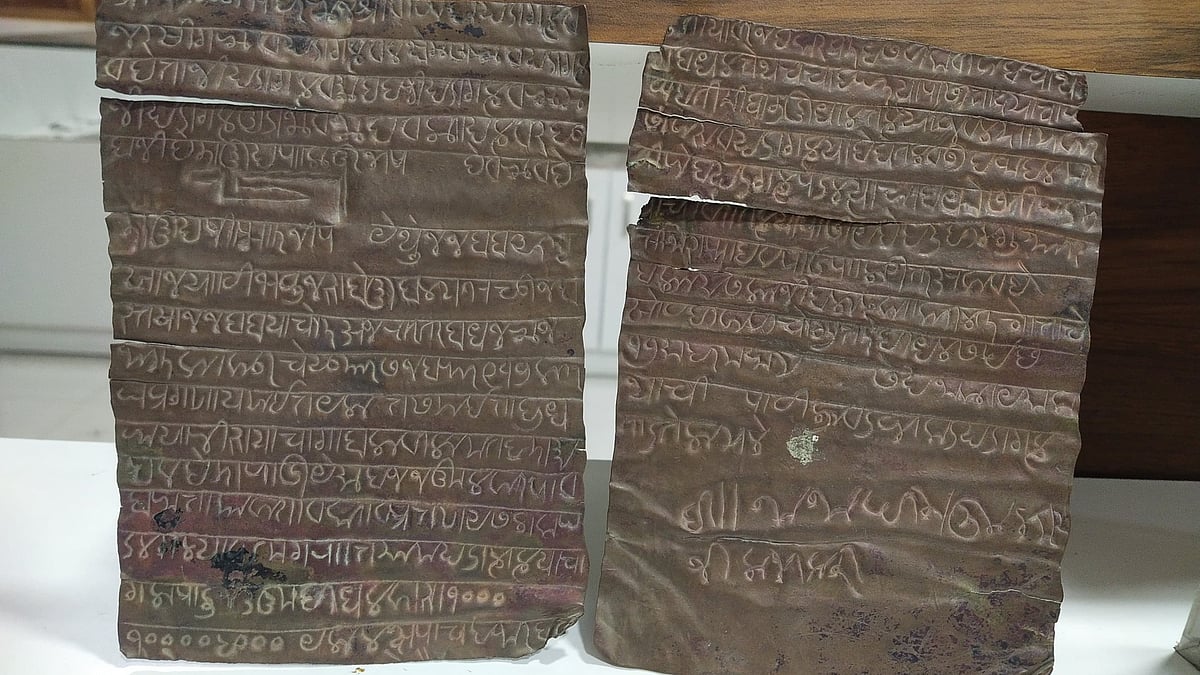
Dated 1507 CE, the copper plate records a violent clash between Savaru and Vithoba Khandagale (Jadhav) near Dudhal Lake, close to the Chandpir Dargah in today’s Khadgaon village, on the outskirts of the city. The inscription states that Vithoba Khandagale was killed in the encounter, and his wife committed sati on the spot. As compensation, the Khandagale–Jadhav family was awarded one lakh five thousand hon, a substantial amount at the time.
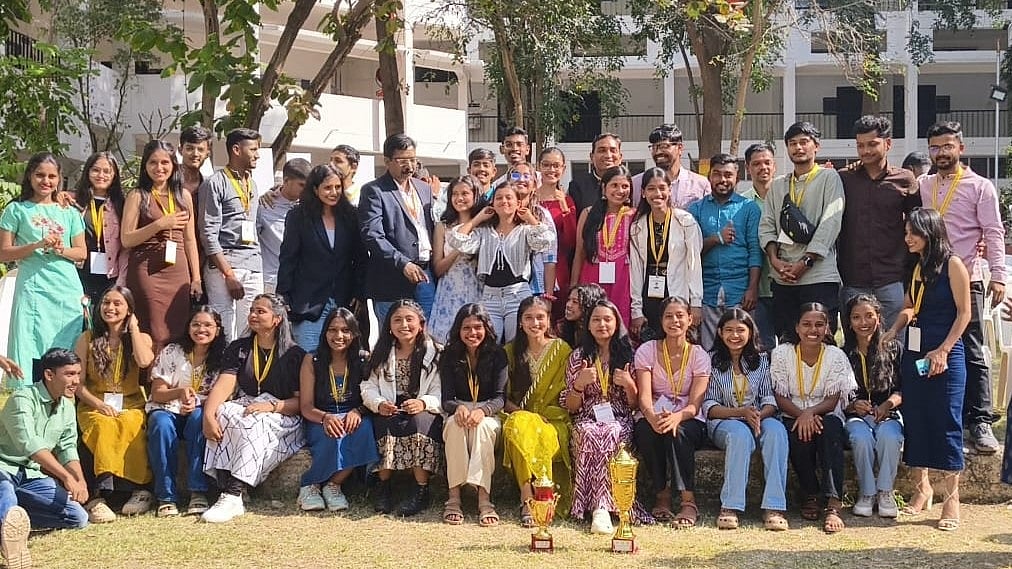
The copper plate, previously unstudied and unknown to scholars, has now been successfully deciphered under the efforts of researcher Krishna Gudade, Principal Dr. Mahadev Gavhane, and Head of the History Department Lt. Dr. Archana Tak. The inscription was read by Radhika Date.
The inscription consists of two copper sheets containing 30 lines in Modi script and old Marathi. According to the text, Savaru and Vithoba Khandagale met near the Chandpir Dargah, where a fierce battle broke out. Vithoba was killed, his wife immolated herself, and a memorial was built at the site. Compensation was granted for maintaining the memorial and supporting Vithoba’s father.
The inscription also mentions that during the inquiry, several notable figures, Rajshree Vithoba Khandagale, Narsingrao Khandagale, Laxmanrao Khandagale, Dattaji Khandagale, Mahadaji Khandagale, and Ramji Khandagale, appeared before Nabab Ashkhan along with local officials Deshmukh Patil of Latur and Raghuji and Deorao Deshmukh Patil.
The event is recorded in the Suhur year 917, interpreting the conflict as a significant local matter. Savaru, evidently seeking absolution, may have filed a petition. Testimonies from several officials and village functionaries supported the award of compensation. An order was then issued to pay 1,05,000 hon to the Khandagale family. The inscription warns that anyone opposing the decree would be deemed guilty before the court.
The copper plate was written by village Kulkarni Nana Dam and dated 17 Moharram. The inscription mentions personal names and place names such as Khadgaon (then called Khal) and Latur, offering rare linguistic and cultural insights.
“This 518-year-old Bahmani-period copper plate not only documents a local battle but also illuminates the social, political, economic, and religious life of the time,” said Lt. Dr. Archana Tak-Joshi, Head of the History Department.
The research effort received support from senior historian SG Joshi, Dr Rahul More, Dr Priyadarshini Patil, Nilesh Shelke, Rajnaresh Jadhavrao, the Chandpir Dargah priest, and several elderly residents of Khadgaon.