Senior Citizens: They need to be careful about risks of polypharmacy
All elderly patients are requested to consult their family physician or a geriatric consultant to ensure they are not victim to polypharmacy.

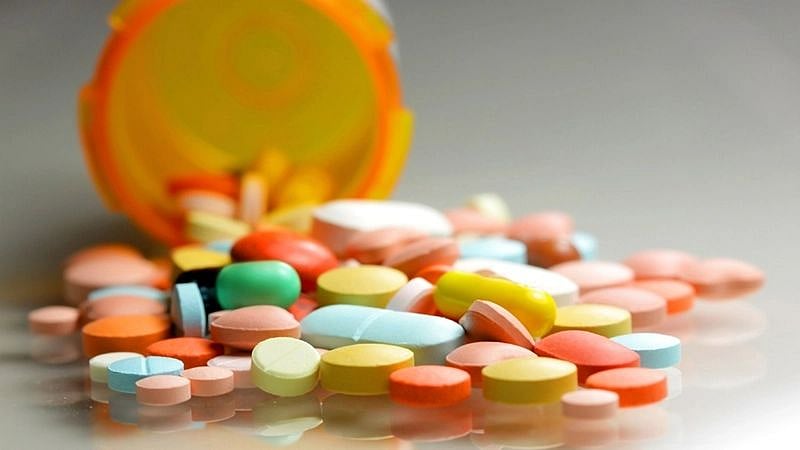
Medicines | Representative Photo
Polypharmacy is a common problem among elderly people in India. It implies “multiple medications” used by elderly population for various types of comorbidities.
As age grows, so do number of ailments; these include common issues like blood pressure, sugar, joint pains, occasional weakness and may extend to severe ailments including cancer or mental impairment. Because of this problem of multiple ailments, elders fall into trap of polypharmacy.
There are several reasons contributing to this problem.
Firstly, self-medication coupled with easy availability of medicines across the counter which is a common thing in India is one of the prime reasons.
Secondly, elders go to separate doctors (including specialists) at different points of time and do not disclose fully existing medicines and thereby, start consuming new medicines prescribed for fresh problems.
Thirdly, as many elders suffer from chronic ailments, there has been a normal tendency to resort to alternative medicines like Homeopathy or Ayurveda along with allopathy and that results in medicines from different streams being consumed together.
And finally, many elders ignore / forget advice given by doctors to discontinue certain medications and this adds to the problem.
As a result of all the reasons above, it is seen that multiple-medication or polypharmacy is a commonly prevalent problem particularly in Indian context. It is not a rare occasion to see an elderly consuming as high as 15 to 16 pills a day.
Effects of Polypharmacy:
Multiple-medication, if not controlled or monitored properly, may have adverse impacts. Some of these could be having minimum physical implications. But some other drugs, if taken without proper medical supervision, may result in serious physical / mental diseases.
Overdose of medication or mutual adverse reactions of some medicines or taking unnecessary drugs all have their consequences, if continued for a long time. These may cause damage to any of the sensitive organs like liver or kidney or urinary system or lungs or heart, etc. and may sometimes even be life threatening. For example, excess of D3 may cause toxicity which is quite serious; Overdose of blood thinners may be dangerous, and so on. No one is very sure about composition of some of the alternative medicines and these may also damage the organs.
Controlling Polypharmacy:
The only way forward is to control menace of polypharmacy or multiple- medication. Three (3) major strategies to counter it include:
Patient Education: This is important as elder patients who resort to polypharmacy must appreciate the risks, both short as well as long-term. Sometimes, elders take it lightly until they land in problem. Hence patient education is important and it is the responsibility of all of us to make them understand pitfalls of multi-drug usage.
Doctor / Pharmacist Education: Though many doctors are, by and large, aware of the risks of polypharmacy, some of them take it easy. Some doctors sometimes may not even insist on knowing current medicines being taken or was being taken before prescribing new drugs. Though such cases are not common, it happens particularly in some remote places or where doctors are semi-qualified or when the doctor is highly pressed for time like in government hospitals. “Structured doctor education” is thus must. Geriatric specialists are motivated and skilled to do this besides taking care of other needs of elderly patients. Pharmacists should also be educated so as not to give all medicines requested by elders and to check the current ones being used by them.
Regulatory Intervention: The only regulatory intervention is to minimize availability of medicines over the counter (OTC). In India this is a serious issue and needs to be taken cognizance of by the regulators.
However, the primary onus lies on elders. They should consult the family physician or geriatric practitioner or an expert doctor giving details of all the medicines and their dosage they are taking. A chart should be made and given to doctor along with the period since when they have been consuming these medicines. Often, we find many elders are not conversant with exact names or composition or strength of medicine. Better way is to take all medicines to the doctor and explain details of their consumption. The practitioner may then suggest way forward regarding what to continue, what to discontinue and / or taper off. It will be an experimental stage and the patient should follow advice of the practitioner and see reaction for certain period of time say, 2 weeks and then go back to the doctor again for further views / actions.
Way Forward:
We need to accept the fact that polypharmacy is a serious issue in India. Elderly population is exposed more to the problem because of their ignorance, comorbidities, advanced age and long history of medication, prevalence of chronic ailments, reduced patience & pain bearing capacity and digital explosion of marketing by different types of medicine / alternative science drug manufacturers. The problem needs to be taken seriously before it can become a real health hazard.
All elderly patients are, therefore, requested to revisit the medicines being consumed by them and consult their family physician or a geriatric consultant or a medicine specialist to ensure they are not victim to polypharmacy. It is easy to tackle if one has a will.
ALSO READ
RECENT STORIES
-
-
-
-
-